


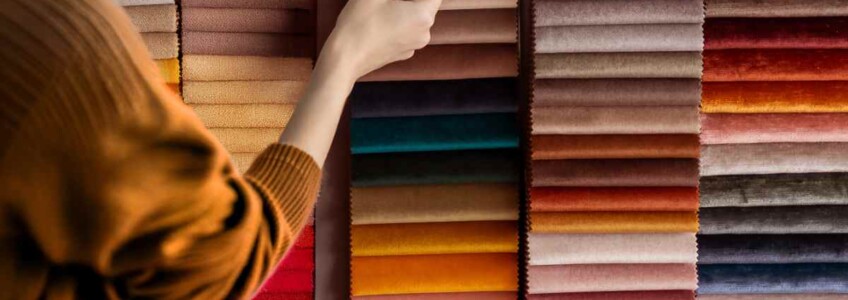
Choosing upholstery fabrics means making a technical decision before it is even aesthetic. The wrong siding doesn’t just age poorly: it polishes on the armrests, frayes along the seams, fades where the light hits, and forces you to redo the job after a few years. A correctly chosen upholstery, on the contrary, accompanies furniture for decades.
Those who work in the sector, from upholsterer to upholstery manufacturer to HO.RE.CA operator, evaluate an upholstery fabric on measurable parameters: abrasion resistance, colorfastness, sewing behavior, reaction to fire. Manifattura Foderami Cimmino‘s comprehensive guide reconstructs the entire evaluation process, from fiber families to armor, from standardized values to metre calculations for choosing the best upholstery fabrics.
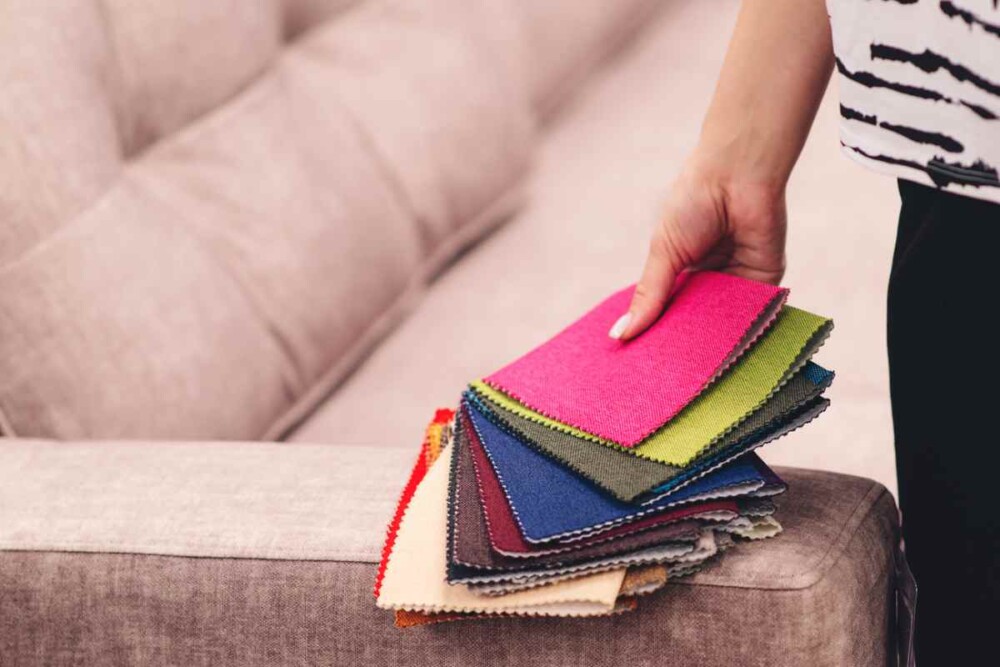
What upholstery fabrics are and how they differ from other furnishing fabrics
Upholstery fabrics are textile materials constructed to resist continuous contact, pressure, and rubbing, intended to cover padded or rigid structures: sofas, armchairs, chairs, headboards, benches, ottomans, panels, and contract seating.
The distinction from other home fabrics is functional, not decorative. A drapery fabric works vertically, suspended, stressed only by its own weight and light; a tablecloth works horizontally and is stressed by liquids; an upholstery fabric works under load and friction, for years. For this reason it requires higher weights, more compact reinforcement, higher yarn twists and specific finishes.
Fixed upholstery and removable upholstery: two different technical needs
Before evaluating any material, it is necessary to establish how it will be applied, because the two types of upholstery impose different requirements.
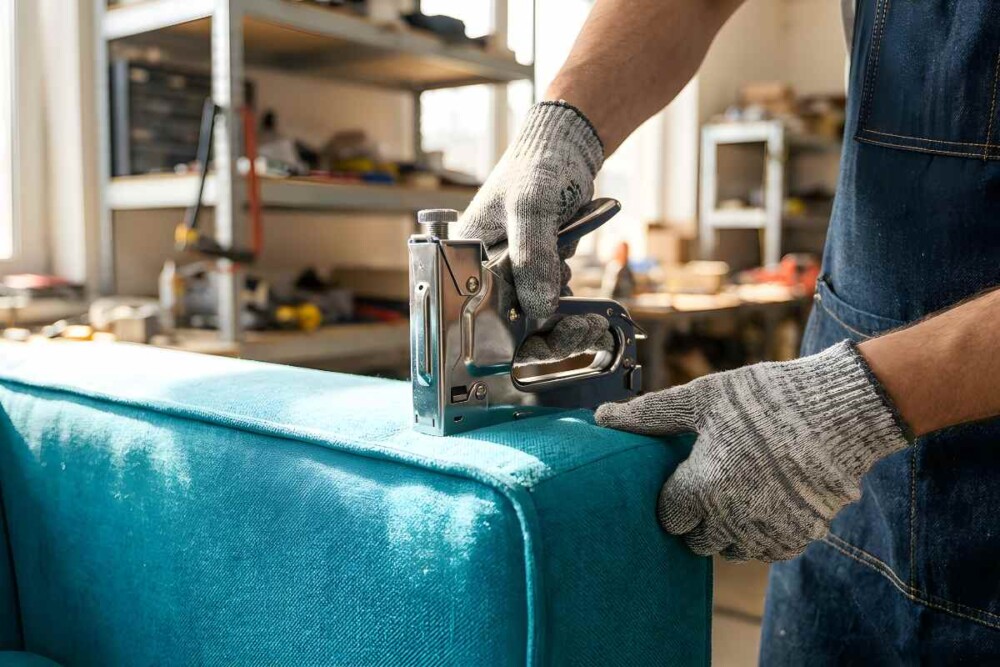
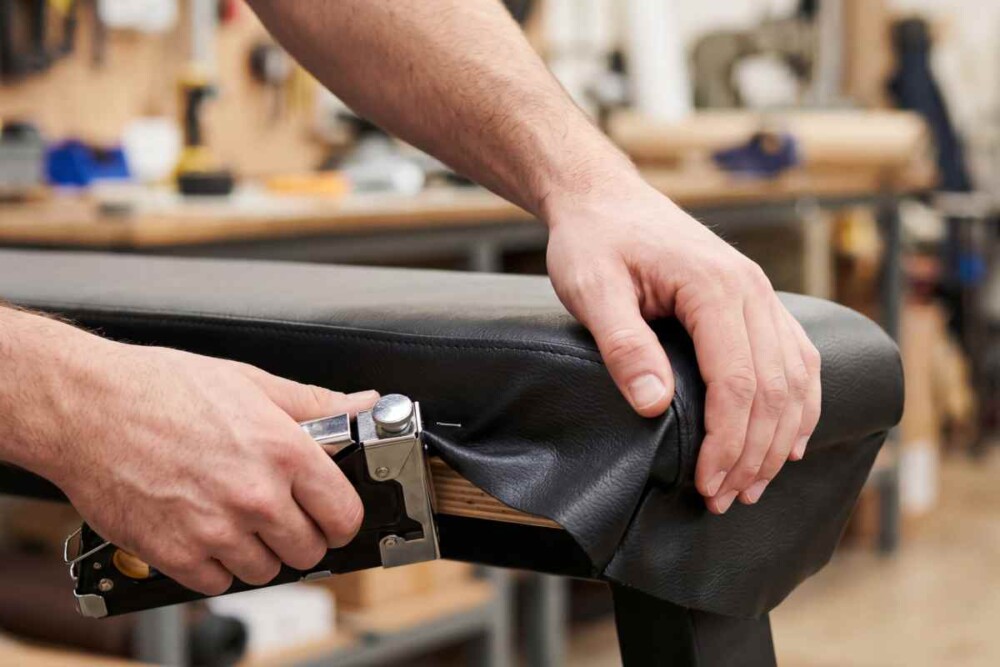
In fixed upholstery the fabric is stretched and stapled directly onto the structure. It must possess good dimensional stability and withstand tension without deforming. Retirement after processing is not recoverable: a fabric that contracts after assembly results in visible tension and poor stitching.
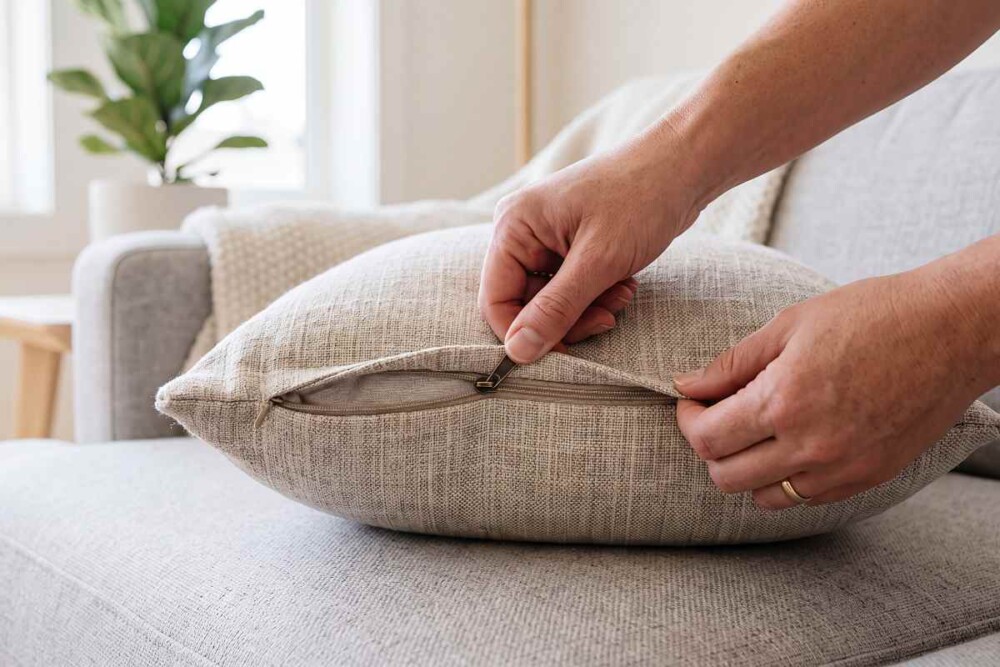
In the removable upholstery the covering is packaged as a removable lining. Here, the washability, the wash stability and the behavior of the zipper in the seam count. A fabric that withdraws even two percent makes the lining irrecoverable.
The third category, that of coordinates and complements such as cushions, headboards and paralets, tolerates less severe specifications because the mechanical stress is marginal.
The technical parameters that define the best upholstery fabrics
No fabric is the best ever. There is the appropriate fabric for a given intended use, and the appropriateness is stated in the technical data sheet. There are, however, some parameters that must be verified before any aesthetic consideration.
Abrasion resistance of upholstery fabrics: the Martindale test
The Martindale test, regulated by ISO 12947-2, is the benchmark for the durability of upholstery fabrics. The sample is rubbed against a standard abrasive in a Lissajous-figure motion, in intervals of five thousand cycles, until two wires break or obvious wear appears. The result is expressed in Martindale cycles: the higher the value, the more the fabric resists wear.
| Martindale Cycles | Intended use indicated |
| Less than 10,000 | Exclusively decorative use: fabric for cushions, lampshades, drapes. Not suitable for upholstery |
| From 10,000 to 15,000 | Lightweight home upholstery: bedroom chairs, occasional seating |
| From 15,000 to 25,000 | Regular-use home tapestry: family sofas, dining chairs |
| 25,000 to 40,000 | Intensive domestic use and light contracts: offices, waiting rooms |
| Over 40,000 | Strict contract: hotels, restaurants, public spaces, transportation |
The data should be read with caution. The Martindale value certifies abrasion resistance, not the overall strength of the coating: a sixty-thousand-cycle fabric with low color fastness in light will still fade in front of a south-facing glass window.
Pilling resistance in upholstery fabrics
Pilling is the formation of surface pilling due to the migration of short fibers outward from the fabric. It is evaluated according to ISO 12945-2 on a scale of one to five, where five indicates no training. For upholstery it is reasonable not to go below the value four. Continuous-wire synthetic fibers and blends with a significant percentage of polyester perform better than pure employed short natural fibers.
Color fastness of upholstery fabrics to light and rubbing
Light fastness is measured on a scale of one to eight according to ISO 105-B02. For a cladding exposed to direct natural lighting, it is advisable to choose values equal to or greater than five; in contracts and very bright environments, the reference increases to six.
The fastness to rubbing, as regulated by ISO 105-X12, is expressed on a scale of one to five in dry and wet conditions and indicates how much color the fabric gives way to contact. A low value means coatings that discharge pigment onto clothing, a defect that generates immediate disputes in the contract.
Weight, height and seam slip of upholstery fabrics
The basis weight of the fabrics, expressed in grams per square meter, describes their consistency. Upholstery materials generally range between 250 and 500 grams per square meter, with top tips for heavy velvets and textured jacquards. A high basis weight alone does not guarantee durability, but too low a basis weight excludes it.
The height of the patch determines the required yardage and the yield of the sfrid. The most common heights in upholstery are 140 centimetres and 280-320 centimetres: the latter significantly reduce the gap on wide panels and one-piece upholstery.
Seam slip, measured according to ISO 13936-2, quantifies how much the threads move along the seam under load. It is the most underrated parameter of the entire technical data sheet and the most frequent cause of the opening of the seams on sofas: a soft and not very compact fabric can give way even with an excellent Martindale value.
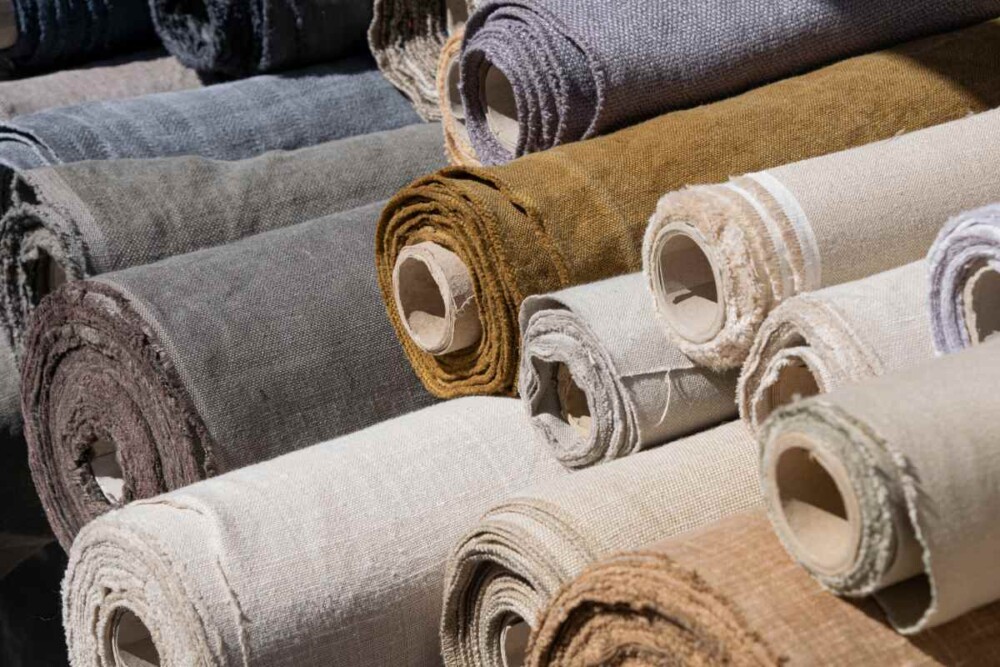
Upholstery fabrics of natural fibres: cotton, linen and wool
Natural fibers remain the go-to choice when looking for an authentic hand and a warm aesthetic. However, they require a careful assessment of the technical limitations, which vary significantly from fiber to fiber.
Cotton for upholstery
Cotton is the most widely used natural fiber in furniture upholstery. Breathable, pleasant to the touch and color stable in quality dyes, it lends itself to all compact armor. In upholstery it is almost never used in thin titles: twisted yarns and dense reinforcement such as Panama canvas are used.
The limitation of pure cotton is its tendency to crease and lower abrasion resistance than synthetics at the same weight. For this reason, the blend with polyester represents an established practice: cotton guarantees hand and breathability, polyester adds dimensional stability and mechanical resistance.
Tessuto Panama Lione: eavy upholstery cotton in height 300 cm
Tessuto Panama Lione is a heavy cotton in panama armor, with a compact and regular structure that makes it a reference for natural fiber upholstery. The 100% cotton composition ensures breathability and a dry hand, while the weight of 310 grams per square meter ensures the robust consistency required by the upholstery of sofas, armchairs, cushions and furnishing accessories intended for everyday use.
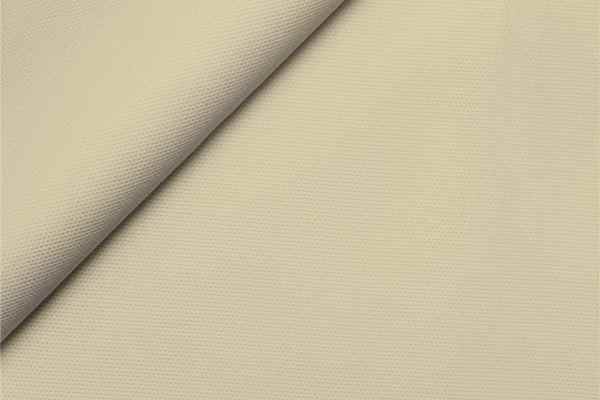
The height of 300 centimetres constitutes the most relevant operational advantage. It allows for the creation of large, one-piece panels, significantly reducing sizzle compared to standard 140-centimeter heights and limiting the number of seams on large cladding: an element that affects both material cost and processing time.
The color chart exceeds twenty variations and covers the entire range required for furniture, from neutrals like raw, cream, and sand to saturated shades of burgundy, red, dark blue, and anthracite, to pastel hues for lighter spaces.
Tessuto Panama Blossom 280 cm: half panama printed for furnishing accessories
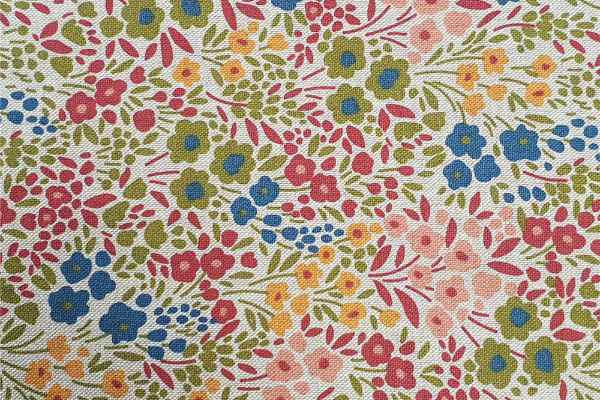
Tessuto Panama Blossom is a half panama in a cotton and polyester blend, with a colorful design print on a raw base. Half panama armor provides a regular, lightweight surface, while the blend of 80% cotton and 20% polyester combines the natural hand of plant fiber with the dimensional stability and ease of maintenance guaranteed by the synthetic.
With a basis weight of 200 grams per square meter, it is a fabric suitable for cushions, decorative complements, lightweight upholstery and panels, where mechanical stress is contained and colour rendering and workability prevail. The print on a raw background makes the decoration particularly legible and lends itself to environments that require a defined visual accent.
The height of 280 centimeters allows you to create large panels with reduced sizzle and manage the furnishing coordinates without interruptions in the drawing. The OEKO-TEX® Standard 100 certification certifies the absence of substances harmful to human health, a requirement that takes on particular importance in complements intended for children’s rooms and long-stay environments.
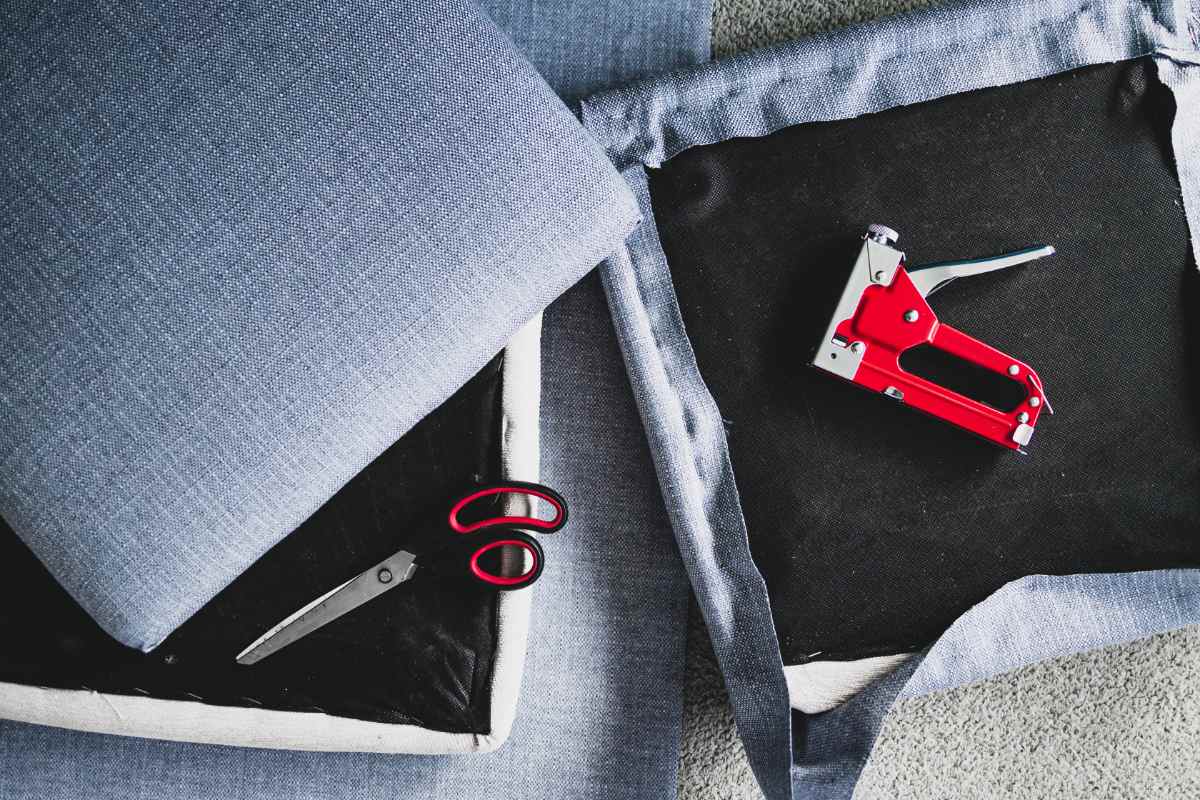
Linen and linen blend for upholstery
Linen is characterized by a long, tough fiber, which produces opaque surfaces with a natural and slightly irregular appearance. It is the choice of choice for contemporary and Mediterranean-style upholstery, where the irregularity of the yarn constitutes a recognized aesthetic value.
It must be managed with awareness: pure linen creases, has little elastic recovery and tends to mark in the seating areas. Linen blend fabric, typically with cotton or polyester, addresses most of these limitations while maintaining the characteristic appearance of the fiber.
Lino 3006 Dolce 270 cm avorio: pure linen for panels and furniture finishes
Lino 3006 Dolce in the ivory variant is a 100% linen canvas of Italian production, with a height of 270 centimetres and a weight of 150 grams per square metre. The pure fiber returns the opaque and slightly irregular surface typical of linen, which in contemporary furniture is sought as an aesthetic value and not corrected as a defect.
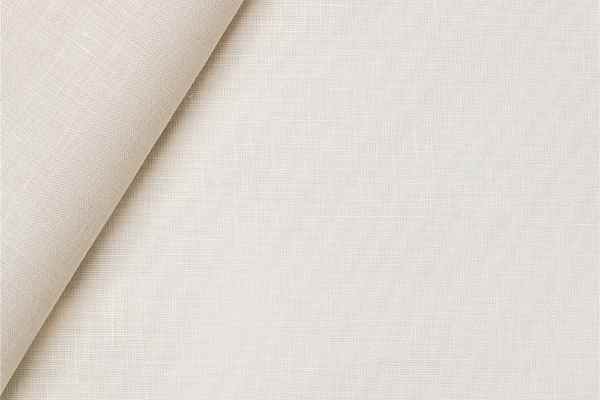
The height of 270 centimetres places it outside the scope of the garment and inside that of the large surfaces: decorative panels, backdrops, exposed headboards, technical drapes and furnishing finishes that work in tension without suffering direct friction. The ivory tone behaves like a warm neutral, capable of accompanying both natural palettes and sharp contrasts.
The OEKO-TEX® Standard 100 certification certifies the absence of substances harmful to human health, a relevant requirement for fabrics used in long-term living environments and accommodation facilities.
Lino Tela 2001 Dolce 270 cm bianco: linen canvas for complements and cushions
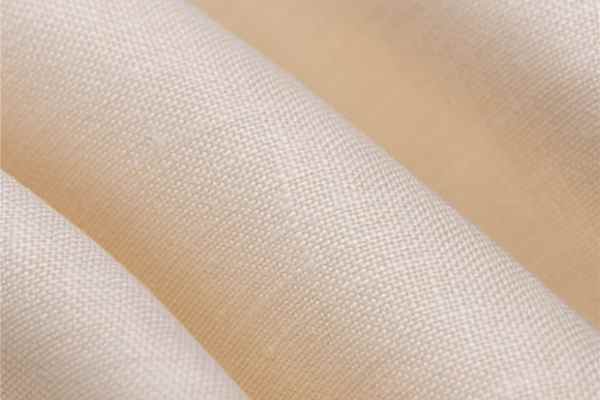
Lino Tela 2001 Dolce in the white variant it is a 100% linen canvas with a height of 270 centimeters and a weight of 200 grams per square meter. The canvas structure, compact and regular, restores the matte surface and dry hand characteristic of pure fiber, with the natural irregularity of the yarn that in contemporary furniture constitutes a sought-after trait.
Its weight places it in the context of cushions, decorative complements and panels, where the mechanical stress is limited. Since it is pure linen, the typical tendency towards wrinkling of the fiber must be considered: a character consistent with the natural aesthetics of the material, but to be evaluated in projects that require surfaces perfectly stretched over time.
The height of 270 centimeters allows you to work large panels in one piece and create seamless coordinates. The OEKO-TEX® Standard 100 certification certifies the absence of substances harmful to human health.
Wool and wool blends for upholstery
Wool guarantees upholstery performance that few fibers match: high resilience, good recovery from compression, and intrinsically favorable fire behavior, due to its high nitrogen and moisture content. It is the traditional fiber of high-end padding and the representative contract.
The cost and need for moth treatments limit their spread, but wool-polyester and wool-viscose blends represent a frequent compromise in contract collections.
Panno Lana Marzia: wool blend for playing surface covering
Panno Lana Marzia is a wool and polyamide blend fabric, composed of 80% wool and 20% polyamide, with a height of 180 centimeters and a basis weight of 389 grams per square meter. The compact structure returns a smooth and uniform surface, free of irregularities that could interfere with sliding.
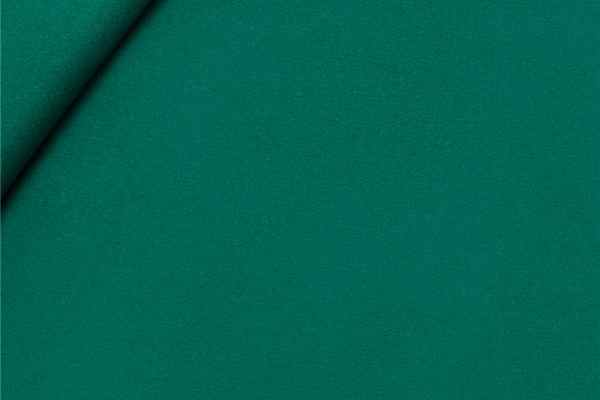
The intended use is the covering of game tops: poker tables, billiard surfaces and card game tops, where the dominant stress is continuous horizontal rubbing. The wool component ensures softness, warmth to the touch and the good recovery from compression typical of the fibre, while the polyamide adds mechanical strength and dimensional hold over time, counteracting the deformation of the stretched surface.
The height of 180 centimeters allows you to cover most standard tops in one piece, avoiding stitching in the playing area. The high basis weight ensures the consistency necessary to mask the irregularities of the underlying support.
Upholstery fabrics of man-made fibres
Synthetic fibers dominate stock upholstery today because they allow for high and consistent performance at controlled costs, with a tolerance for technical treatments that natural fibers do not possess.
Upholstery polyester
Polyester is the dominant fiber in contemporary upholstery. It resists abrasion, does not absorb water, dries quickly, maintains dimensional stability and accepts both bulk dyeing and technical finishes well.
Tessuto Spalmato Teseo 140 cm: polyester coupling for cladding and panels
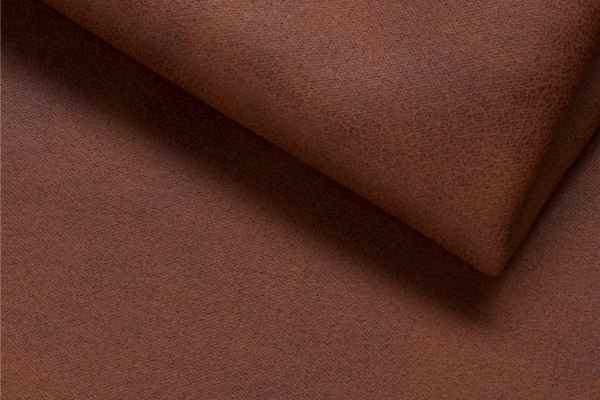
Tessuto Spalmato Teseo is a 100% polyester pair, constructed by combining a felted backing layer with a skin-effect coated surface. The weight of 350 grams per square meter places it in the range of structural coatings, suitable for continuous contact and the typical stress of seats.
The coupled structure determines the behavior of the material: the felted layer ensures consistency, insulating power and the ability to mask the irregularities of the support, while the joined coated surface ensures resistance to contact and quick cleaning with a damp cloth, without the need for specific treatments. The solid-color finish and lack of elasticity make it suitable for both fixed upholstery and tensioned panels, where dimensional stability is the determining requirement.
The height of 140 centimetres corresponds to the standard of seat coverings and makes it easier to place on small panels. The field of employment covers residential and contract seating, decorative and sound-absorbing panels, headboards and furnishing accessories. The OEKO-TEX® Standard 100 certification certifies the absence of substances harmful to human health, a requirement frequently required in specifications for public spaces and accommodation facilities.
Microfiber and suede fabrics for upholstery
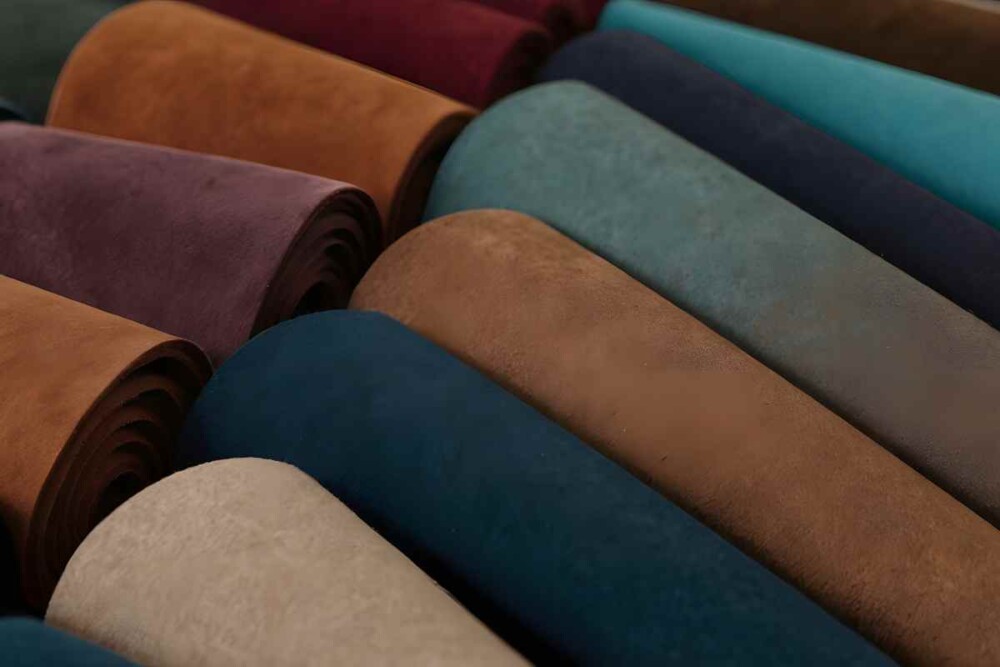
Microfibers are polyesters, sometimes combined with polyamide, of extremely low titer. The high fiber density per square centimeter produces compact, soft surfaces that are naturally resistant to liquid penetration.
Suede and hand-catching fabrics belong to this family and are one of the most effective responses to the needs of families with children and pets: the compact surface does not retain hair and does not have handles in which the claws can get caught.
Tessuto Scamosciato Texas 140 cm: suede-effect microfiber for furniture upholstery
Tessuto Scamosciato Texas is a 100% polyester microfiber with a suede finish, coupled with a magline backing. The surface gives a soft, velvety hand with a suede-like appearance, while the weight of 240 grams per square meter ensures the consistency required by furniture upholstery and complements.
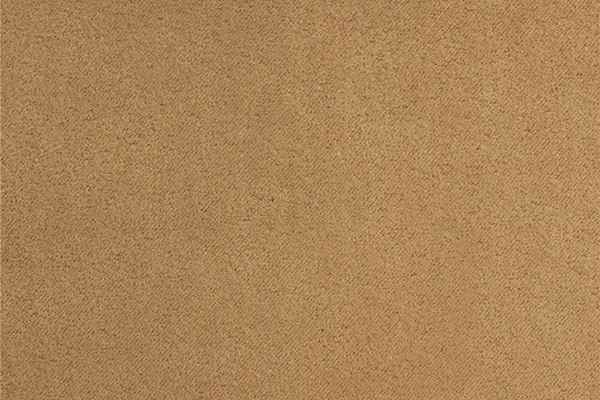
The microfiber structure determines the behavior of the material. The high density of fibers per square centimeter produces a compact surface, without loops in which the claws can get tangled and little inclined to retain hair: characteristics that make it one of the most suitable solutions for domestic environments with animals. The firmness also slows down the penetration of liquids, facilitating timely intervention on stains.
The magline backing provides extensibility to the material, a significant advantage in covering curved shapes and contoured seats, where a rigid fabric would require filming and darts. During the manufacturing phase, the tension must be calibrated, because the coupling gives way under traction and excessive tensioning can alter the geometry of the panel. The height of 140 centimeters corresponds to the standard of seat coverings. The OEKO-TEX® Standard 100 certification certifies the absence of substances harmful to human health.
Acrylic for upholstery
Acrylic is the reference fiber for upholstery exposed to light. Mass dyed, it guarantees exceptional light fastness and excellent weather resistance. It is the standard material of outdoor seating and outdoor furniture, where every other fiber gives way to the sun before mechanical wear.
Tessuto Outdoor 160 cm: mixed acrylic for outdoor upholstery
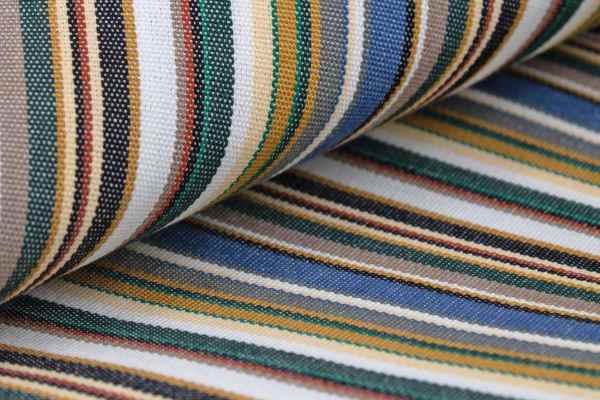
Tessuto Outdoor is an acrylic and polyester blend, composed of 80% acrylic fiber and 20% polyester, with a height of 160 centimeters and a basis weight of 220 grams per square meter. The striped design is available in different color combinations.
The choice of fibre meets the dominant requirement of outdoor upholstery. In furniture exposed to the elements, the critical stress is not abrasion but ultraviolet radiation: bulk-dyed acrylic maintains color saturation over time, because the pigment is incorporated into the fiber and not deposited on the surface. The polyester component adds dimensional stability and mechanical strength, while the water-repellent treatment prevents water absorption and limits mold formation during periods of prolonged exposure to moisture.
The field of application covers outdoor cushions, garden seating and upholstery, upholstery for terrace furnishings, outdoor seating and outdoor accommodation spaces. The OEKO-TEX® Standard 100 certification certifies the absence of substances harmful to human health.
Viscose and artificial fibres in upholstery
Viscose comes from regenerated cellulose and is characterized by shine and a fluid hand at low costs. In upholstery, it is not used pure, because it loses wet toughness and has little resistance to abrasion: instead, it appears as a decorative component in blends with cotton or polyester, typically in velvets and jacquards, where it guarantees the silky reflection of the surface.
Tessuto Velluto Jacquard Baia: polyester-operated velvet for upholstery
Tessuto Velluto Jacquard Baia is a velvet in 100% polyester worked with jacquard technique, which produces relief designs directly in weaving. The height is 145 centimeters and the weight is 269 grams per square meter.
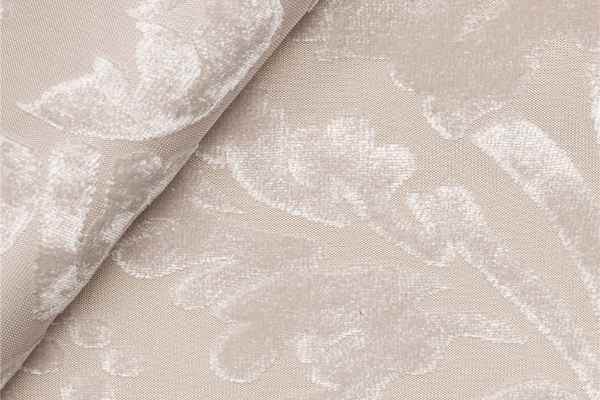
The armor determines the yield of the material. The pile surface provides chromatic depth and reflections that vary with the incidence of light, while the jacquard work generates the contrast between the raised areas and the background, creating a three-dimensional texture that accompanies the classic and representative-style furnishings. Polyester provides dimensional stability and easier handling than natural fiber velvets.
In processing, two constraints typical of this category must be respected. All panels require a cut in the same pile direction, because two pieces oriented in opposite directions appear different shades even coming from the same piece. The design also requires the pattern to be aligned between adjacent panels: both factors influence the calculation of the requirement, which must be increased compared to a solid-color fabric of the same height. The field of application covers the covering of sofas, armchairs and representative seats, the matching cushioning and the decorative panels.
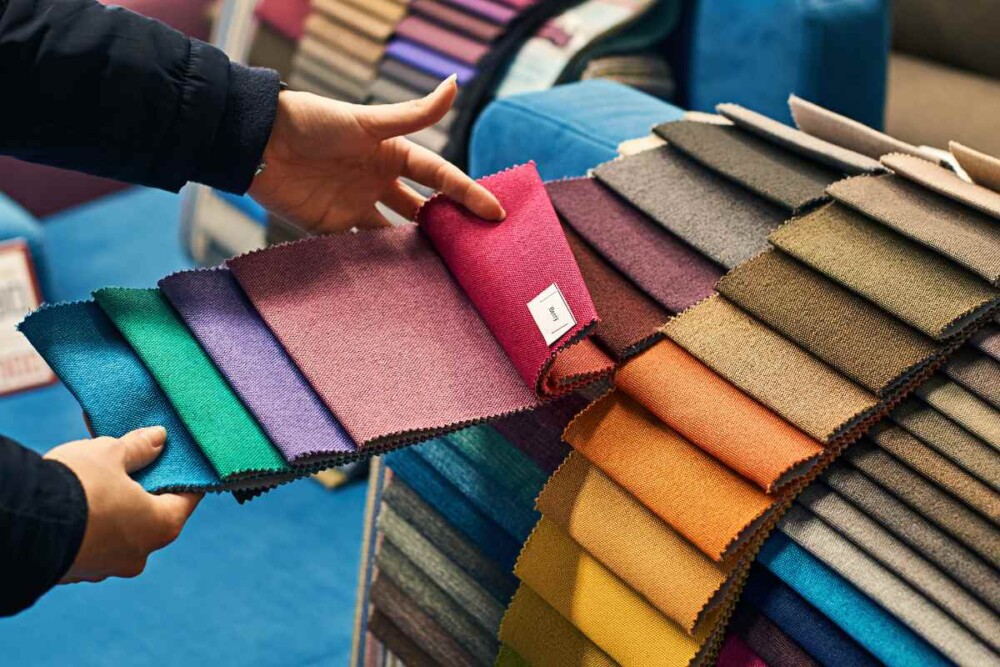
Upholstery fabrics by type of armor
The fibre determines the chemical and mechanical behaviour of the coating; the armour determines its appearance, hand and to a large extent its strength. Two fabrics with the same composition can behave radically differently depending on how they are constructed.
Panama canvas and compact structure fabrics
Panama canvas is a doubled canvas weave, in which two or more warp threads work together against two weft threads. The result is a regular checkerboard surface, full-bodied and stable, which represents one of the historical references of classical upholstery. It lends itself to the upholstery of seats, cushions, bedspreads and panels, and tolerates well the tension typical of fixed upholstery.
Tessuto Panama Robinson 280 cm: cotton in panama armor for complements and cushioning
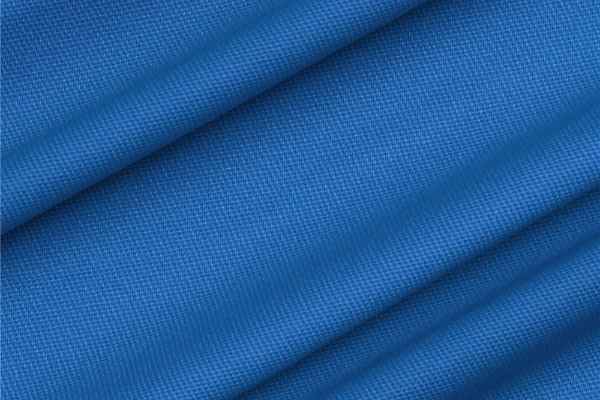
Tessuto Panama Robinson is a cotton in panama armor with a height of 280 centimeters and weight of 190 grams per square meter. The pure natural fiber composition ensures breathability and a dry hand, while the panama weave, with its doubled threads, produces the regular checkerboard surface that characterizes this family of fabrics.
Its weight places it in the field of cushions, decorative complements and lightweight coverings, where aesthetic rendering and workability prevail over abrasion resistance. Pure cotton also allows for simple washing management, an important aspect in removable complements.
The height of 280 centimeters is the main operational advantage: it allows for the creation of one-piece coordinates and wide panels, reducing sizzle and limiting stitching compared to standard 140-centimeter heights. The OEKO-TEX® Standard 100 certification certifies the absence of substances harmful to human health.
Upholstery chenille
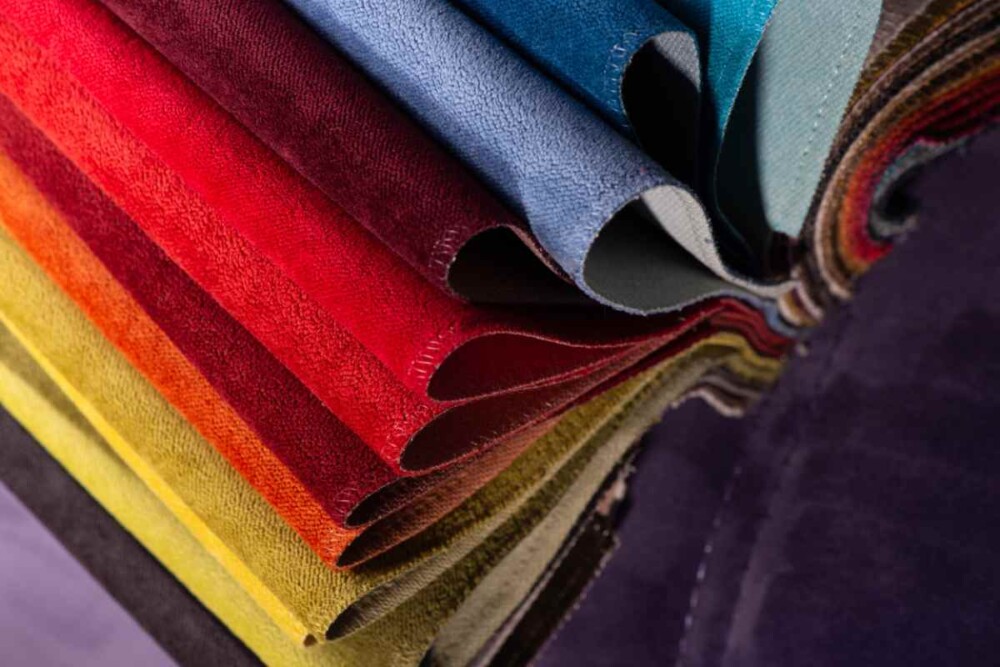
Chenille is obtained by inserting a hairy yarn into the weft that returns a velvety surface that is soft to the touch. It guarantees excellent coverage, a warm appearance and good abrasion resistance, which is why it is among the most popular fabrics for upholstering sofas and armchairs. The tendency towards hair release in less structured qualities should be evaluated.
Tessuto Ciniglia Connor 140 cm: polyester chenille for seat covering
Tessuto Ciniglia Connor is a 100% polyester chenille with a height of 140 centimetres and a weight of 340 grams per square metre. The surface has a slight structured rifling that accompanies the typical softness of the armor, giving a material and defined appearance.
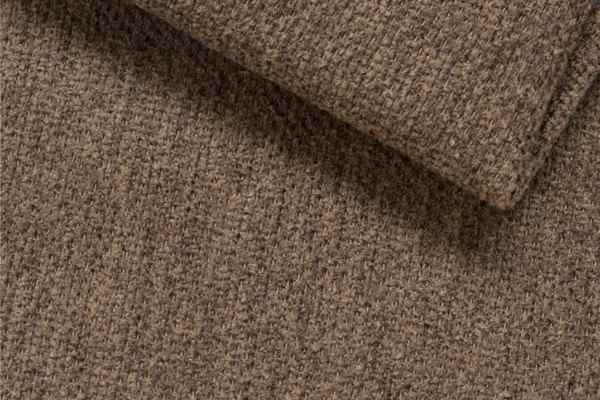
Chenille owes its characteristics to the weft yarn, covered with radially arranged fibres that generate a velvety surface with full coverage. The result is a fabric that is soft to the touch and warm to the eye, with a weight that places it squarely in the range of structural seat coverings. The polyester composition ensures wear resistance, color stability and simple routine maintenance, without the care requirements required by natural fiber chenille.
The solid color finish and lack of elasticity make it suitable for both fixed upholstery and removable upholstery. The field of employment covers sofas, armchairs, residential and commercial seating, matching cushions and furnishing accessories. The OEKO-TEX® Standard 100 certification certifies the absence of substances harmful to human health.
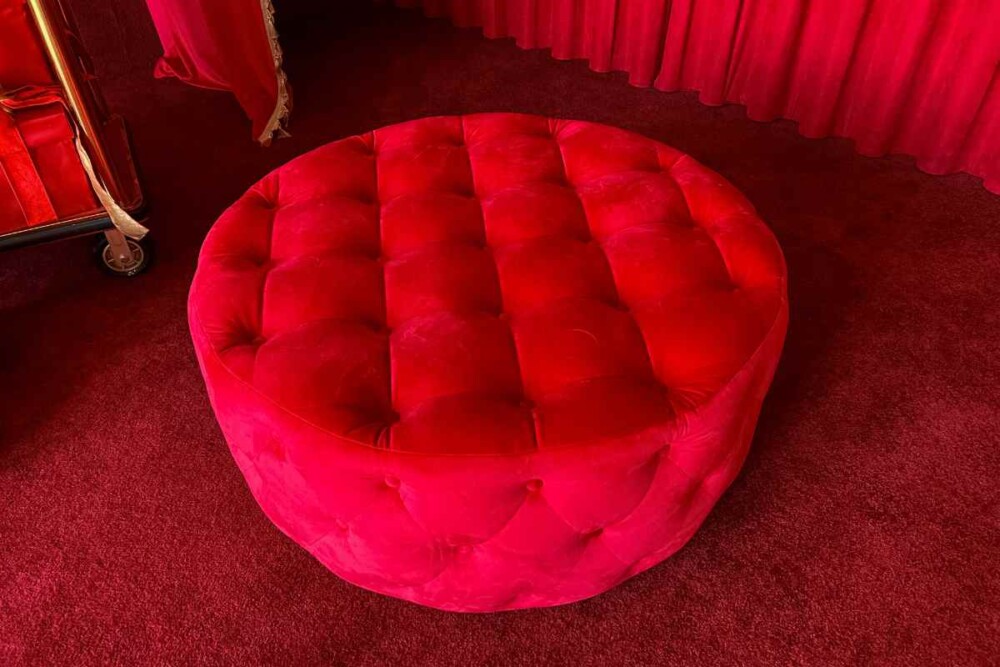
Velvet for upholstery
Velvet is a pile fabric, obtained with an additional warp cut after weaving. It returns chromatic depth and reflections that vary according to the incidence of light. In polyester versions it combines the premium effect with practical management, while natural fibre velvets require more attention. When cutting, the direction of the pile must always be respected, under penalty of obvious differences in tone between the panels.
Tessuto Velluto Arredamento 140 cm: polyester solid velvet for upholstery
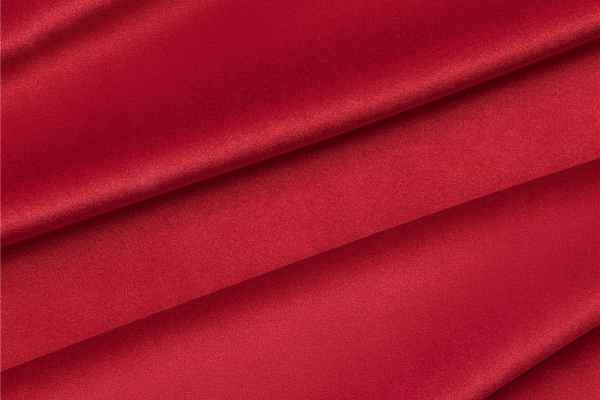
Tessuto Velluto Arredamento is a 100% polyester velvet in solid colors, with a height of 140 centimeters and a weight of 300 grams per square meter. The compact pile surface returns the characteristic chromatic depth of the armor, with reflections that vary as a function of the incidence of light and the observation angle.
The solid color enhances the optical behavior of the pile without the interference of a design, which is why this construction remains the reference for the covering of reception seats and for environments that require chromatically solid surfaces. Polyester provides color stability, wear resistance, and simple routine maintenance compared to natural fiber velvets, which require specific care.
During the manufacturing process, the pile pattern on all panels must be respected: two pieces cut in opposite directions appear to have different shades even when coming from the same piece, and the error cannot be corrected once the coating has been fitted. The field of employment covers sofas, armchairs, upholstered seating, headboards and matching cushions.
Jacquards and damasks for upholstery
Jacquard processing allows you to obtain complex designs directly in weaving, with relief effects and contrasts between opaque and shiny areas. It is the armor of classical and representative upholstery. The structure is generally compact and strong, but the extended drawing ratio significantly affects the calculation of requirements.
Tessuto Yvonne Jacquard 280 cm: geometric jacquard in cotton blend for furniture
Tessuto Yvonne Jacquard is a blend composed of 55% polyester and 45% cotton, worked with jacquard technique with geometric designs. The height is 280 centimeters and the weight is 215 grams per square meter.
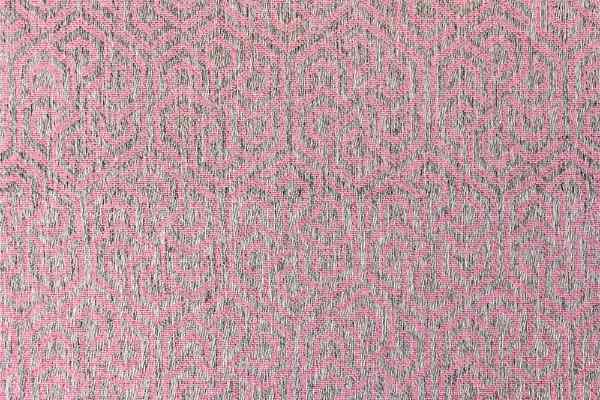
Jacquard work generates the pattern directly in weaving, not in printing: the design is therefore structural, with relief effects and contrasts between opaque and reflective areas that vary with lighting. The geometry of the decoration accompanies both contemporary and classical settings, depending on the chosen chromatic juxtaposition.
The fiber blend determines the material’s behavior: cotton ensures natural hand and breathability, polyester adds dimensional stability and strength, reducing the tendency of the plant component to crumple. The height of 280 centimeters allows for the creation of panels and coordinates in a single piece, a significant advantage on an processed fabric where each seam requires the alignment of the pattern.
When calculating the requirement, the drawing ratio must be considered, which requires aligning the pattern between adjacent panels and results in an increase compared to a solid-color fabric of equal height. The field of application covers cushions, decorative complements, panels and furnishing coverings. The OEKO-TEX® Standard 100 certification certifies the absence of substances harmful to human health.
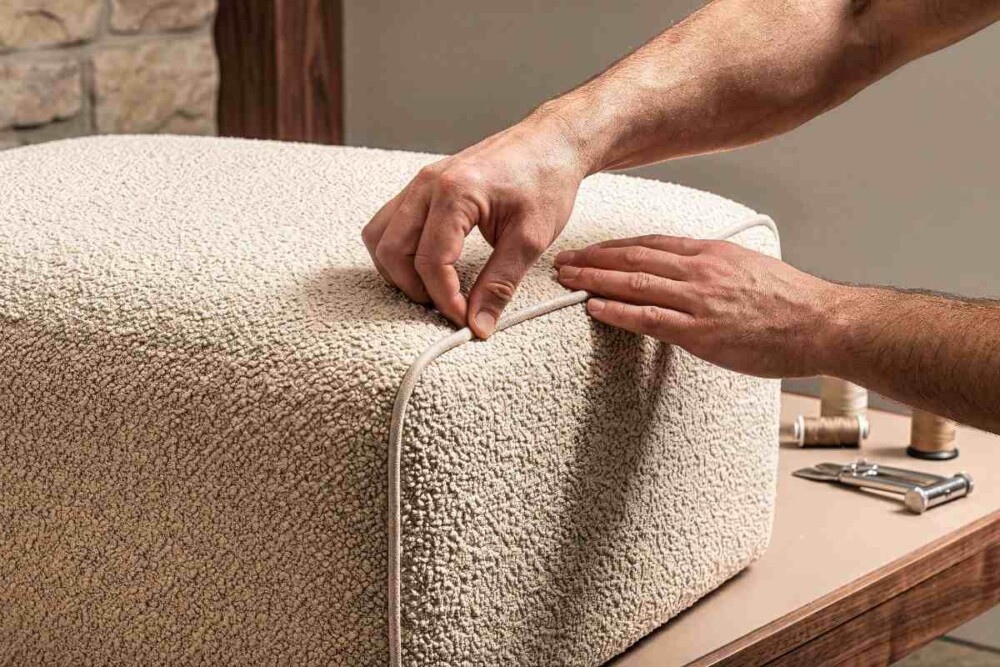
Boucle and wool-effect fabrics for upholstery
Bouclé fabric is characterized by a looped yarn that produces an irregular, textured surface, highly sought after in contemporary furniture. It provides a soft, enveloping appearance, but requires careful evaluation when pets are present, as the rings on the surface can easily get caught.
Tessuto Bouclé Emily 140 cm: polyester boucle for seat covering
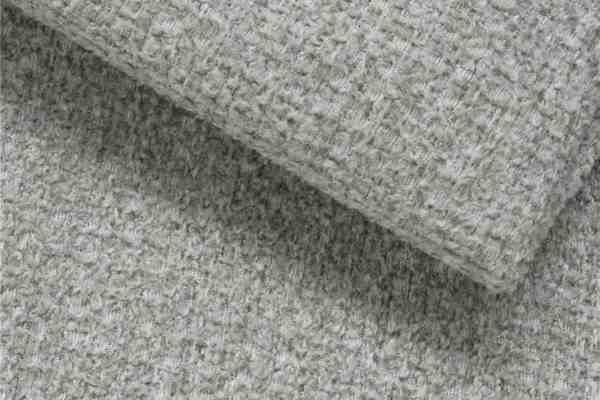
Tessuto Bouclé Emily is a 100% polyester boucle with a height of 140 centimetres and a weight of 340 grams per square metre. The surface is full-bodied and slightly wavy, with the irregular material effect that characterizes this workmanship.
Boucle owes its appearance to the ring yarn used in weaving, which generates a raised surface of variable depth. The result is a soft, enveloping fabric, highly sought after in contemporary furniture for its ability to visually heat rooms with essential lines. Its weight places it in the range of structural coverings, suitable for covering sofas, armchairs and seats subject to daily use.
The polyester composition provides dimensional stability, wear resistance and simple routine maintenance. As with all hedgehog surfaces, the intended use in pet environments must be evaluated: raised rings can become entangled upon contact with claws, a condition that in that context suggests orienting oneself on compact surfaces.
The solid color finish and lack of elasticity make it suitable for both fixed upholstery and removable upholstery. The OEKO-TEX® Standard 100 certification certifies the absence of substances harmful to human health.
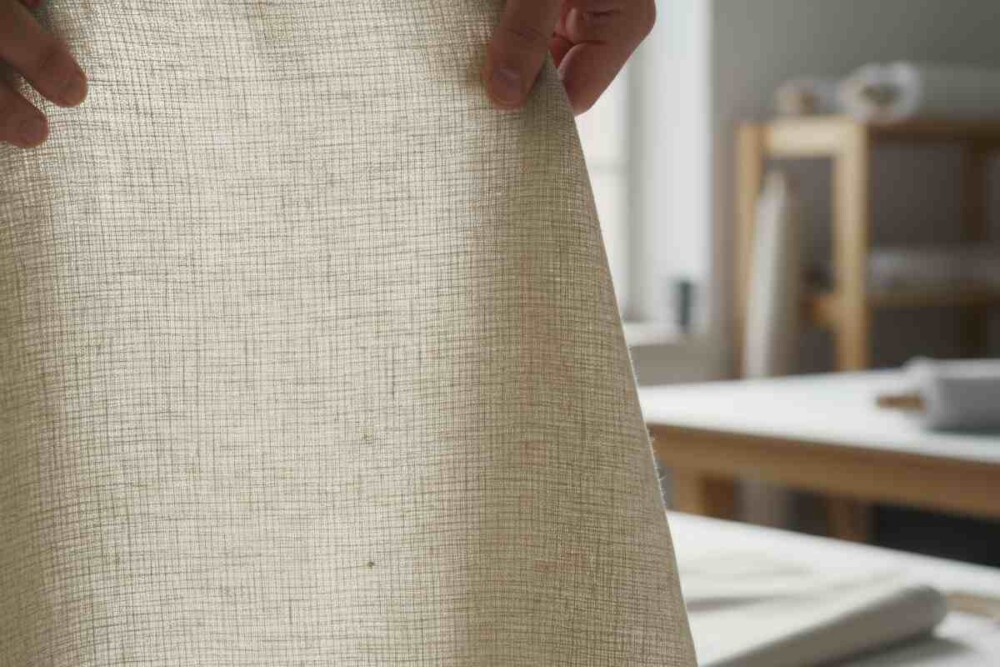
Hemp and hemp-effect fabrics for upholstery
Canapone is a coarse woven fabric with a dense weft and warp, whose name derives from its similarity to hemp. It is characterized by high resistance and rustic appearance, and is used in both classic and contemporary furnishings, including applications exposed to the elements.
Tessuto Canapone Opis 280 cm: hemp effect cotton blend for furniture
Tessuto Canapone Opis is a blend composed of 67% polyester and 33% cotton, with a height of 280 centimeters and weight of 225 grams per square meter. The raised weave gives back the material and slightly irregular appearance that characterizes this family of fabrics.
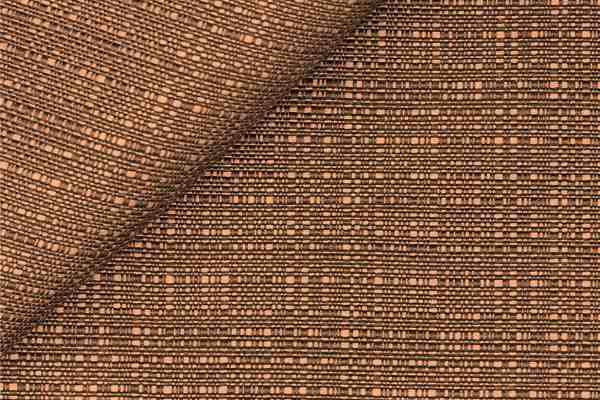
The hemp owes its name to its resemblance to hemp: the thick weave, with a dense weft and warp, produces a full-bodied surface with a rustic character, which in contemporary furniture is sought after for its ability to introduce texture into clean-lined spaces. The fiber blend balances the two contributions, with cotton providing natural hand and breathability and polyester adding dimensional stability and wear resistance.
The height of 280 centimeters allows for the creation of large, coordinated panels in one piece, reducing sizzle compared to standard heights. The field of use covers furniture upholstery, cushions and accessories, with a large color chart that allows the material to be adapted to different color registers.
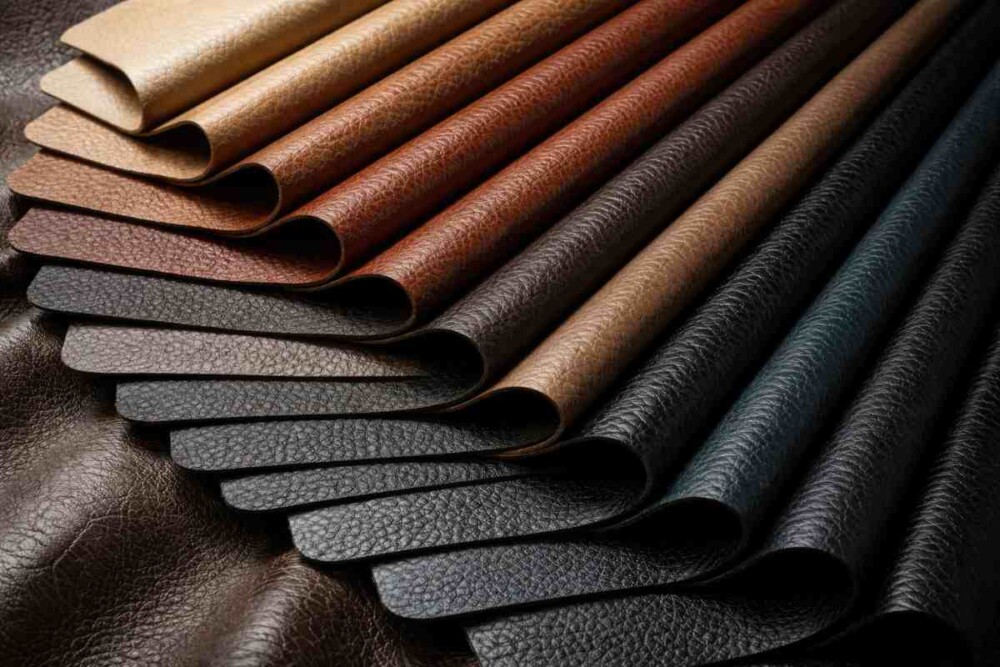
Ecopleather and synthetic upholstery coverings
Alongside the actual fabrics, upholstery uses continuous surface coatings that reproduce the appearance of the skin. They are not woven in the strict sense, because they lack a weft and warp structure on the surface, but they are fully included among the covering materials.
Polyurethane eco-leather for upholstery
Polyurethane eco-leather consists of a textile support coated with a polymer layer. It is characterized by softness, good relative breathability and ease of maintenance: in most cases, ordinary cleaning is performed with a damp cloth. It is the most popular solution in the upholstery of modern seats, stools and commercial furnishings.
Tessuto Lepoc 140 cm: polyurethane eco-leather for seat covering
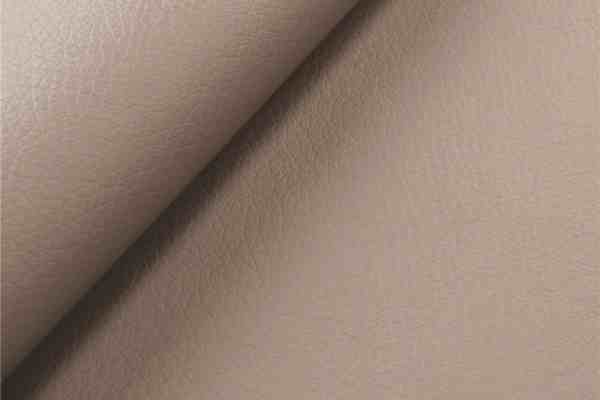
Tessuto Lepoc is an eco-leather composed of 60% polyurethane, 30% polyester and 10% cotton, with a height of 140 centimeters and a basis weight of 340 grams per square meter. The smooth finish reproduces the appearance of the leather without the use of materials of animal origin.
The structure is typical of eco-leather: a textile support, here made of a polyester and cotton blend, coupled with a polyurethane polymer layer that forms the exposed surface. Polyurethane ensures superior softness compared to polyvinyl chloride coatings and routine maintenance that in most cases is exhausted with the passage of a damp cloth, without the need for specific products.
The weight places the material in the band of structural coatings, suitable for continuous contact and stress of the seats. The field of application covers sofas, armchairs, residential and commercial seating, cushions and accessories, with a height of 140 centimetres which corresponds to the standard of upholstery.
PVC upholstery coverings
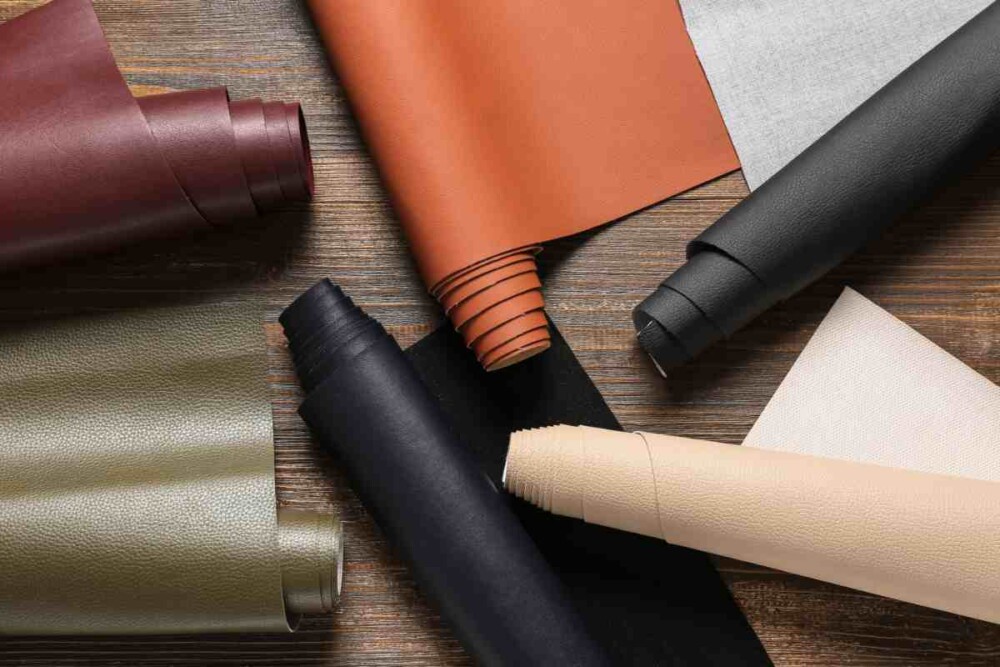
Polyvinyl chloride coatings provide total waterproofness and high mechanical strength, with generally lower costs than polyurethane. They are indicated for high-traffic environments and for applications where cleaning must be quick and frequent, from catering to healthcare facilities. The hand feels less soft and breathability is zero.
Tessuto Melissa 140 cm: leather-effect PVC coating for seating
Tessuto Melissa is a 100% polyvinyl chloride skin-effect coating, with a height of 140 centimeters and a basis weight of 465 grams per square meter. This is the material with the highest consistency among synthetic coatings, a characteristic that determines its field of use.
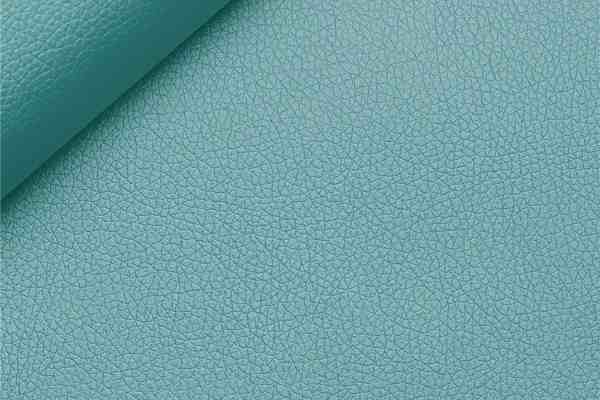
Polyvinyl chloride provides total waterproofness and high mechanical strength: the continuous surface does not absorb liquids and withstands frequent cleaning with cleaning products, without degrading. This is why this family of coatings remains the reference in high-traffic environments, where rapid and repeated sanitization is part of ordinary management.
The field of application covers the upholstery of sofas, armchairs and seats, with particular relevance for catering, healthcare facilities and commercial spaces. The height of 140 centimeters corresponds to the standard of upholstery.
Technical upholstery fabrics: stain-resistant, outdoor and fireproof
Contemporary upholstery has been enriched with a category of materials designed to meet a specific performance requirement. Technical treatment does not replace the basic quality of the fabric, but extends its field of use.
Stain-resistant and water-repellent upholstery fabrics
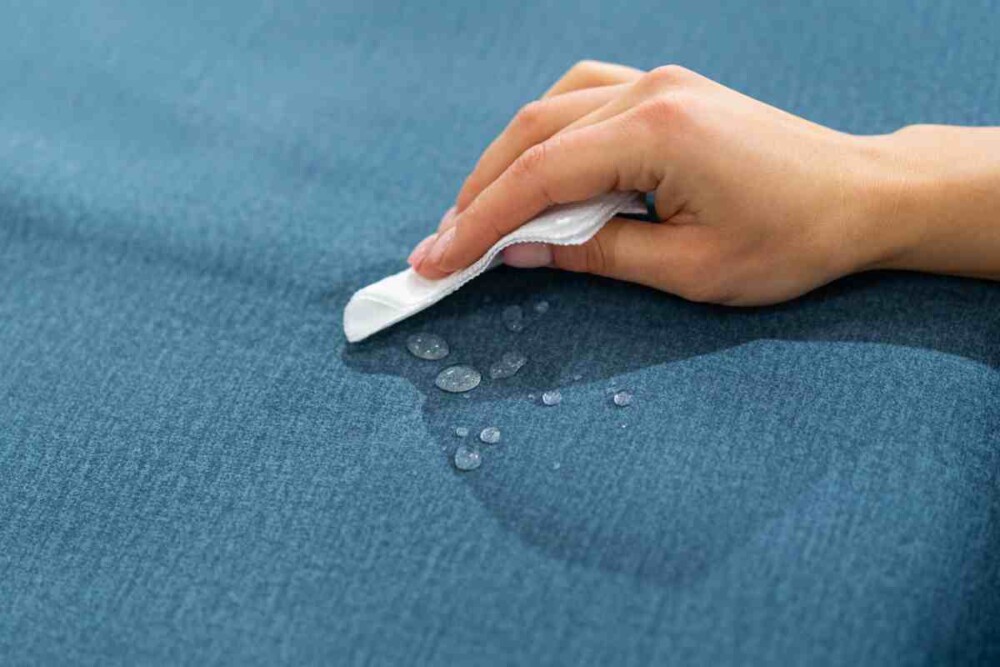
Water-repellent and oil-repellent finishes reduce surface tension, preventing liquids from immediately penetrating the fiber and allowing time to intervene. They should be distinguished from fabrics with an intrinsically compact structure, such as microfibers, where the effect derives from construction and not from treatment. Finishes fade with repeated washing, while structural compactness remains.
Outdoor upholstery fabrics
Outdoor upholstery poses a different problem than domestic upholstery: the dominant stress is not abrasion but ultraviolet radiation, accompanied by humidity and temperature changes. Bulk-dyed acrylic fibers and high-solidity polyesters represent the references of the category, together with the supports treated against mold formation.
Intrinsically fireproof upholstery fabrics
In the contract, the difference between a treated fabric and an intrinsically fireproof fabric is substantial. In the first case, the performance derives from a substance applied during finishing, destined to degrade with washing; in the second, the characteristic lies in the chemical structure of the polymer and persists for the entire life of the coating. For environments subject to periodic certification, the second solution is almost always more cost-effective over the life cycle.
How to choose upholstery fabric based on its intended use
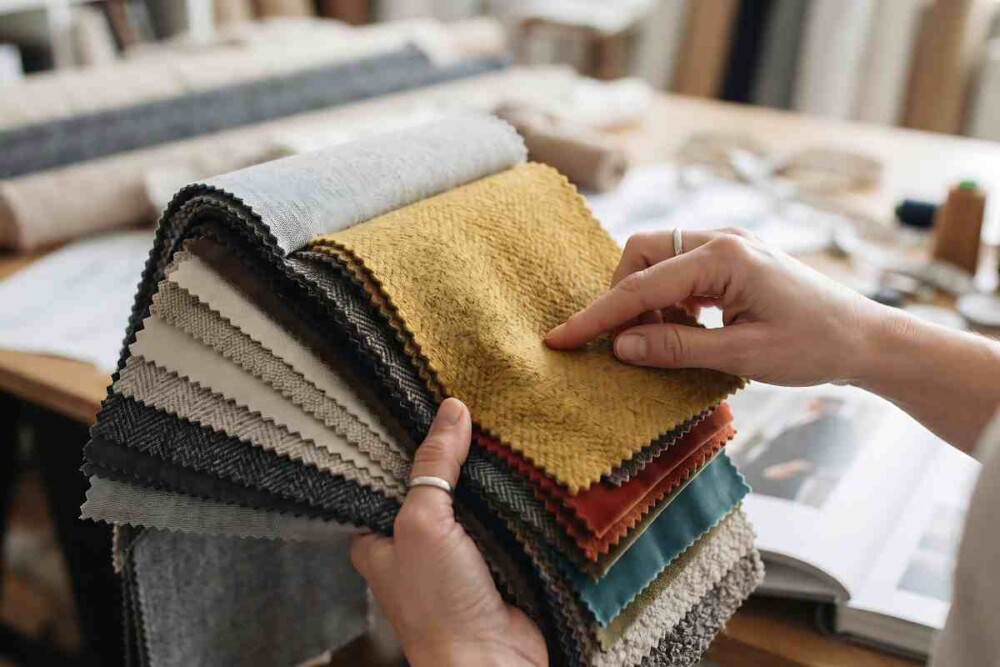
The most reliable method of guiding the choice is to start from the intended use and go back to the minimum requirements, rather than starting from the fabric and checking a posteriori whether it is adequate. The table summarizes the operational references.
| Intended use | Minimum Martindale | Additional requirements |
| Cushions and decorative complements | Not decisive | Aesthetic coordination, washability |
| Padded headboards and panels | 10.000 | Dimensional stability, light fastness |
| Chamber chairs and occasional seating | 15.000 | Good recovery from compression |
| Family sofas and dining chairs | 20.000 – 25.000 | Contained seam slip, washability |
| Offices and waiting rooms | 30.000 | Light fastness 5-6, pilling resistance 4-5 |
| Hotels, restaurants, public spaces | 40,000 and over | Class 1 IM on assembly, EN 1021-1 and 1021-2 |
| Outdoor furniture | 25.000 – 40.000 | Mass dyed fiber, light fastness 7-8, anti-mold |
Residential Upholstery: Priorities and Trade-offs
In the home, the choice is based on the balance between aesthetics, tactile comfort, and ease of management. Martindale doesn’t have to be maximized at all costs: exceeding usage requirements by a large margin often means forgoing softness without any real benefit. The factor that deserves greater attention is the presence of children or animals, which shifts the priority to the washability and compactness of the surface.
Contract Upholstery: Regulatory Obligations and Life Cycle
In the contract the logic reverses. Technical performance trumps taste, and documentation becomes an integral part of the supply: reaction-to-fire certifications, abrasion test reports, and maintenance sheets must be acquired before ordering, not after processing has begun.
Outdoor Upholstery: Light Before Wear
For furnishings exposed to the elements, the guiding criterion is color fastness to light, followed by resistance to humidity. A fabric with excellent mechanical strength but poor ultraviolet resistance loses tone within a season, making every other parameter irrelevant.
How much fabric is needed for upholstery: calculating the yardage
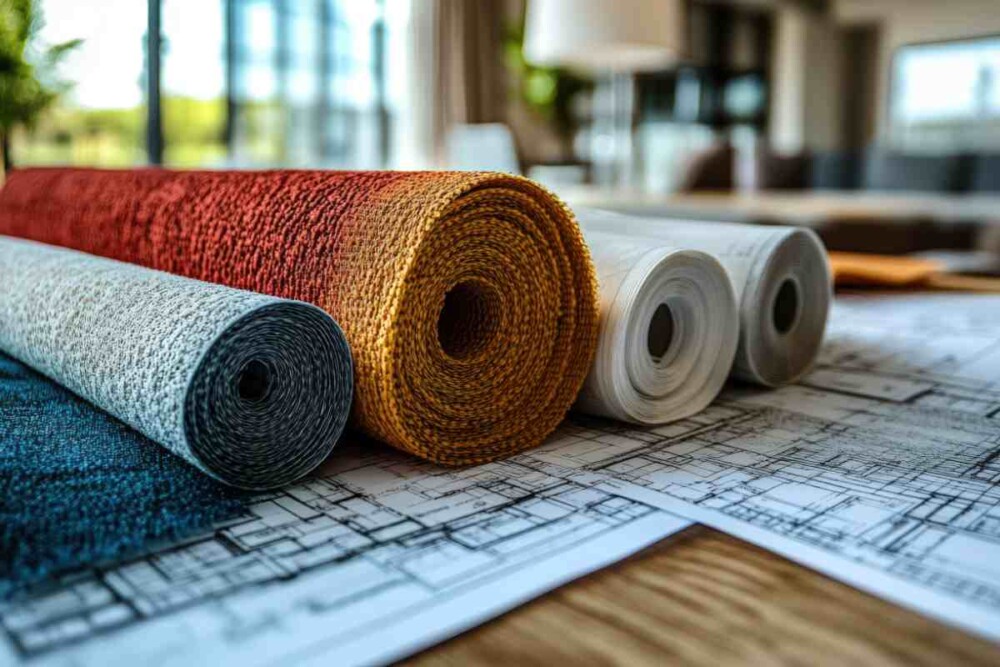
The requirement depends on the size of the furniture, the height of the piece, the drawing ratio and the presence of the pile. The values below are indicative and refer to a height of 140 centimeters with solid-colored fabric: they must always be verified on the actual model and on the upholsterer’s relief.
| Element to be coated | Indicative Meter (height 140 cm) |
| Chair with padded seat | 0.5 to 1 meter |
| Chair with padded seat and backrest | From 1.5 to 2.5 meters |
| Armchair | 3 to 5 meters |
| Two-seater sofa | From 8 to 11 meters |
| Three-seater sofa | From 12 to 16 meters |
| Marriage headboard | 3 to 4 meters |
| Cushion 45 x 45 centimeters | About 0.5 meters |
Drawing and incidence ratio on sizzle
The drawing ratio indicates the distance after which the pattern repeats, in height and width. In jacquards and large-format prints it can exceed fifty centimetres and in some cases reaches one metre. Each panel must be cut by aligning the pattern with adjacent ones, which results in a gap proportional to the ratio: on a sixty-centimeter design, the increase in requirements can exceed twenty percent compared to the solid color.
Hair direction and cutting direction
In velvets, suede and all surface oriented fabrics the pile reflects light differently depending on the direction. All panels should be cut in the same direction, without exception: two pieces cut in opposite directions appear of different shades even if they come from the same piece. The practical consequence is the impossibility of optimizing the positioning by rotating the panels, with a further increase in requirements.
Upholstery fabric maintenance
The actual life of a coating depends on maintenance as much as on its intrinsic characteristics. The technical data sheets include international codes that indicate the permitted cleaning method: knowing them prevents irreversible damage during the first operation.
| Code | Admitted cleaning method |
| W | Cleaning with water-based products |
| S | Cleaning with solvents, excluding water-based products |
| WS | Both water-based products and solvents allowed |
| X | Suction and brushing only, no liquid agents |
Good upholstery maintenance practices
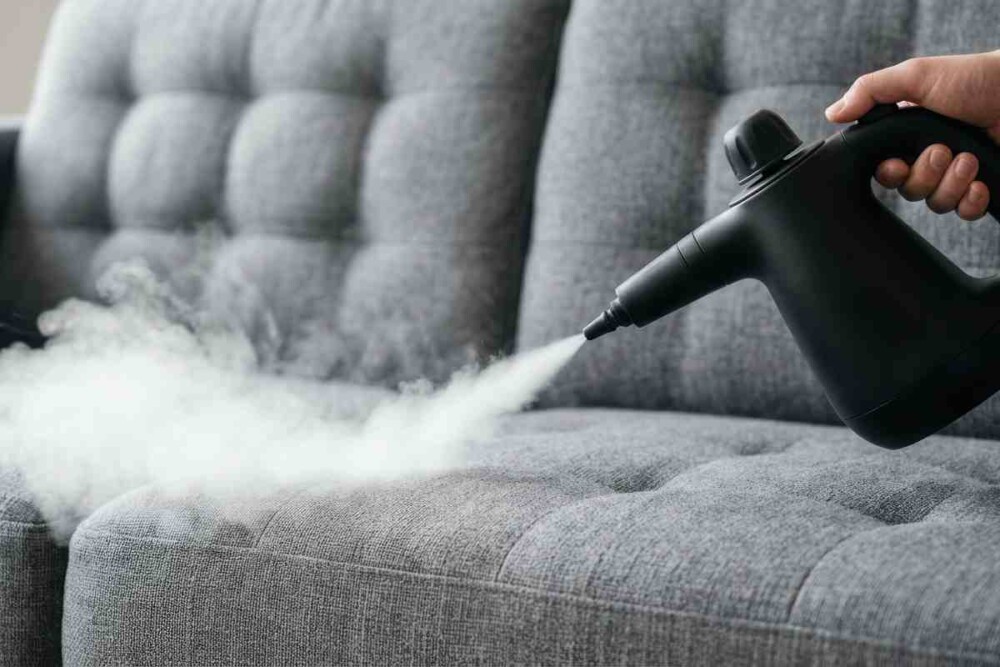
Some simple habits significantly extend the life of the coating. Regular suction removes particulate matter that acts as an abrasive between the fibers. The stains should be patted and never rubbed, because the rubbing pushes them deep and alters the surface. The removable cushions should be rotated periodically to distribute wear. Direct and prolonged exposure to sunlight should be limited, especially in intense tones. Before any treatment, it is always advisable to perform a test on a hidden area.
Most frequent mistakes when choosing upholstery fabrics
Daily experience with upholsterers and ateliers highlights a limited number of recurring errors, which recur with considerable consistency and can be prevented with a preliminary check.
- Only rate the Martindale. A high value does not compensate for poor color fastness or poor sewing behavior.
- Employ a clothing fabric in upholstery. Clothing weights and armor cannot withstand the constant stress of the session.
- Ignore the drawing report in the quote. It is the most common cause of insufficient footage and the consequent use of a different piece of the game.
- Order at different times without checking the match. Different dye baths generate chromatic waste visible on the side-by-side panels.
- Give the assembly as a certificate starting from the fabric. In the contract, Class 1 IM concerns the combination of covering and padding, not just the covering.
- Neglect pre-washing in removable liners. Even minimal shrinkage after packaging renders the lining unusable.
Wholesale upholstery fabrics: the Cimmino experience since 1750
Manifattura Foderami Cimmino has been selecting and distributing fabrics for professional home decor since 1750. The company supports upholsterers, ateliers, upholstery manufacturers, and HO.RE.CA operators in choosing the right material for each project, with sampling, yardage sales, and wholesale fabric supplies available throughout Italy.
Choosing an upholstery fabric requires a comparison of usage requirements, regulatory constraints, and aesthetic performance: a comparison that should be addressed before ordering and not once the work has begun. Our technical office is available for the evaluation of data sheets and for the verification of compliance on contract projects.
FAQ – Frequently Asked Questions About Upholstery Fabrics
High-density polyester fabrics, microfibers, and textured chenilles achieve the highest abrasion resistance values, frequently exceeding forty thousand Martindale cycles. However, the overall strength also depends on the solidity of the colour and the sewing behaviour, which must be checked together with the abrasion figure.
For a sofa for regular family use the reference is between twenty thousand and twenty-five thousand Martindale cycles. For intensive use or in a contract environment the minimum value rises to forty thousand cycles.
Upholstery fabric works under load and friction, so it requires high weights, compact reinforcement, and certified abrasion resistance. Curtain fabric works suspended vertically and instead favors falling, lightness and light fastness.
It is not advisable. Clothing fabrics have weights and structures designed for body draping and not for the continuous stress of a seat, resulting in premature wear and sagging of the seams.
For a three-seater sofa, approximately twelve to sixteen meters of fabric are needed, 140 centimeters high and in solid color. With patterned or pile fabrics the requirement increases in proportion to the pattern ratio and the cutting direction constraint.
Microfibers and suede fabrics with a compact surface are the most suitable choice, because they do not have loops in which the claws can get caught and retain hair less. Bouclés and curly fabrics should be avoided.
In the domestic sphere, there is no general obligation. In places subject to fire brigade control, such as hotels, restaurants and facilities open to the public, the fire reaction classification according to the Ministerial Decree of 26 June 1984 is required, with Class 1 IM being assigned to the cladding and padding assembly.
The permitted method is indicated by the code reported in the technical data sheet. The acronym W allows water-based products, the S imposes solvents, the WS allows both, the X limits the intervention to suction and brushing. Stains should always be patted and never rubbed.
Natural fibers provide superior hand and breathability, synthetics prevail over strength, dimensional stability and ease of maintenance. Blends are the most effective compromise in most projects, because they combine the appearance of the former with the performance of the latter.
