


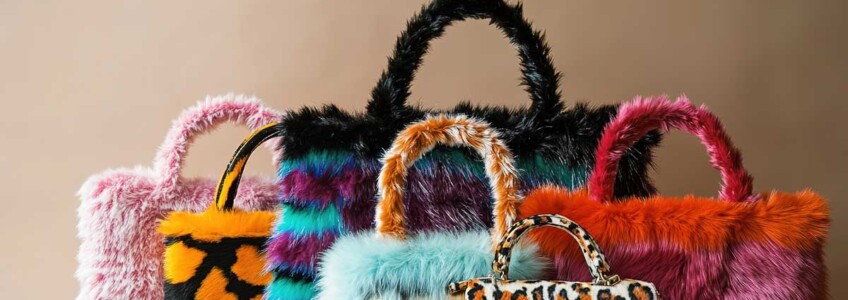
Making a DIY eco-fur bag is an ideal project for those who love creative sewing and want to create a soft, original accessory perfect for the cold season. Eco-fur is a fabric that allows you to obtain a visually rich, voluminous result with an ever-present aesthetic. To make a durable and finished bag, however, you need to know some specific techniques. In this complete guide of Manifattura Loderami Cimmino there are all the practical details useful for both beginners and those already familiar with sewing machine and design of accessories to make an eco-fur bag.
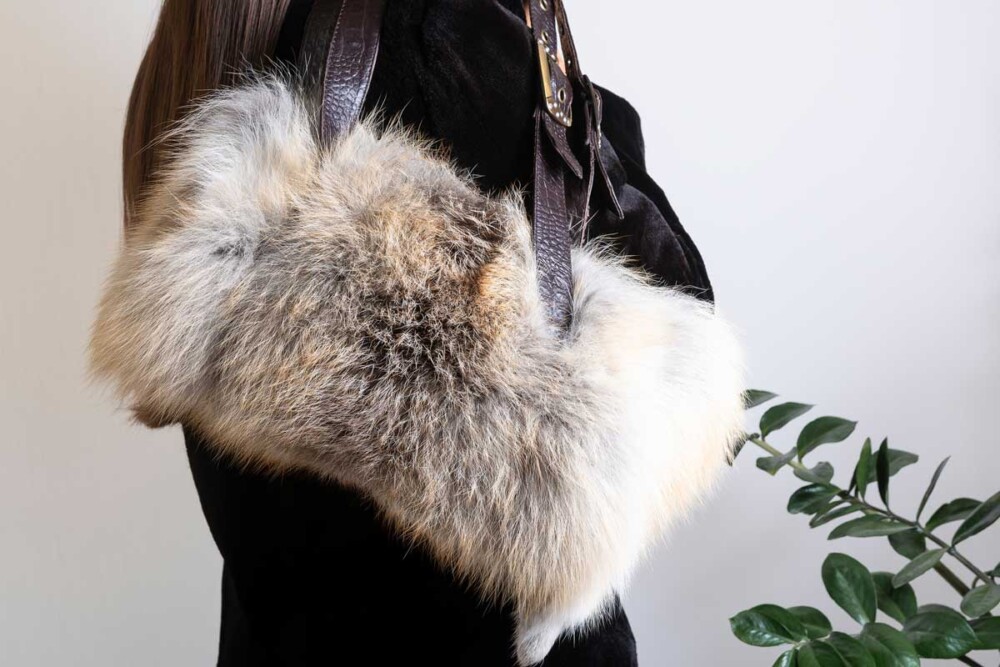
Why choose eco-fur for a DIY bag
Eco-fur is a material capable of transforming a simple bag into an attractive accessory full of personality. Its ability to add volume and softness makes it perfect for winter and for those
Advantages of eco-fur over other bag fabrics
Eco-fur offers advantages that make it ideal for creating handmade bags. First, its soft, thick fibers help hide any imperfections in the seams, making the end result more even than smooth fabrics like cotton or canvas. It is also available in many variations of color, hair length, density and texture: this allows you to create minimalist, fashion, vintage or glamorous bags simply by changing the type of faux fur. Compared to natural fur, it is lighter and easier to handle when cutting and sewing, as well as being an ethical and sustainable alternative.
Why eco-fur is ideal for winter bags and Cozy accessories
The texture of faux fur immediately recalls the idea of warmth, softness and comfort, three central elements in winter style. An eco-fur bag
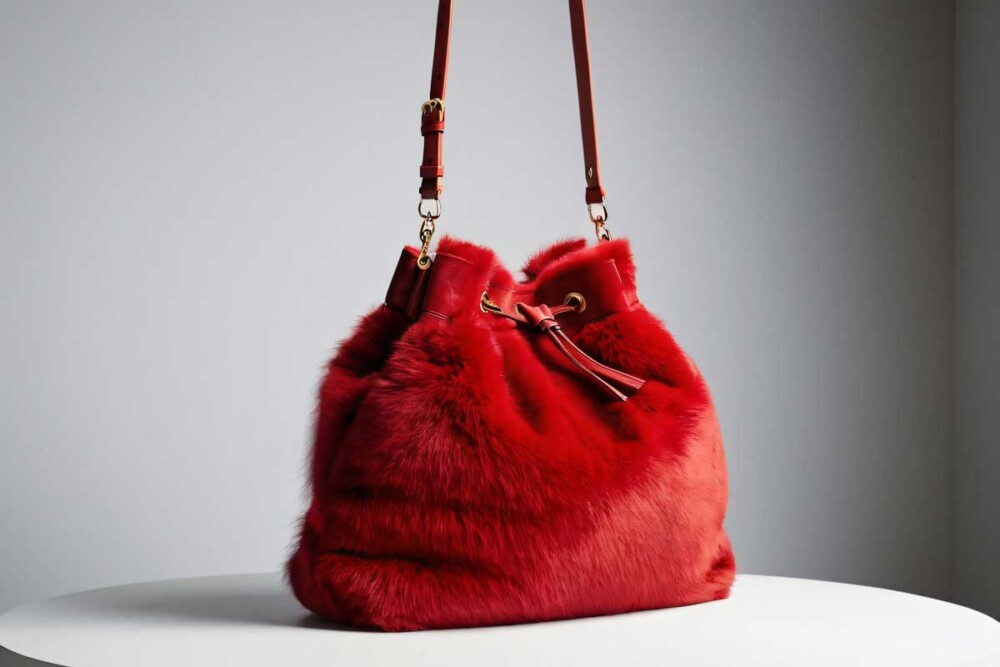
Essential materials for sewing an eco-fur bag
The final yield of the bag depends on the quality of the materials chosen and their combination. It is essential to spend time selecting the most suitable fur, lining, and reinforcements, because each of these elements affects the structure, softness, and durability of the accessory.
How to choose the right eco-fur: short, medium, or long hair
Hair length and density influence both aesthetics and ease of processing:
- Short hair → perfect for those just starting out. It stays tidy, requires less maintenance, cuts easily, and doesn’t tend to get stuck in the seams. Ideal for clutch and mini bag.
- Medium hair → the most versatile solution. The volume is balanced, the seams are easily concealed and the result has a more “fashion” look without being difficult to finish.
- Long fur → scenic, very soft and perfect for bulky shoppers. However, it requires care: the pile moves during cutting, can get trapped in the seams and must be combed after each stage for a uniform appearance.
It is advisable to check that the textile base (backing) is strong and not too soft, to prevent the bag from losing shape.
The best fabrics to make an eco-fur bag
Some materials lend themselves better than others to the creation of an eco-fur bag because they combine texture, ease of sewing and a rich visual effect, ideal for accessories that want to stand out. Here are which ones to choose from Cimmino’s catalog.
Pelo 684 2 Colori
Pelo 684 2 Colori is a short-haired, soft and compact eco-fur fabric, ideal for creative projects that require volume and a warm visual appearance. It is available in 1 meter cuts, with a width of 140 cm, an 80% acrylic and 20% polyester composition and a weight of 214 g/m². These features make it a handy and easy-to-work material, with a uniform, soft surface that holds its shape well while remaining lightweight.
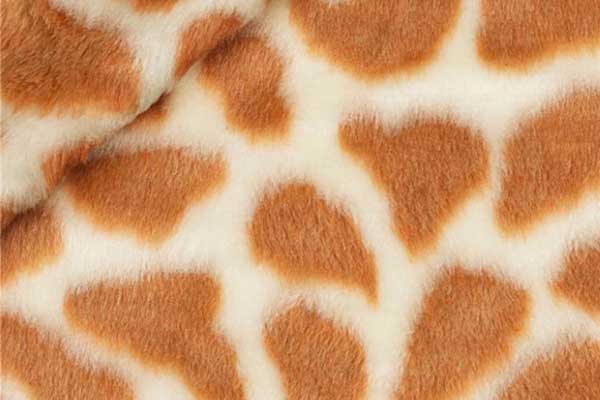
To make a DIY eco-fur bag, this fabric represents a practical and aesthetically striking solution. The uniform furry effect and full visual rendering allow you to obtain modern and distinctive bags, with a lightweight, versatile material and immediately ready to use.
Pelo 686 2 Colori My
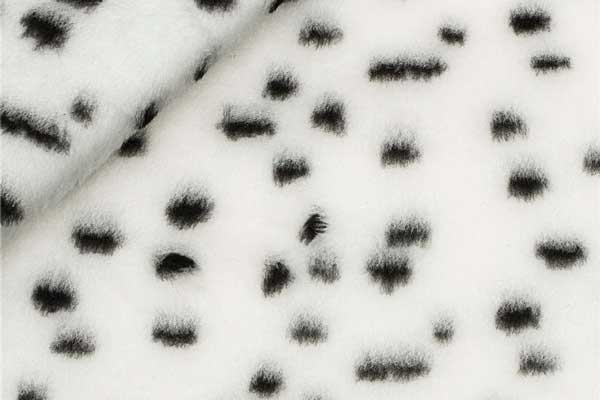
Pelo 686 2 Colori MY is an eco-fur fabric made of 100% polyester, designed for creative projects, accessories or costumes. It has a short, soft-touch coat and a uniform surface that resembles that of a well-defined animal coat. It has a height of 150 cm and a weight of 300 g/m², characteristics that make the fabric consistent and with a good body, suitable for robust but flexible designs.
This material lends itself effectively to creating DIY bags: the compactness and thickness of the Pelo 686 2 Colori MY ensure that the accessory maintains its shape over time, while remaining soft to the touch. The short, even pile makes cutting and sewing easy, perfect for well-finished, furry-looking shoppers, shoulder straps, or clutches. Its color versatility and pleasant feel make this fabric an ideal choice for attractive bags, comfortable to carry and visually characterful.
Tessuto Vitaly Extra
Tessuto Vitaly Extra is a short-haired synthetic fur made of 100% acrylic fibre. It has a height of 150 cm and a weight of 260 g/m². It presents itself with a printed pattern, often in animalier variants, which gives a decisive and very characteristic appearance to the material. While not stretchy, it maintains good softness to the touch and a compact structure, qualities that make it ideal for creative applications and handcrafted accessories.
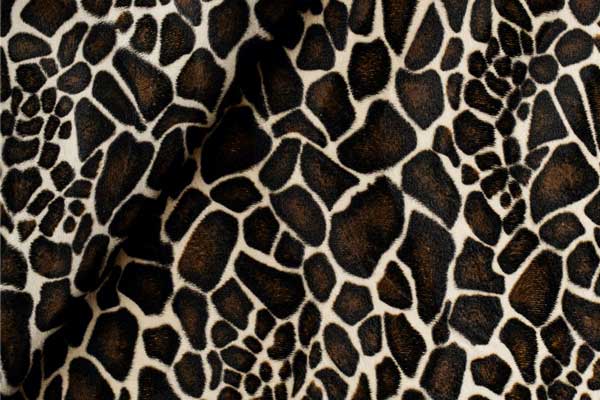
For the creation of DIY eco-fur bags, the Vitaly Extra Fabric is particularly suitable thanks to its balanced texture and full aesthetic rendering. The short pile facilitates cutting and sewing, allowing you to obtain shoppers, clutches or shoulder straps with a uniform and well-finished surface. Printed patterns instantly bring personality to the accessory, transforming each project into an original and visually striking bag, perfect for those seeking a creative and distinctive result.
Pelo Lungo Melange
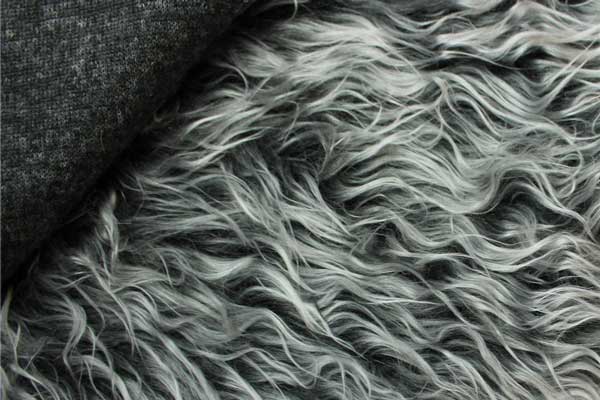
Pelo Lungo Melange is a long-haired, soft-handed eco-fur fabric, made of 75% acrylic and 25% polyester. It has a width of 140 cm and a weight of approximately 378 g/m². Its full texture and well-defined hairy surface make it particularly suitable for creations that require volume, softness and a noticeable scenographic effect.
For making DIY bags, Pelo Lungo Melange is an ideal choice when aiming for accessories with a bold and eye-catching look. The long, soft coat gives the bag a noticeable, tactile “hairy” effect, perfect for shoppers, shoulder straps, clutches, or oversized bags with a strong character.
Which lining to choose for a structured and durable bag
The inner lining is essential to maintain the shape of the bag, protect the objects and give stability to the project. The most suitable options are heavy cotton, compact microfiber, thick satin or reinforced canvas.
For bags that need to maintain a precise shape, a rigid or semi-rigid interlining layer can be added, or a reinforcing heat-adhesive film can be added to the back of the lining. This helps to avoid creases, bulges or sagging over time.
Tools needed to properly cut and sew ecofurf
In addition to the classic sewing tools, the following are useful for eco-fur:
- sewing clips instead of the classic pins,
- sharp, fine-tipped scissors to cut the base without cutting the hair,
- reinforced needles for thick fabrics,
- foot for bulky materials,
- soft brush for combing and evening the coat,
- long bets so as not to compress the fabric.
How to prepare a pattern for an eco-fur bag
The pattern determines the proportions, functionality and style of the bag. Careful design allows you to avoid material waste, improve the fit of the pile and achieve a harmonious result.
Recommended sizes for shoppers, clutches and clutch bags
The size of the bag changes significantly depending on the model:
- Shopper → 25–30 × 35 cm panels, 10 cm side band, 55–60 cm handles;
- Evening Clutch → 20 × 30cm panels, short handle or chain;
- Mini bag → 16 × 22 cm panels, perfect with zip closure;
- Shoulder bag → 22 × 28 cm panels with textured bottom and adjustable shoulder strap.
It is important to always leave more generous seam allowances (1.2–1.5 cm) because the pile takes up volume.
How to draw the pattern and correctly mark the direction of the hair
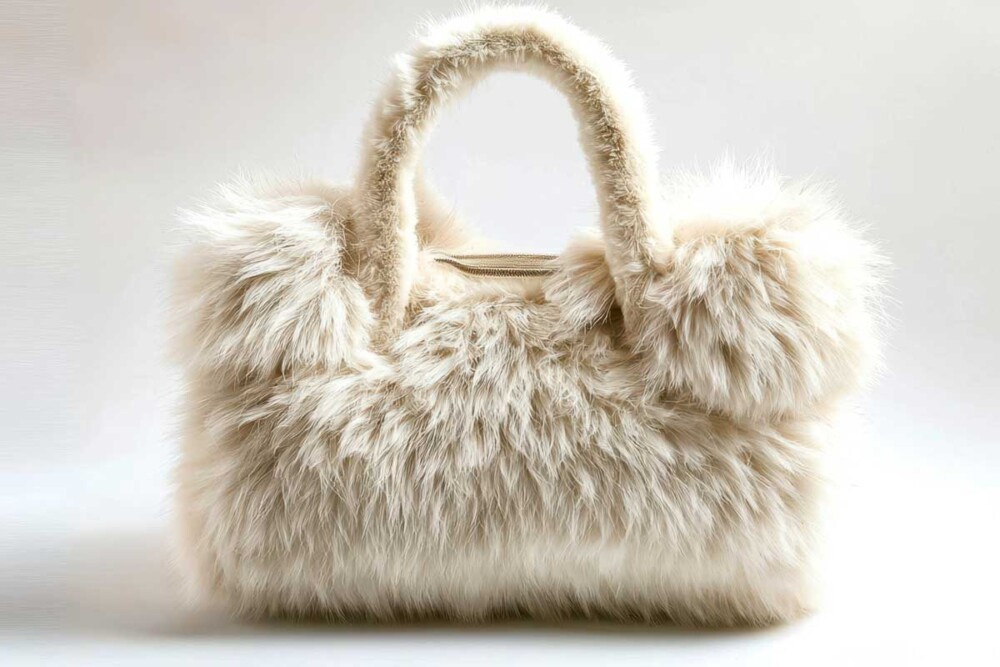
The direction of the pile must be consistent across all pieces: an error in this step makes the bag visually uneven. The direction of the hair should always be indicated with an arrow on the pattern. In models with separate bottoms and hips, you need to check that the hair runs evenly from top to bottom on each panel.
How to cut eco-fur without ruining it
The cutting of the eco-fur is an extremely delicate phase: the quality of the edge and the hair yield depend on precise and slow gestures.
Correct technique to incise the base without cutting the hair
To avoid the effect “severed hair”, you need to:
- Place the fur with the reverse side up.
- Hold the edges up to check where the fibers are.
- Slowly score the textile base with just the tip of scissors or a fine cutter.
- Separate the pieces by pulling gently, without “tearing”.
Advanced tips to avoid waste and achieve symmetrical shapes
Eco-fur is more expensive than plain fabrics, so precise cutting is essential:
- Place the larger pieces in the center of the fabric, where the direction of the pile is most uniform
- Group symmetrical pieces (e.g. handles) to obtain a homogeneous yield
- Use smaller cutouts for decorations, inside pockets, or loops
How to sew an eco-fur bag step by step
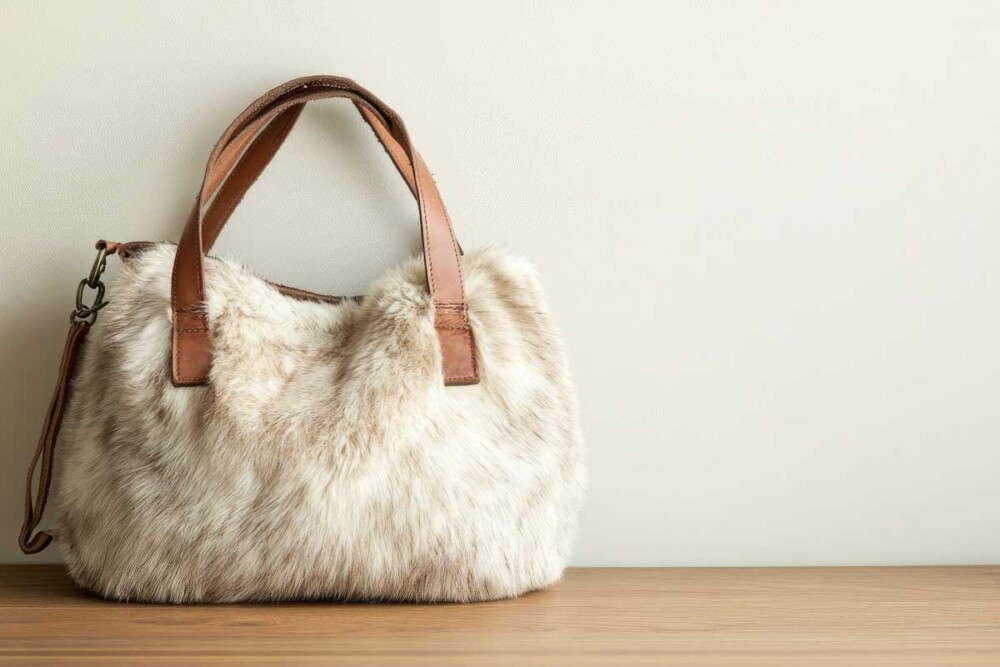
Just as in the case of DIY canvas bags, sewing is the heart of the project for this type of handmade bag: it requires patience and precision, but by following the correct method you can achieve a sartorial quality result.
Assemble the inner lining with clean seams
The lining should be built as a second complete bag:
- join the panels with straight seams,
- iron the margins well,
- insert any internal pockets,
- reinforce with interlining if necessary.
Sew the eco-fur without crushing the fur
The secret of an invisible seam consists of:
- always work with the pieces “straight on straight”,
- use a longer point than normal to avoid compressing the hair,
- finish by pulling the trapped fibers outward with a needle or your fingers.
Secure the handles correctly to ensure durability over time
The handles are a critical part of the bag: they must be beautiful but above all durable.
For a professional result:
- always reinforce the internal area with a small square of rigid fabric,
- make a seam “box” with internal cross to improve the seal,
- Consider using faux leather handles or chains for a more modern aesthetic.
DIY Bag Finishing: How to Achieve a Professional Result
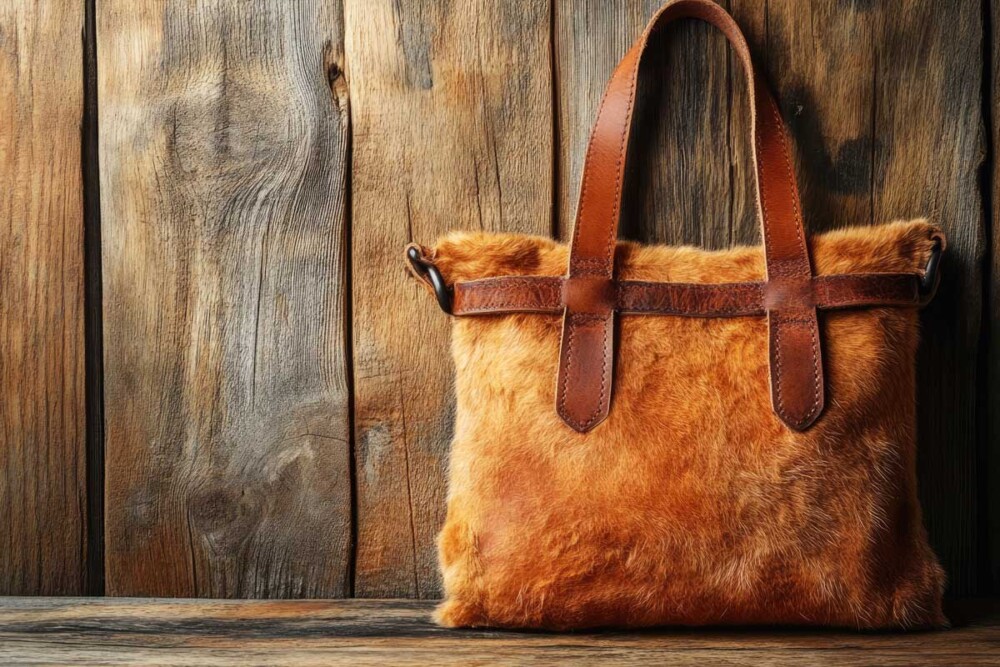
The finishing determines the perceived quality level of the bag. Even a perfect seam can be less elegant if the pile is not even or if the edges are not finished.
How to even out the hair at the joints
After each seam:
- comb the fur with a soft brush always following the same direction
- eliminates any fine lint
- If necessary, trim the inside edges with bias tape or fabric to increase durability
Accessories and details that elevate the aesthetics of the bag
Accessories turn a simple bag into one piece. You can add:
- matching pompoms
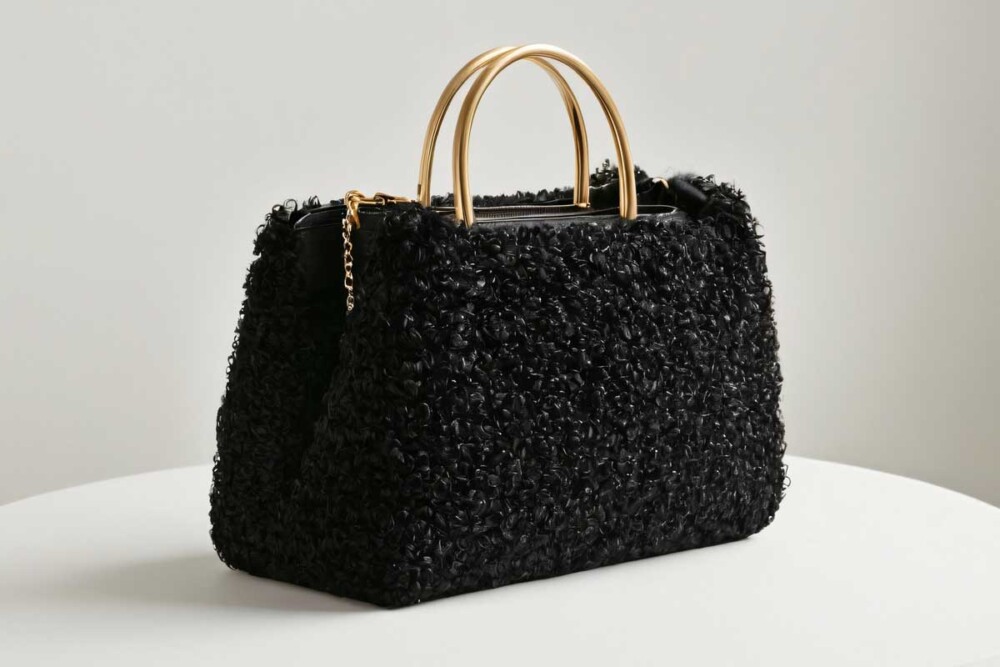
- metal handles
- hidden zip
- eco-leather inserts for contrast
- rigid bases
- interior zip pockets
Mistakes to avoid when working with eco-fur
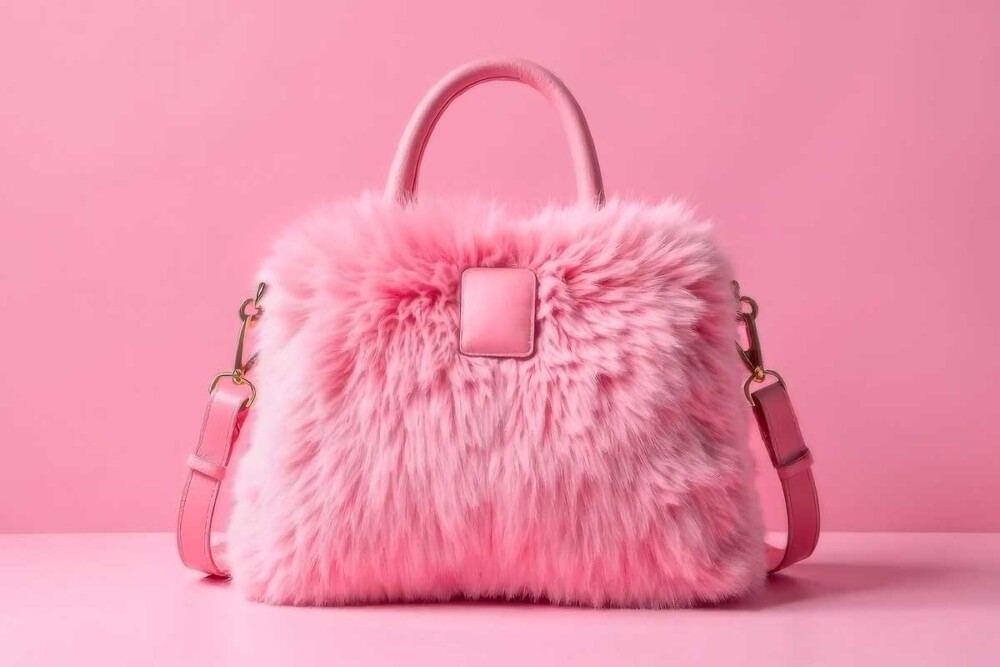
Working with faux fur can lead to some common mistakes that affect the outcome.
- Improper hair cutting and uneven edges: If you cut the hair like a common fabric, you get uneven edges. It is essential to incise only the base, keeping the hair long and uniform.
- Unsuitable or too light lining: An unstructured lining causes the bag to warp over time. Choose sturdy materials and don’t skimp on internal reinforcements.
- Handles secured without reinforcements or with weak seams: This is one of the most frequent breaking points. Rigid reinforcement and box stitching provide stability even with everyday use.
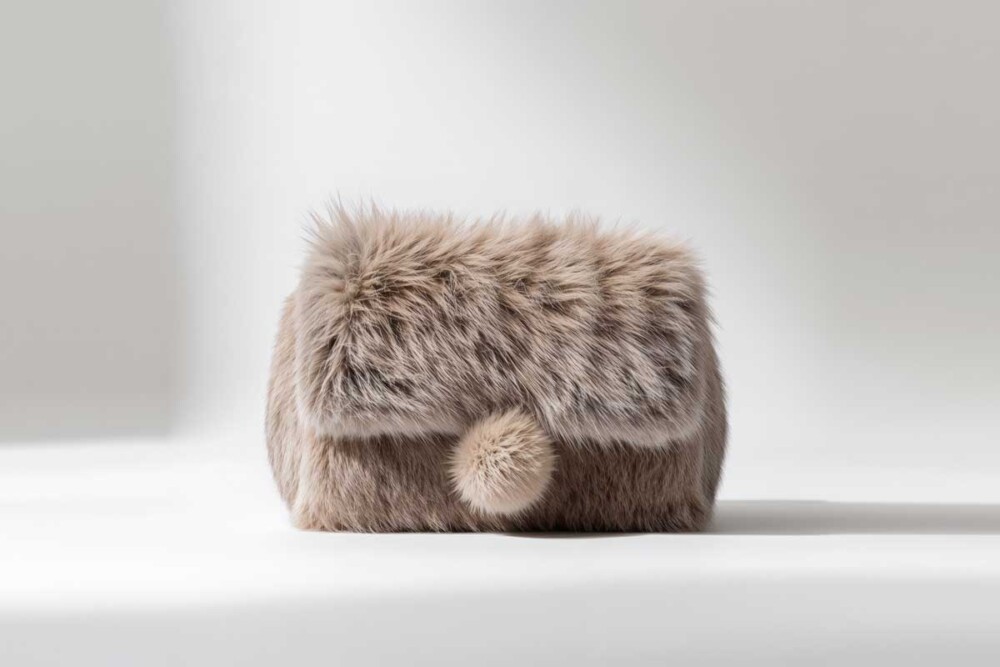
Creative ideas for making custom eco-fur bags
Once you understand the technical steps, you can experiment by creating more complex or personalized bags.
Models to try: shoulder strap, shopper, clutch, mini bag
Each model changes aesthetics and use:
- Shopper → capacious and versatile, perfect for winter.
- Clutch → elegant, ideal for the evening or formal occasions.
- Mini bag → compact design, perfect for minimal outfit.
- Shoulder strap → practical and urban, with adjustable handle.
How to adapt size and detail to the desired style
You can customize the bag by increasing the depth through a wider side band, choosing a particular geometric shape, opting for chain or faux leather handles, or inserting contrasting colored linings.
Making a DIY eco-fur bag is a project that combines creativity, technique, and experimentation because it offers the possibility of transforming a simple fabric into a warm, soft, and distinctive accessory. By following the steps described and choosing wholesale fabrics online at the Cimmino shop, you can achieve a truly professional result even without a lot of initial experience.
FAQ – Frequently Asked Questions about DIY Eco-Fur Bags
The best eco-fur for a DIY bag depends on the pattern you want to create. For an elegant bag, short hair is ideal, while for bulky shoppers, medium or long hair works better. The important thing is to choose a faux fur with a sturdy textile base, so as to ensure stability and durability.
To cut the eco-fur without damaging the hair, you need to cut the textile base from the reverse using the tip of scissors or a thin cutter. Avoid cutting the pile directly: this will give you even edges and a more natural look after sewing.
The essential materials are: eco-fur, durable lining (heavy cotton, microfiber, satin), optional interlining to give structure, sharp scissors, clips, thick fabric needle, soft brush, dyed thread and a sewing machine capable of processing bulky materials.
For a durable bag, a heavy lining such as microfiber, thick cotton, or canvas is recommended. If you want a more structured bag, add an internal reinforcement such as a sticky canvas or hardboard at the bottom.
To avoid crushing the pile, sew the eco-fur “straight against straight” using a long stitch and pulling the trapped fibers outward at the end of the seam. A soft brush helps even out the pile and make the seams invisible.
The difficulty is medium: precision in cutting and care in hair management are required, but by following a step-by-step tutorial, even beginners can achieve a professional result. Faux fur hides any imperfections well.
To increase durability, reinforce critical points such as the base and handle attachments. Use sturdy liners and apply a square of stiff fabric to secure the handles. Reinforced box seams provide greater hold over time.
Yes, a zip is one of the most functional closures. It is applied between lining and eco-fur during the assembly phase. It is advisable to use a soft nylon zip to facilitate sewing and harmonize it with the volume of the pile.
With eco-fur you can create many models: large shoppers, evening clutches, mini bags, clutches, shoulder bags and crescent models. By changing the shape, depth and type of handles you can get totally different styles.
To reduce hair loss, cut the fabric by cutting only the base and not the fibers. Gently work the edges and brush off the excess after each step. Avoid shaking the fabric too much and use clips instead of pins to avoid damaging the fibers.
