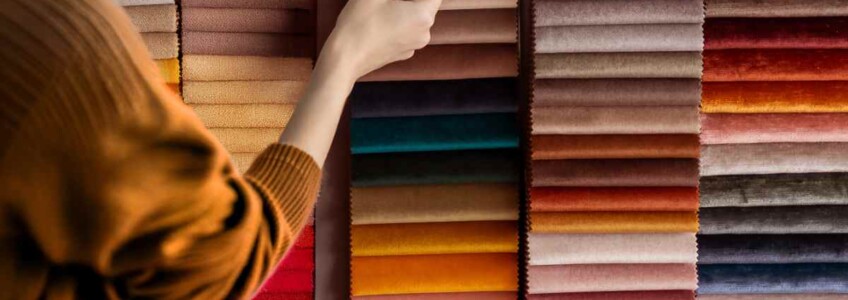
upholstery fabrics

The best upholstery fabrics: a technical guide to choosing upholstery

Choosing upholstery fabrics means making a technical decision before it is even aesthetic. The wrong siding doesn’t just age poorly: it polishes on the armrests, frayes along the seams, fades where the light hits, and forces you to redo the job after a few years. A correctly chosen upholstery, on the contrary, accompanies furniture for decades.

Those who work in the sector, from upholsterer to upholstery manufacturer to HO.RE.CA operator, evaluate an upholstery fabric on measurable parameters: abrasion resistance, colorfastness, sewing behavior, reaction to fire. Manifattura Foderami Cimmino‘s comprehensive guide reconstructs the entire evaluation process, from fiber families to armor, from standardized values to metre calculations for choosing the best upholstery fabrics.
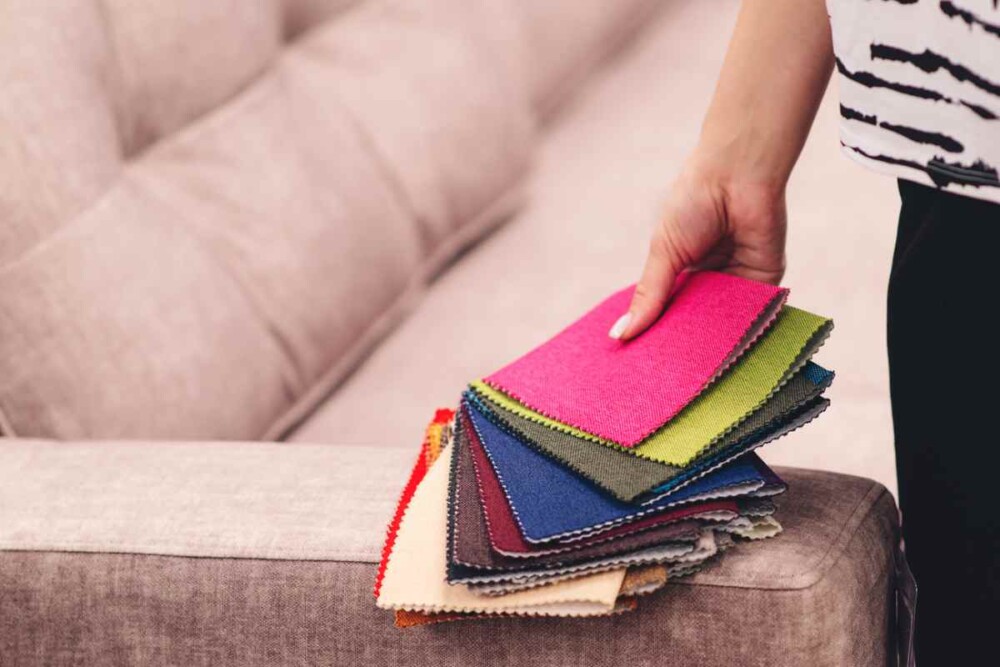
upholstery fabrics

What upholstery fabrics are and how they differ from other furnishing fabrics

Upholstery fabrics are textile materials constructed to resist continuous contact, pressure, and rubbing, intended to cover padded or rigid structures: sofas, armchairs, chairs, headboards, benches, ottomans, panels, and contract seating.

The distinction from other home fabrics is functional, not decorative. A drapery fabric works vertically, suspended, stressed only by its own weight and light; a tablecloth works horizontally and is stressed by liquids; an upholstery fabric works under load and friction, for years. For this reason it requires higher weights, more compact reinforcement, higher yarn twists and specific finishes.
removable upholstery

Fixed upholstery and removable upholstery: two different technical needs

Before evaluating any material, it is necessary to establish how it will be applied, because the two types of upholstery impose different requirements.

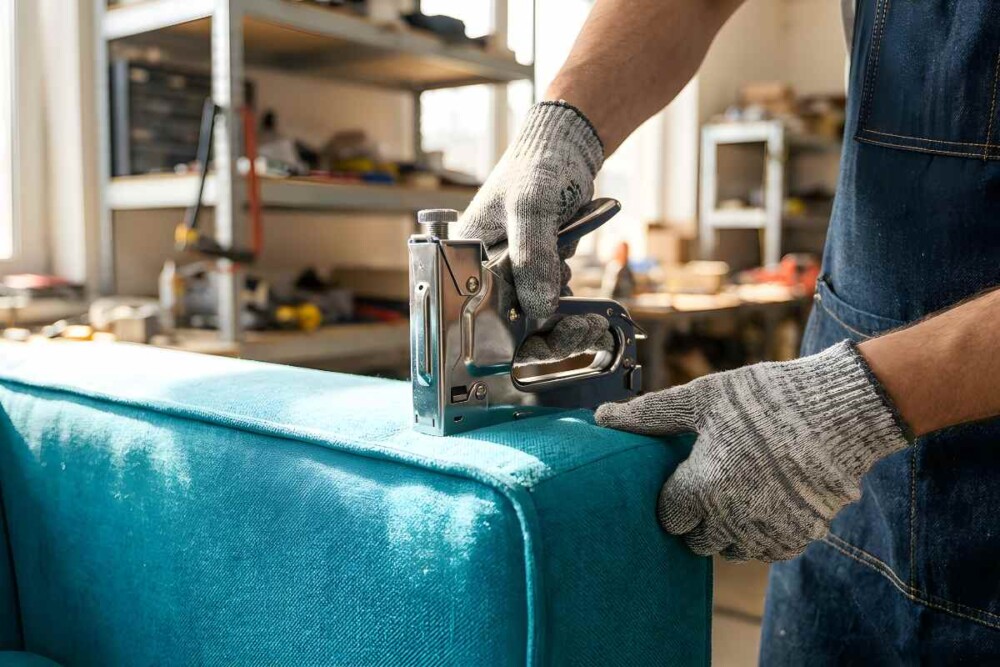
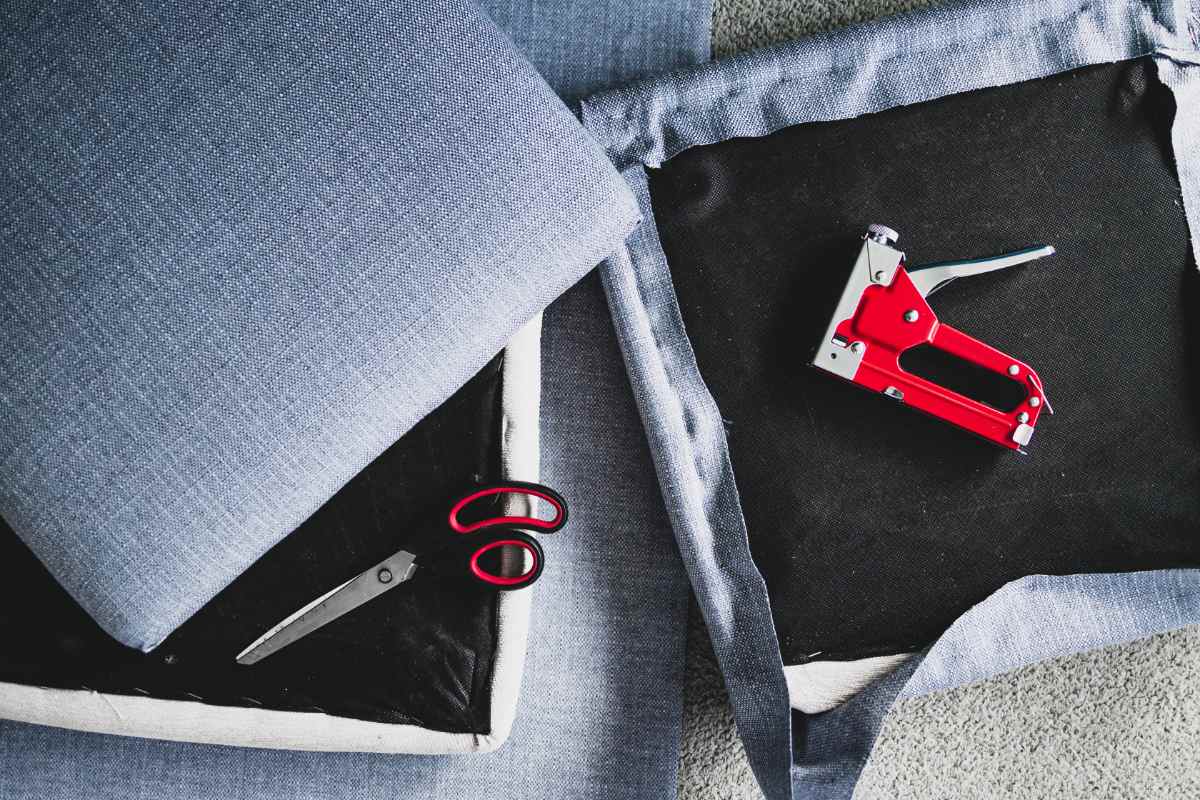
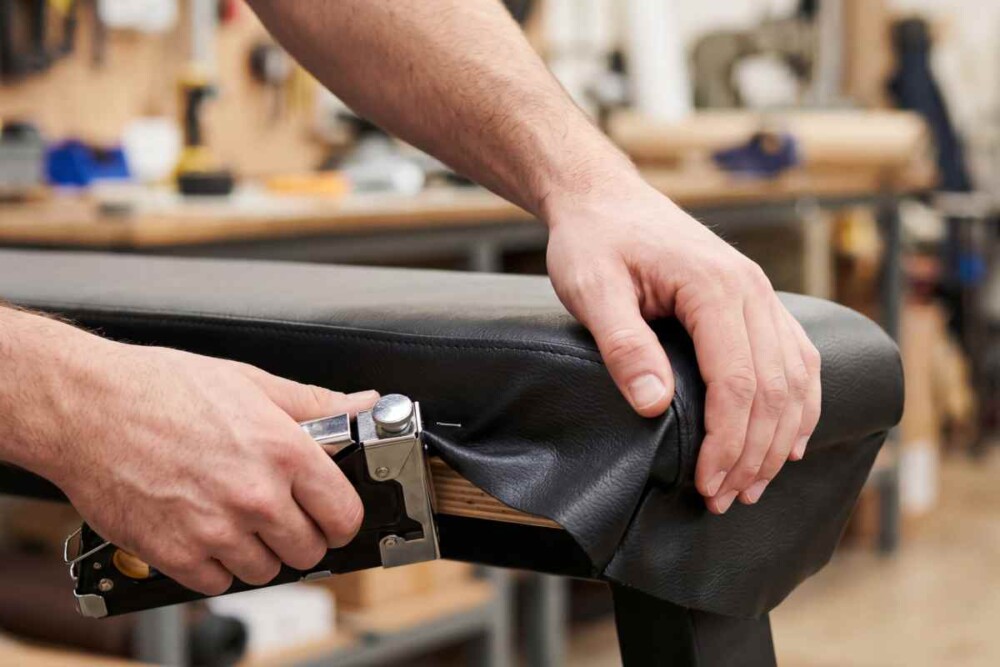
In fixed upholstery the fabric is stretched and stapled directly onto the structure. It must possess good dimensional stability and withstand tension without deforming. Retirement after processing is not recoverable: a fabric that contracts after assembly results in visible tension and poor stitching.

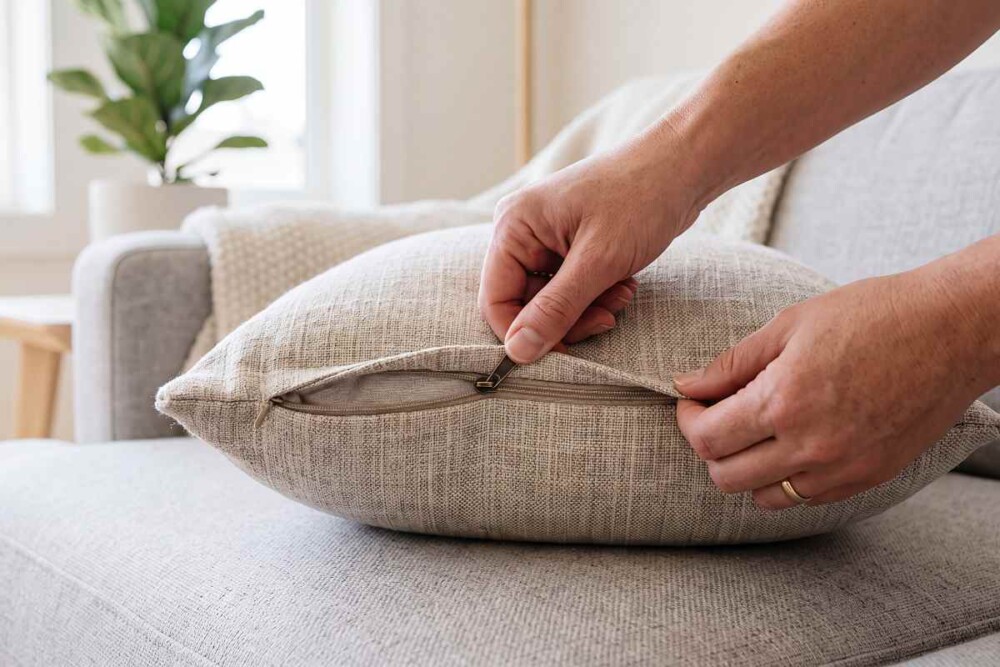
In the removable upholstery the covering is packaged as a removable lining. Here, the washability, the wash stability and the behavior of the zipper in the seam count. A fabric that withdraws even two percent makes the lining irrecoverable.

The third category, that of coordinates and complements such as cushions, headboards and paralets, tolerates less severe specifications because the mechanical stress is marginal.
upholsterer's fabrics

The technical parameters that define the best upholstery fabrics

No fabric is the best ever. There is the appropriate fabric for a given intended use, and the appropriateness is stated in the technical data sheet. There are, however, some parameters that must be verified before any aesthetic consideration.

Abrasion resistance of upholstery fabrics: the Martindale test

The Martindale test, regulated by ISO 12947-2, is the benchmark for the durability of upholstery fabrics. The sample is rubbed against a standard abrasive in a Lissajous-figure motion, in intervals of five thousand cycles, until two wires break or obvious wear appears. The result is expressed in Martindale cycles: the higher the value, the more the fabric resists wear.

Martindale CyclesIntended use indicated
Less than 10,000Exclusively decorative use: fabric for cushions, lampshades, drapes. Not suitable for upholstery
From 10,000 to 15,000Lightweight home upholstery: bedroom chairs, occasional seating
From 15,000 to 25,000Regular-use home tapestry: family sofas, dining chairs
25,000 to 40,000Intensive domestic use and light contracts: offices, waiting rooms
Over 40,000Strict contract: hotels, restaurants, public spaces, transportation

The data should be read with caution. The Martindale value certifies abrasion resistance, not the overall strength of the coating: a sixty-thousand-cycle fabric with low color fastness in light will still fade in front of a south-facing glass window.

Pilling resistance in upholstery fabrics

Pilling is the formation of surface pilling due to the migration of short fibers outward from the fabric. It is evaluated according to ISO 12945-2 on a scale of one to five, where five indicates no training. For upholstery it is reasonable not to go below the value four. Continuous-wire synthetic fibers and blends with a significant percentage of polyester perform better than pure employed short natural fibers.

Color fastness of upholstery fabrics to light and rubbing

Light fastness is measured on a scale of one to eight according to ISO 105-B02. For a cladding exposed to direct natural lighting, it is advisable to choose values equal to or greater than five; in contracts and very bright environments, the reference increases to six.

The fastness to rubbing, as regulated by ISO 105-X12, is expressed on a scale of one to five in dry and wet conditions and indicates how much color the fabric gives way to contact. A low value means coatings that discharge pigment onto clothing, a defect that generates immediate disputes in the contract.

Weight, height and seam slip of upholstery fabrics

The basis weight of the fabrics, expressed in grams per square meter, describes their consistency. Upholstery materials generally range between 250 and 500 grams per square meter, with top tips for heavy velvets and textured jacquards. A high basis weight alone does not guarantee durability, but too low a basis weight excludes it.

The height of the patch determines the required yardage and the yield of the sfrid. The most common heights in upholstery are 140 centimetres and 280-320 centimetres: the latter significantly reduce the gap on wide panels and one-piece upholstery.

Seam slip, measured according to ISO 13936-2, quantifies how much the threads move along the seam under load. It is the most underrated parameter of the entire technical data sheet and the most frequent cause of the opening of the seams on sofas: a soft and not very compact fabric can give way even with an excellent Martindale value.
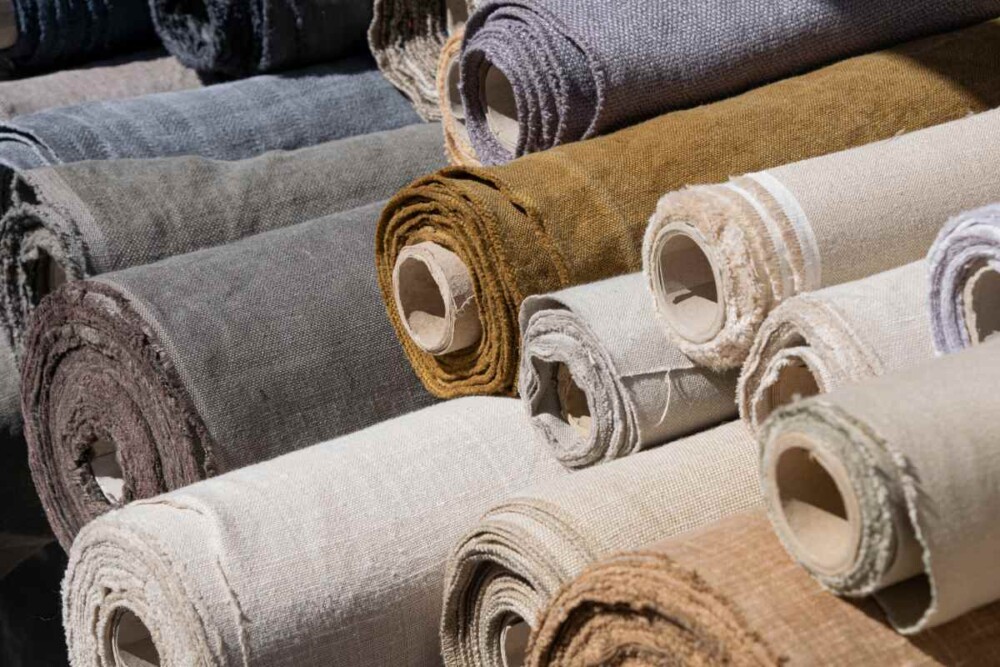
cotton upholstery

Upholstery fabrics of natural fibres: cotton, linen and wool

Natural fibers remain the go-to choice when looking for an authentic hand and a warm aesthetic. However, they require a careful assessment of the technical limitations, which vary significantly from fiber to fiber.


Cotton for upholstery

Cotton is the most widely used natural fiber in furniture upholstery. Breathable, pleasant to the touch and color stable in quality dyes, it lends itself to all compact armor. In upholstery it is almost never used in thin titles: twisted yarns and dense reinforcement such as Panama canvas are used.

The limitation of pure cotton is its tendency to crease and lower abrasion resistance than synthetics at the same weight. For this reason, the blend with polyester represents an established practice: cotton guarantees hand and breathability, polyester adds dimensional stability and mechanical resistance.


Tessuto Panama Lione: eavy upholstery cotton in height 300 cm

Tessuto Panama Lione is a heavy cotton in panama armor, with a compact and regular structure that makes it a reference for natural fiber upholstery. The 100% cotton composition ensures breathability and a dry hand, while the weight of 310 grams per square meter ensures the robust consistency required by the upholstery of sofas, armchairs, cushions and furnishing accessories intended for everyday use.
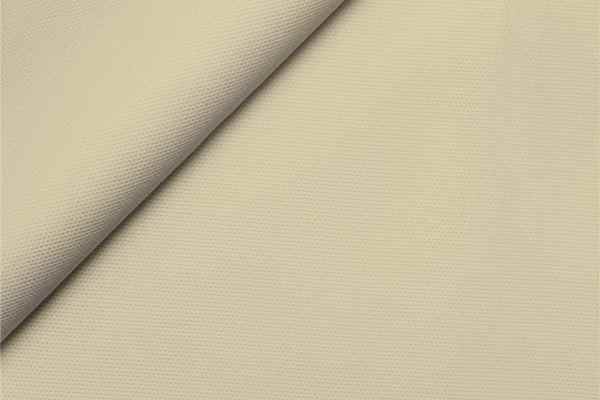
Tessuto Panama Lione

The height of 300 centimetres constitutes the most relevant operational advantage. It allows for the creation of large, one-piece panels, significantly reducing sizzle compared to standard 140-centimeter heights and limiting the number of seams on large cladding: an element that affects both material cost and processing time.

The color chart exceeds twenty variations and covers the entire range required for furniture, from neutrals like raw, cream, and sand to saturated shades of burgundy, red, dark blue, and anthracite, to pastel hues for lighter spaces.


Tessuto Panama Blossom 280 cm: half panama printed for furnishing accessories
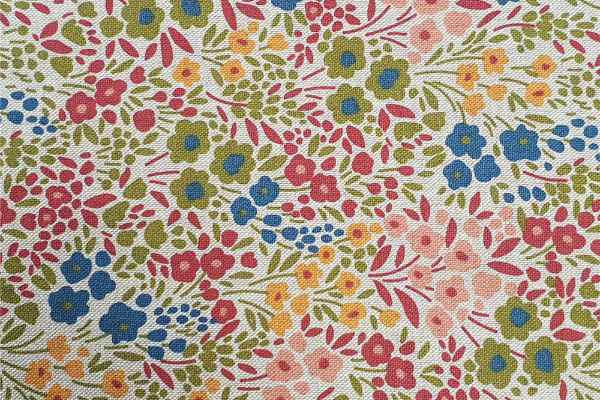
Tessuto Panama Blossom Cm 280

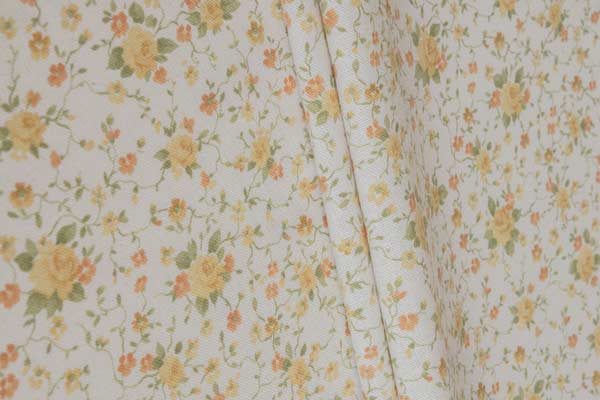
Tessuto Panama Blossom is a half panama in a cotton and polyester blend, with a colorful design print on a raw base. Half panama armor provides a regular, lightweight surface, while the blend of 80% cotton and 20% polyester combines the natural hand of plant fiber with the dimensional stability and ease of maintenance guaranteed by the synthetic.

With a basis weight of 200 grams per square meter, it is a fabric suitable for cushions, decorative complements, lightweight upholstery and panels, where mechanical stress is contained and colour rendering and workability prevail. The print on a raw background makes the decoration particularly legible and lends itself to environments that require a defined visual accent.

The height of 280 centimeters allows you to create large panels with reduced sizzle and manage the furnishing coordinates without interruptions in the drawing. The OEKO-TEX® Standard 100 certification certifies the absence of substances harmful to human health, a requirement that takes on particular importance in complements intended for children’s rooms and long-stay environments.

linen upholstery

Linen and linen blend for upholstery

Linen is characterized by a long, tough fiber, which produces opaque surfaces with a natural and slightly irregular appearance. It is the choice of choice for contemporary and Mediterranean-style upholstery, where the irregularity of the yarn constitutes a recognized aesthetic value.

It must be managed with awareness: pure linen creases, has little elastic recovery and tends to mark in the seating areas. Linen blend fabric, typically with cotton or polyester, addresses most of these limitations while maintaining the characteristic appearance of the fiber.


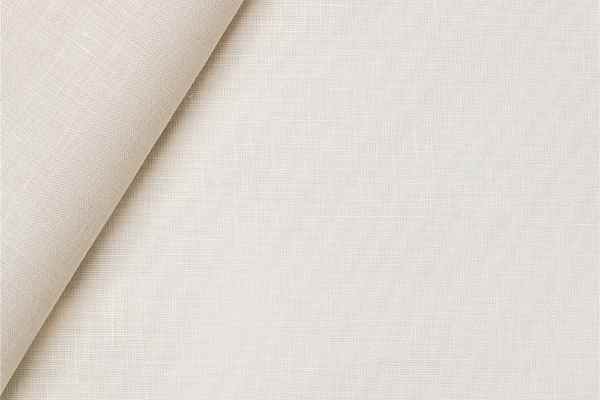
Lino 3006 Dolce 270 cm avorio: pure linen for panels and furniture finishes

Lino 3006 Dolce in the ivory variant is a 100% linen canvas of Italian production, with a height of 270 centimetres and a weight of 150 grams per square metre. The pure fiber returns the opaque and slightly irregular surface typical of linen, which in contemporary furniture is sought as an aesthetic value and not corrected as a defect.
Lino 3006 Dolce Cm.270 Avorio

The height of 270 centimetres places it outside the scope of the garment and inside that of the large surfaces: decorative panels, backdrops, exposed headboards, technical drapes and furnishing finishes that work in tension without suffering direct friction. The ivory tone behaves like a warm neutral, capable of accompanying both natural palettes and sharp contrasts.

The OEKO-TEX® Standard 100 certification certifies the absence of substances harmful to human health, a relevant requirement for fabrics used in long-term living environments and accommodation facilities.


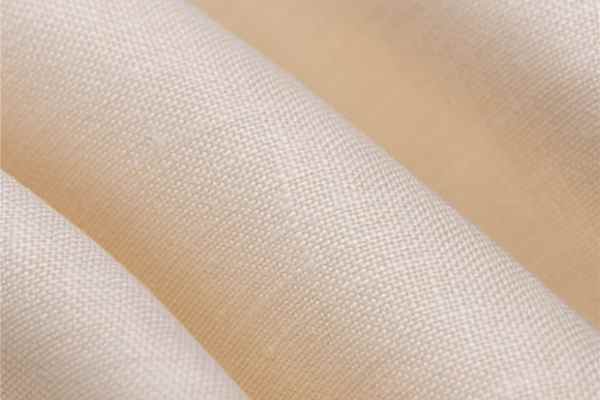
Lino Tela 2001 Dolce 270 cm bianco: linen canvas for complements and cushions
Lino Tela 2001 Dolce Cm.270 Bianco

Lino Tela 2001 Dolce in the white variant it is a 100% linen canvas with a height of 270 centimeters and a weight of 200 grams per square meter. The canvas structure, compact and regular, restores the matte surface and dry hand characteristic of pure fiber, with the natural irregularity of the yarn that in contemporary furniture constitutes a sought-after trait.

Its weight places it in the context of cushions, decorative complements and panels, where the mechanical stress is limited. Since it is pure linen, the typical tendency towards wrinkling of the fiber must be considered: a character consistent with the natural aesthetics of the material, but to be evaluated in projects that require surfaces perfectly stretched over time.

The height of 270 centimeters allows you to work large panels in one piece and create seamless coordinates. The OEKO-TEX® Standard 100 certification certifies the absence of substances harmful to human health.

wool upholstery

Wool and wool blends for upholstery

Wool guarantees upholstery performance that few fibers match: high resilience, good recovery from compression, and intrinsically favorable fire behavior, due to its high nitrogen and moisture content. It is the traditional fiber of high-end padding and the representative contract.

The cost and need for moth treatments limit their spread, but wool-polyester and wool-viscose blends represent a frequent compromise in contract collections.


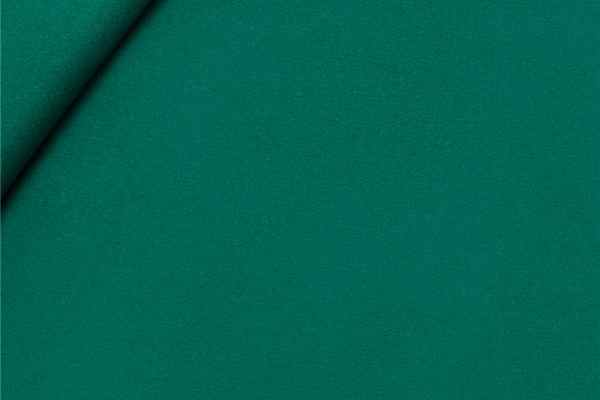
Panno Lana Marzia: wool blend for playing surface covering

Panno Lana Marzia is a wool and polyamide blend fabric, composed of 80% wool and 20% polyamide, with a height of 180 centimeters and a basis weight of 389 grams per square meter. The compact structure returns a smooth and uniform surface, free of irregularities that could interfere with sliding.
Panno Lana Marzia

The intended use is the covering of game tops: poker tables, billiard surfaces and card game tops, where the dominant stress is continuous horizontal rubbing. The wool component ensures softness, warmth to the touch and the good recovery from compression typical of the fibre, while the polyamide adds mechanical strength and dimensional hold over time, counteracting the deformation of the stretched surface.

The height of 180 centimeters allows you to cover most standard tops in one piece, avoiding stitching in the playing area. The high basis weight ensures the consistency necessary to mask the irregularities of the underlying support.

polyester upholstery

Upholstery fabrics of man-made fibres

Synthetic fibers dominate stock upholstery today because they allow for high and consistent performance at controlled costs, with a tolerance for technical treatments that natural fibers do not possess.

Upholstery polyester

Polyester is the dominant fiber in contemporary upholstery. It resists abrasion, does not absorb water, dries quickly, maintains dimensional stability and accepts both bulk dyeing and technical finishes well.


Tessuto Spalmato Teseo 140 cm: polyester coupling for cladding and panels
Tessuto Spalmato Teseo

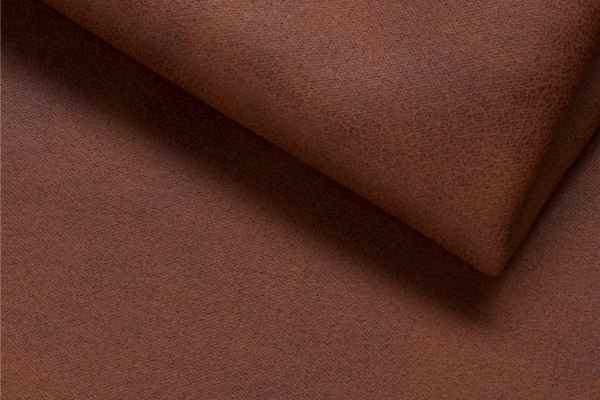
Tessuto Spalmato Teseo is a 100% polyester pair, constructed by combining a felted backing layer with a skin-effect coated surface. The weight of 350 grams per square meter places it in the range of structural coatings, suitable for continuous contact and the typical stress of seats.

The coupled structure determines the behavior of the material: the felted layer ensures consistency, insulating power and the ability to mask the irregularities of the support, while the joined coated surface ensures resistance to contact and quick cleaning with a damp cloth, without the need for specific treatments. The solid-color finish and lack of elasticity make it suitable for both fixed upholstery and tensioned panels, where dimensional stability is the determining requirement.

The height of 140 centimetres corresponds to the standard of seat coverings and makes it easier to place on small panels. The field of employment covers residential and contract seating, decorative and sound-absorbing panels, headboards and furnishing accessories. The OEKO-TEX® Standard 100 certification certifies the absence of substances harmful to human health, a requirement frequently required in specifications for public spaces and accommodation facilities.

suede fabrics for upholstery

Microfiber and suede fabrics for upholstery

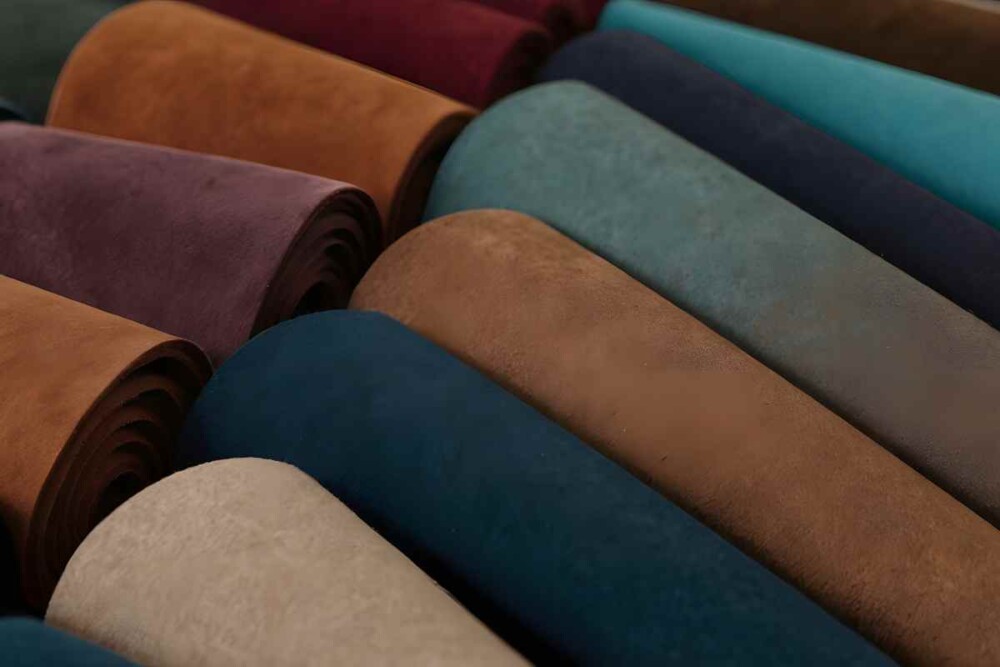
Microfibers are polyesters, sometimes combined with polyamide, of extremely low titer. The high fiber density per square centimeter produces compact, soft surfaces that are naturally resistant to liquid penetration.

Suede and hand-catching fabrics belong to this family and are one of the most effective responses to the needs of families with children and pets: the compact surface does not retain hair and does not have handles in which the claws can get caught.


Tessuto Scamosciato Texas 140 cm: suede-effect microfiber for furniture upholstery

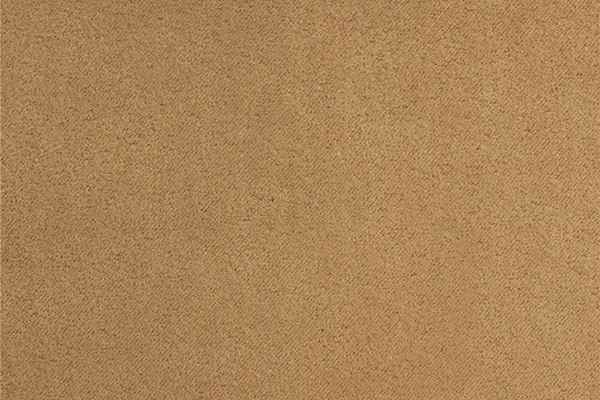
Tessuto Scamosciato Texas is a 100% polyester microfiber with a suede finish, coupled with a magline backing. The surface gives a soft, velvety hand with a suede-like appearance, while the weight of 240 grams per square meter ensures the consistency required by furniture upholstery and complements.
Tessuto Scamosciato Texas

The microfiber structure determines the behavior of the material. The high density of fibers per square centimeter produces a compact surface, without loops in which the claws can get tangled and little inclined to retain hair: characteristics that make it one of the most suitable solutions for domestic environments with animals. The firmness also slows down the penetration of liquids, facilitating timely intervention on stains.

The magline backing provides extensibility to the material, a significant advantage in covering curved shapes and contoured seats, where a rigid fabric would require filming and darts. During the manufacturing phase, the tension must be calibrated, because the coupling gives way under traction and excessive tensioning can alter the geometry of the panel. The height of 140 centimeters corresponds to the standard of seat coverings. The OEKO-TEX® Standard 100 certification certifies the absence of substances harmful to human health.

outdoor upholstery

Acrylic for upholstery

Acrylic is the reference fiber for upholstery exposed to light. Mass dyed, it guarantees exceptional light fastness and excellent weather resistance. It is the standard material of outdoor seating and outdoor furniture, where every other fiber gives way to the sun before mechanical wear.


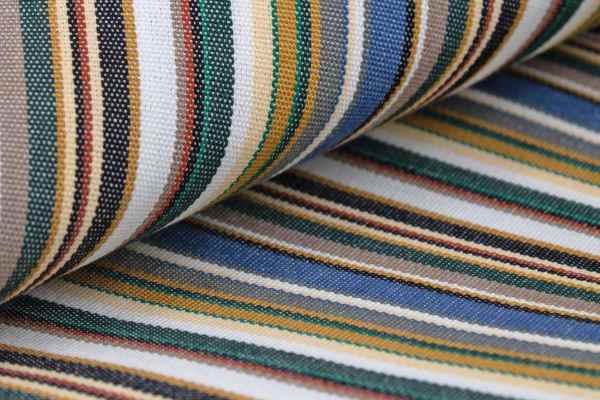
Tessuto Outdoor 160 cm: mixed acrylic for outdoor upholstery
Tessuto Outdoor

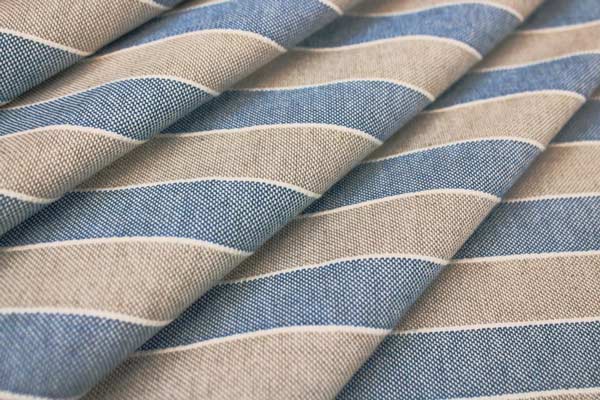
Tessuto Outdoor is an acrylic and polyester blend, composed of 80% acrylic fiber and 20% polyester, with a height of 160 centimeters and a basis weight of 220 grams per square meter. The striped design is available in different color combinations.

The choice of fibre meets the dominant requirement of outdoor upholstery. In furniture exposed to the elements, the critical stress is not abrasion but ultraviolet radiation: bulk-dyed acrylic maintains color saturation over time, because the pigment is incorporated into the fiber and not deposited on the surface. The polyester component adds dimensional stability and mechanical strength, while the water-repellent treatment prevents water absorption and limits mold formation during periods of prolonged exposure to moisture.

The field of application covers outdoor cushions, garden seating and upholstery, upholstery for terrace furnishings, outdoor seating and outdoor accommodation spaces. The OEKO-TEX® Standard 100 certification certifies the absence of substances harmful to human health.

shiny upholstery

Viscose and artificial fibres in upholstery

Viscose comes from regenerated cellulose and is characterized by shine and a fluid hand at low costs. In upholstery, it is not used pure, because it loses wet toughness and has little resistance to abrasion: instead, it appears as a decorative component in blends with cotton or polyester, typically in velvets and jacquards, where it guarantees the silky reflection of the surface.


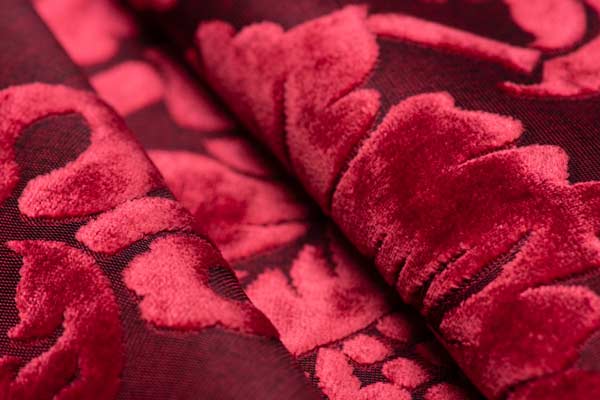
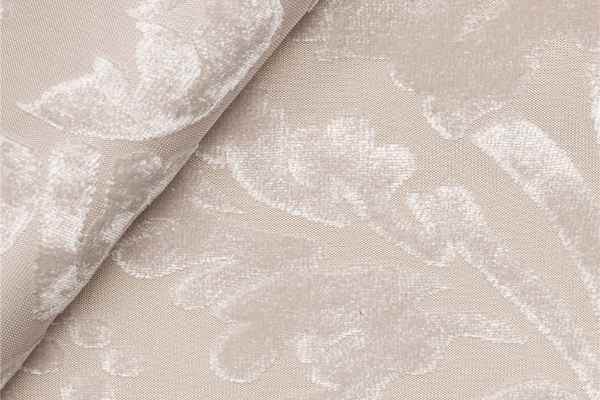
Tessuto Velluto Jacquard Baia: polyester-operated velvet for upholstery

Tessuto Velluto Jacquard Baia is a velvet in 100% polyester worked with jacquard technique, which produces relief designs directly in weaving. The height is 145 centimeters and the weight is 269 grams per square meter.
Tessuto Velluto Jacquard Baia

The armor determines the yield of the material. The pile surface provides chromatic depth and reflections that vary with the incidence of light, while the jacquard work generates the contrast between the raised areas and the background, creating a three-dimensional texture that accompanies the classic and representative-style furnishings. Polyester provides dimensional stability and easier handling than natural fiber velvets.

In processing, two constraints typical of this category must be respected. All panels require a cut in the same pile direction, because two pieces oriented in opposite directions appear different shades even coming from the same piece. The design also requires the pattern to be aligned between adjacent panels: both factors influence the calculation of the requirement, which must be increased compared to a solid-color fabric of the same height. The field of application covers the covering of sofas, armchairs and representative seats, the matching cushioning and the decorative panels.
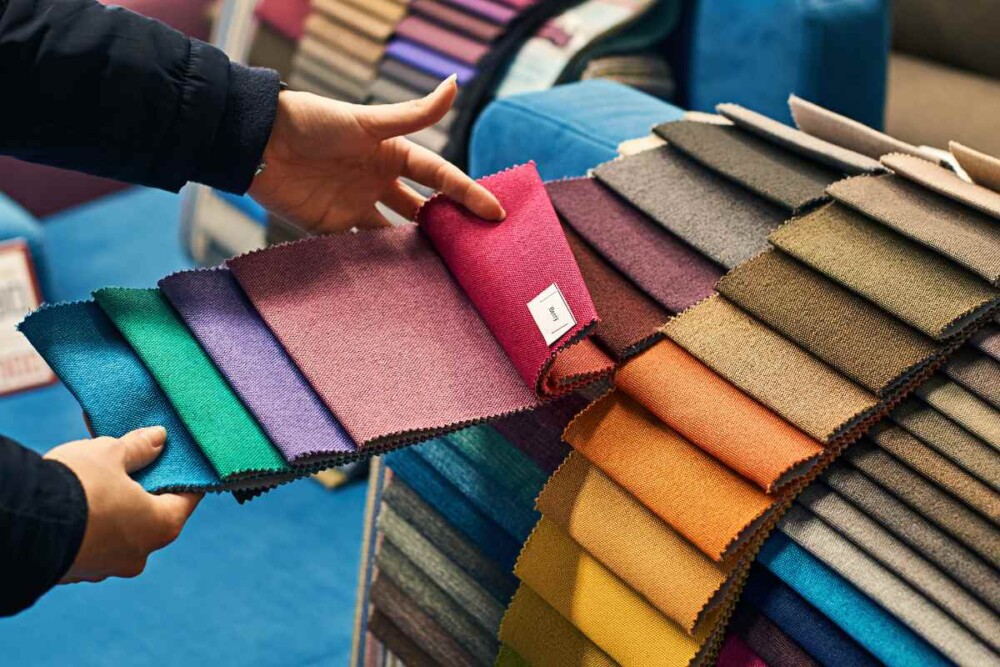

types of upholstery fabrics

Upholstery fabrics by type of armor

The fibre determines the chemical and mechanical behaviour of the coating; the armour determines its appearance, hand and to a large extent its strength. Two fabrics with the same composition can behave radically differently depending on how they are constructed.

Panama canvas and compact structure fabrics

Panama canvas is a doubled canvas weave, in which two or more warp threads work together against two weft threads. The result is a regular checkerboard surface, full-bodied and stable, which represents one of the historical references of classical upholstery. It lends itself to the upholstery of seats, cushions, bedspreads and panels, and tolerates well the tension typical of fixed upholstery.


Tessuto Panama Robinson 280 cm: cotton in panama armor for complements and cushioning
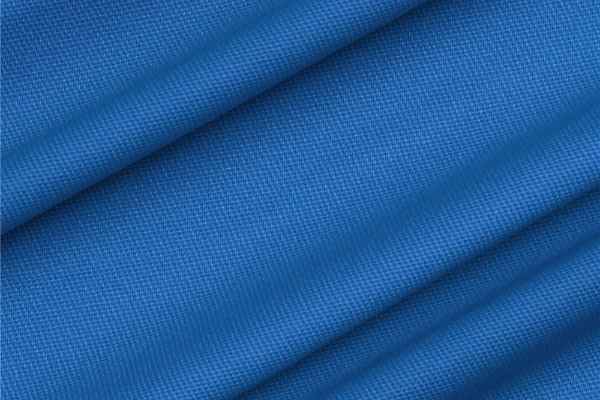
Tess. Panama Robinson

Tessuto Panama Robinson is a cotton in panama armor with a height of 280 centimeters and weight of 190 grams per square meter. The pure natural fiber composition ensures breathability and a dry hand, while the panama weave, with its doubled threads, produces the regular checkerboard surface that characterizes this family of fabrics.

Its weight places it in the field of cushions, decorative complements and lightweight coverings, where aesthetic rendering and workability prevail over abrasion resistance. Pure cotton also allows for simple washing management, an important aspect in removable complements.

The height of 280 centimeters is the main operational advantage: it allows for the creation of one-piece coordinates and wide panels, reducing sizzle and limiting stitching compared to standard 140-centimeter heights. The OEKO-TEX® Standard 100 certification certifies the absence of substances harmful to human health.
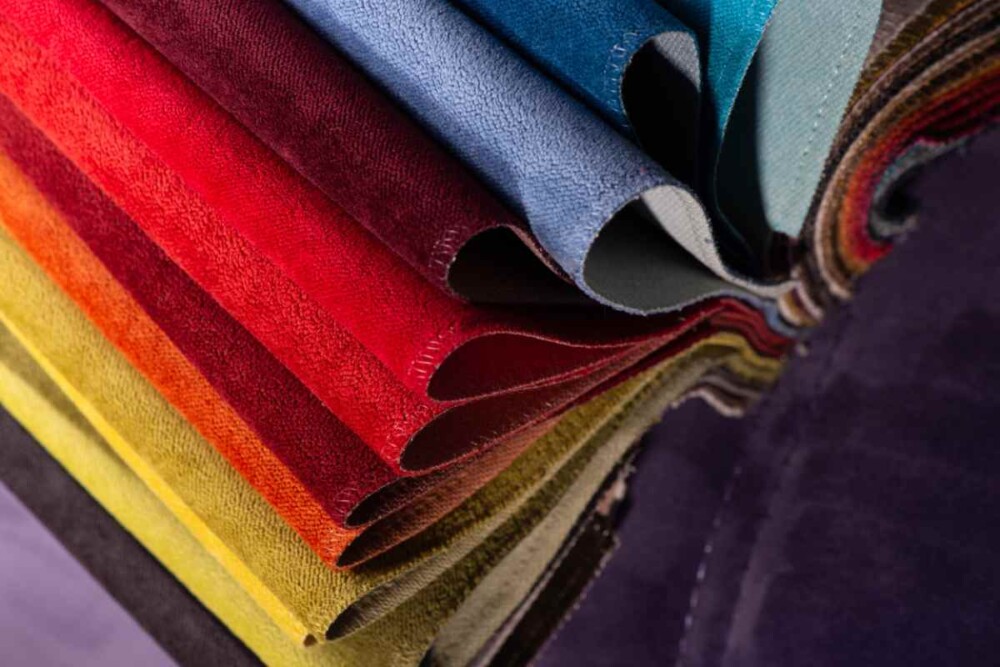

chenille upholstery

Upholstery chenille

Chenille is obtained by inserting a hairy yarn into the weft that returns a velvety surface that is soft to the touch. It guarantees excellent coverage, a warm appearance and good abrasion resistance, which is why it is among the most popular fabrics for upholstering sofas and armchairs. The tendency towards hair release in less structured qualities should be evaluated.


Tessuto Ciniglia Connor 140 cm: polyester chenille for seat covering

Tessuto Ciniglia Connor is a 100% polyester chenille with a height of 140 centimetres and a weight of 340 grams per square metre. The surface has a slight structured rifling that accompanies the typical softness of the armor, giving a material and defined appearance.
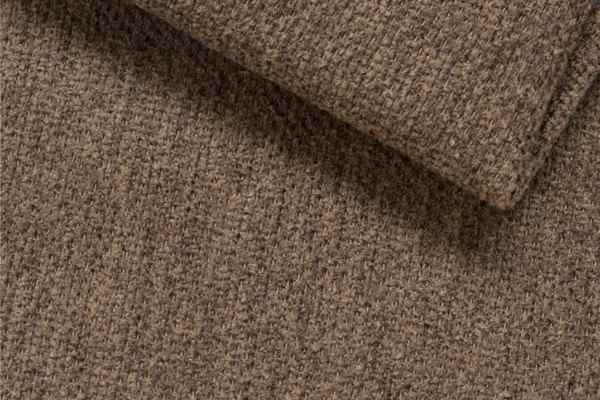
Tessuto Ciniglia Connor

Chenille owes its characteristics to the weft yarn, covered with radially arranged fibres that generate a velvety surface with full coverage. The result is a fabric that is soft to the touch and warm to the eye, with a weight that places it squarely in the range of structural seat coverings. The polyester composition ensures wear resistance, color stability and simple routine maintenance, without the care requirements required by natural fiber chenille.

The solid color finish and lack of elasticity make it suitable for both fixed upholstery and removable upholstery. The field of employment covers sofas, armchairs, residential and commercial seating, matching cushions and furnishing accessories. The OEKO-TEX® Standard 100 certification certifies the absence of substances harmful to human health.

velvet upholstery

Velvet for upholstery

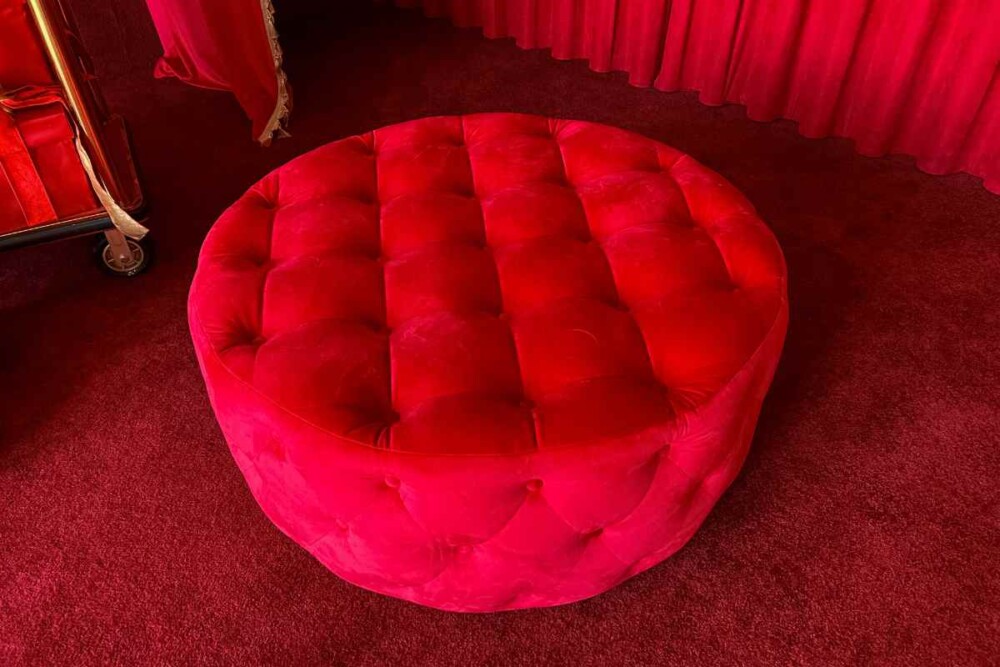
Velvet is a pile fabric, obtained with an additional warp cut after weaving. It returns chromatic depth and reflections that vary according to the incidence of light. In polyester versions it combines the premium effect with practical management, while natural fibre velvets require more attention. When cutting, the direction of the pile must always be respected, under penalty of obvious differences in tone between the panels.


Tessuto Velluto Arredamento 140 cm: polyester solid velvet for upholstery
Velvet Furnishing Fabric

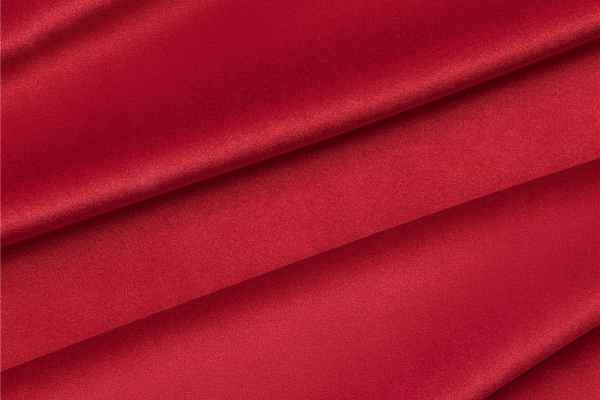
Tessuto Velluto Arredamento is a 100% polyester velvet in solid colors, with a height of 140 centimeters and a weight of 300 grams per square meter. The compact pile surface returns the characteristic chromatic depth of the armor, with reflections that vary as a function of the incidence of light and the observation angle.

The solid color enhances the optical behavior of the pile without the interference of a design, which is why this construction remains the reference for the covering of reception seats and for environments that require chromatically solid surfaces. Polyester provides color stability, wear resistance, and simple routine maintenance compared to natural fiber velvets, which require specific care.

During the manufacturing process, the pile pattern on all panels must be respected: two pieces cut in opposite directions appear to have different shades even when coming from the same piece, and the error cannot be corrected once the coating has been fitted. The field of employment covers sofas, armchairs, upholstered seating, headboards and matching cushions.

jacquard upholstery

Jacquards and damasks for upholstery

Jacquard processing allows you to obtain complex designs directly in weaving, with relief effects and contrasts between opaque and shiny areas. It is the armor of classical and representative upholstery. The structure is generally compact and strong, but the extended drawing ratio significantly affects the calculation of requirements.


Tessuto Yvonne Jacquard 280 cm: geometric jacquard in cotton blend for furniture

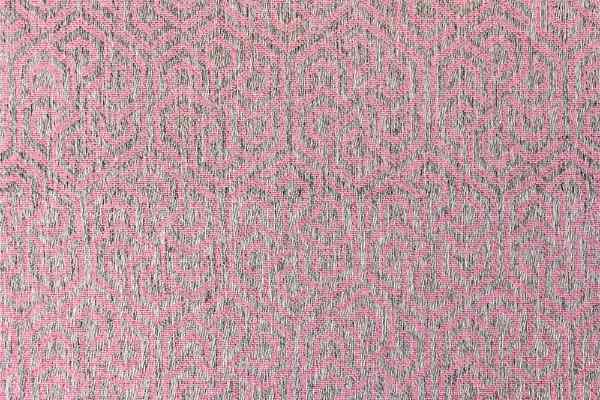
Tessuto Yvonne Jacquard is a blend composed of 55% polyester and 45% cotton, worked with jacquard technique with geometric designs. The height is 280 centimeters and the weight is 215 grams per square meter.
Tessuto Yvonne Jacquard

Jacquard work generates the pattern directly in weaving, not in printing: the design is therefore structural, with relief effects and contrasts between opaque and reflective areas that vary with lighting. The geometry of the decoration accompanies both contemporary and classical settings, depending on the chosen chromatic juxtaposition.

The fiber blend determines the material’s behavior: cotton ensures natural hand and breathability, polyester adds dimensional stability and strength, reducing the tendency of the plant component to crumple. The height of 280 centimeters allows for the creation of panels and coordinates in a single piece, a significant advantage on an processed fabric where each seam requires the alignment of the pattern.

When calculating the requirement, the drawing ratio must be considered, which requires aligning the pattern between adjacent panels and results in an increase compared to a solid-color fabric of equal height. The field of application covers cushions, decorative complements, panels and furnishing coverings. The OEKO-TEX® Standard 100 certification certifies the absence of substances harmful to human health.

bouclé upholstery

Boucle and wool-effect fabrics for upholstery

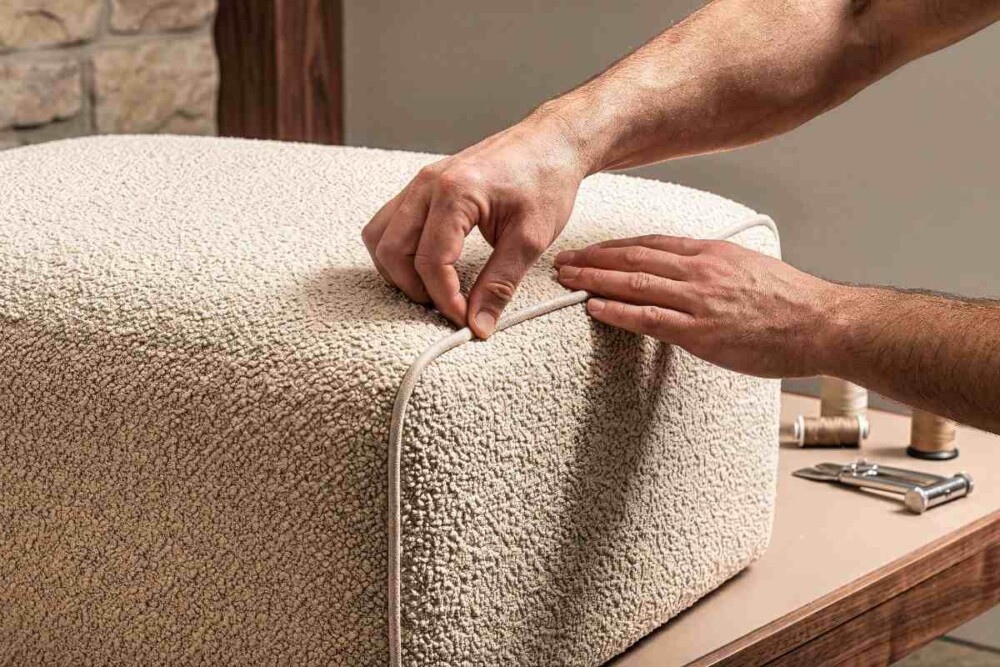
Bouclé fabric is characterized by a looped yarn that produces an irregular, textured surface, highly sought after in contemporary furniture. It provides a soft, enveloping appearance, but requires careful evaluation when pets are present, as the rings on the surface can easily get caught.


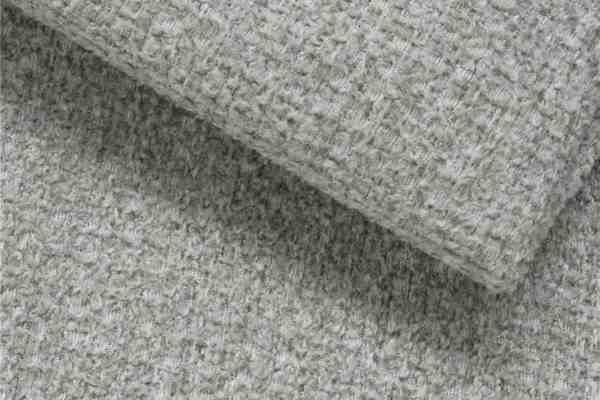
Tessuto Bouclé Emily 140 cm: polyester boucle for seat covering
Tessuto Bouclé Emily

Tessuto Bouclé Emily is a 100% polyester boucle with a height of 140 centimetres and a weight of 340 grams per square metre. The surface is full-bodied and slightly wavy, with the irregular material effect that characterizes this workmanship.

Boucle owes its appearance to the ring yarn used in weaving, which generates a raised surface of variable depth. The result is a soft, enveloping fabric, highly sought after in contemporary furniture for its ability to visually heat rooms with essential lines. Its weight places it in the range of structural coverings, suitable for covering sofas, armchairs and seats subject to daily use.

The polyester composition provides dimensional stability, wear resistance and simple routine maintenance. As with all hedgehog surfaces, the intended use in pet environments must be evaluated: raised rings can become entangled upon contact with claws, a condition that in that context suggests orienting oneself on compact surfaces.

The solid color finish and lack of elasticity make it suitable for both fixed upholstery and removable upholstery. The OEKO-TEX® Standard 100 certification certifies the absence of substances harmful to human health.

hemp upholstery

Hemp and hemp-effect fabrics for upholstery

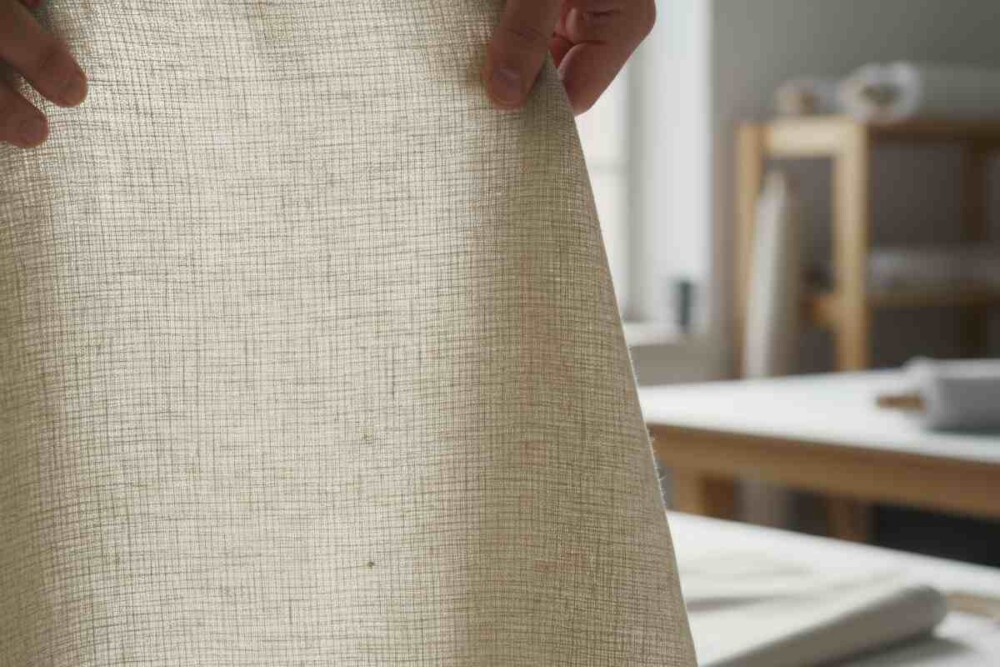
Canapone is a coarse woven fabric with a dense weft and warp, whose name derives from its similarity to hemp. It is characterized by high resistance and rustic appearance, and is used in both classic and contemporary furnishings, including applications exposed to the elements.


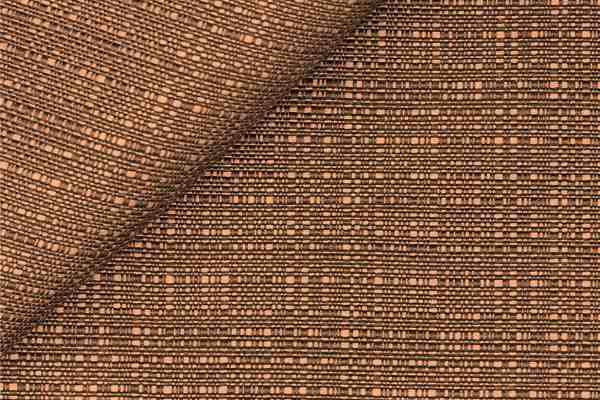
Tessuto Canapone Opis 280 cm: hemp effect cotton blend for furniture

Tessuto Canapone Opis is a blend composed of 67% polyester and 33% cotton, with a height of 280 centimeters and weight of 225 grams per square meter. The raised weave gives back the material and slightly irregular appearance that characterizes this family of fabrics.
Fabric Canapone Opis

The hemp owes its name to its resemblance to hemp: the thick weave, with a dense weft and warp, produces a full-bodied surface with a rustic character, which in contemporary furniture is sought after for its ability to introduce texture into clean-lined spaces. The fiber blend balances the two contributions, with cotton providing natural hand and breathability and polyester adding dimensional stability and wear resistance.

The height of 280 centimeters allows for the creation of large, coordinated panels in one piece, reducing sizzle compared to standard heights. The field of use covers furniture upholstery, cushions and accessories, with a large color chart that allows the material to be adapted to different color registers.

eco-leather upholstery

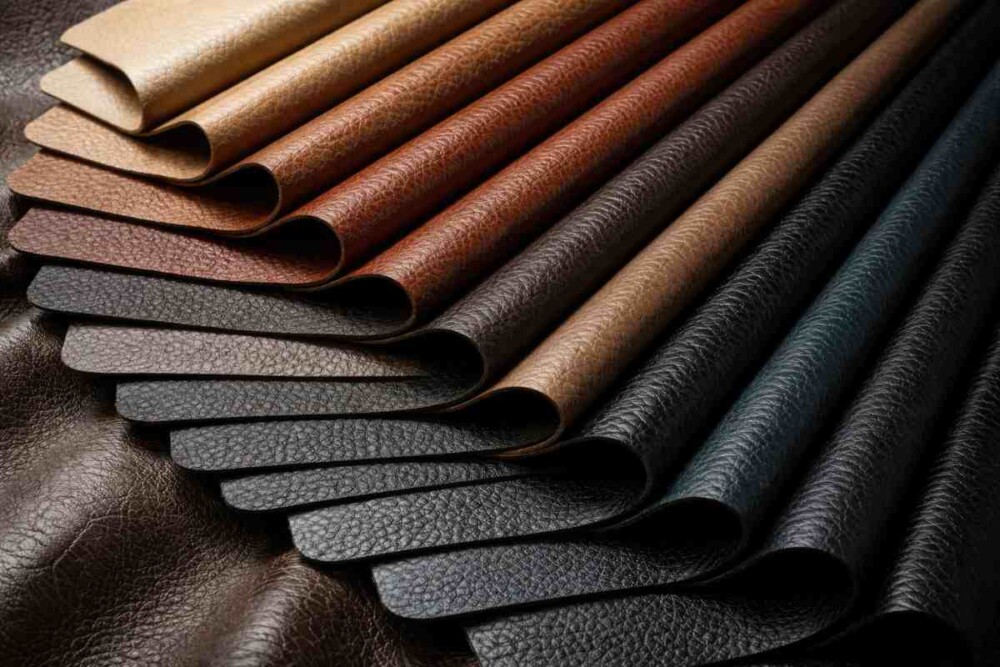
Ecopleather and synthetic upholstery coverings

Alongside the actual fabrics, upholstery uses continuous surface coatings that reproduce the appearance of the skin. They are not woven in the strict sense, because they lack a weft and warp structure on the surface, but they are fully included among the covering materials.

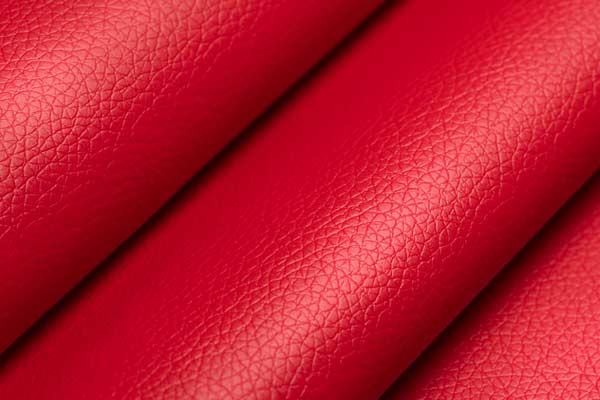
Polyurethane eco-leather for upholstery

Polyurethane eco-leather consists of a textile support coated with a polymer layer. It is characterized by softness, good relative breathability and ease of maintenance: in most cases, ordinary cleaning is performed with a damp cloth. It is the most popular solution in the upholstery of modern seats, stools and commercial furnishings.


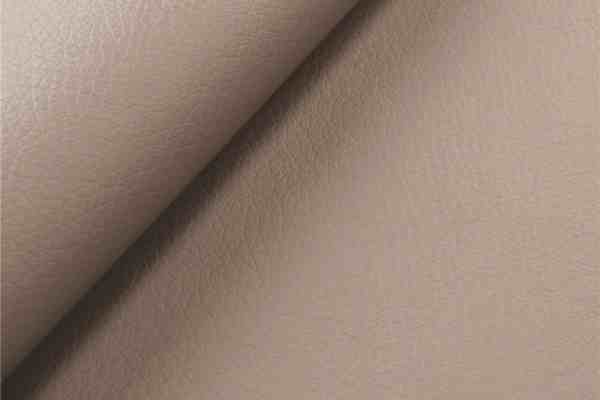
Tessuto Lepoc 140 cm: polyurethane eco-leather for seat covering
Tessuto Lepoc

Tessuto Lepoc is an eco-leather composed of 60% polyurethane, 30% polyester and 10% cotton, with a height of 140 centimeters and a basis weight of 340 grams per square meter. The smooth finish reproduces the appearance of the leather without the use of materials of animal origin.

The structure is typical of eco-leather: a textile support, here made of a polyester and cotton blend, coupled with a polyurethane polymer layer that forms the exposed surface. Polyurethane ensures superior softness compared to polyvinyl chloride coatings and routine maintenance that in most cases is exhausted with the passage of a damp cloth, without the need for specific products.

The weight places the material in the band of structural coatings, suitable for continuous contact and stress of the seats. The field of application covers sofas, armchairs, residential and commercial seating, cushions and accessories, with a height of 140 centimetres which corresponds to the standard of upholstery.

PVC upholstery

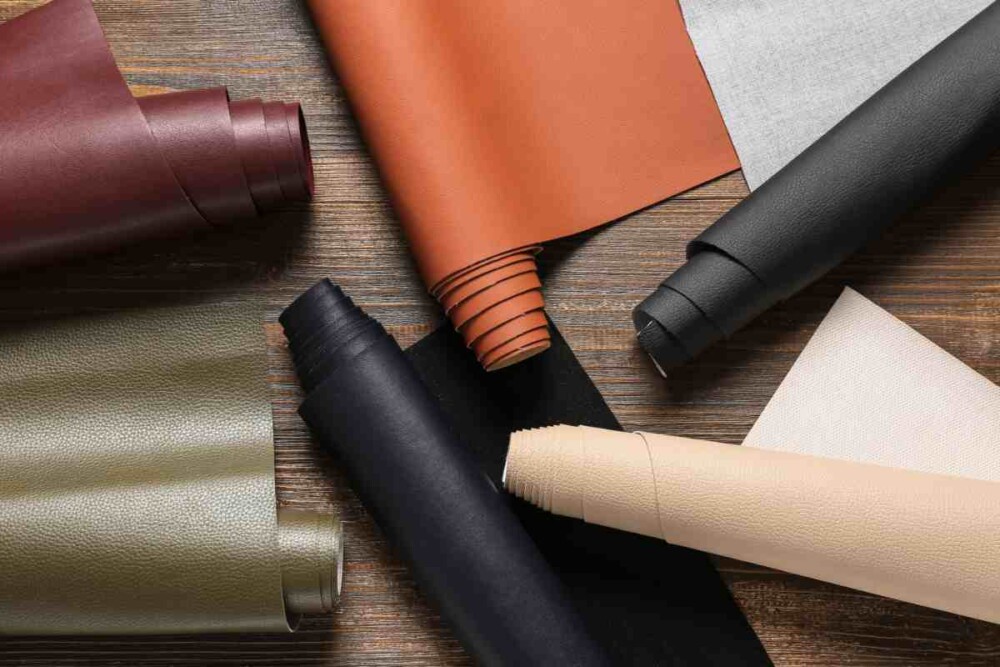
PVC upholstery coverings

Polyvinyl chloride coatings provide total waterproofness and high mechanical strength, with generally lower costs than polyurethane. They are indicated for high-traffic environments and for applications where cleaning must be quick and frequent, from catering to healthcare facilities. The hand feels less soft and breathability is zero.


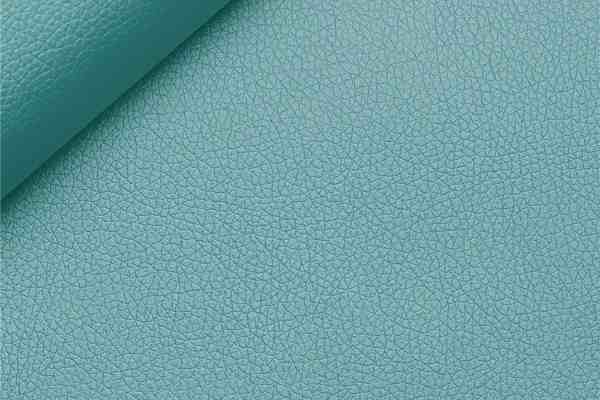
Tessuto Melissa 140 cm: leather-effect PVC coating for seating

Tessuto Melissa is a 100% polyvinyl chloride skin-effect coating, with a height of 140 centimeters and a basis weight of 465 grams per square meter. This is the material with the highest consistency among synthetic coatings, a characteristic that determines its field of use.
Fabric Melissa

Polyvinyl chloride provides total waterproofness and high mechanical strength: the continuous surface does not absorb liquids and withstands frequent cleaning with cleaning products, without degrading. This is why this family of coatings remains the reference in high-traffic environments, where rapid and repeated sanitization is part of ordinary management.

The field of application covers the upholstery of sofas, armchairs and seats, with particular relevance for catering, healthcare facilities and commercial spaces. The height of 140 centimeters corresponds to the standard of upholstery.

stain-resistant upholstery

Technical upholstery fabrics: stain-resistant, outdoor and fireproof

Contemporary upholstery has been enriched with a category of materials designed to meet a specific performance requirement. Technical treatment does not replace the basic quality of the fabric, but extends its field of use.

Stain-resistant and water-repellent upholstery fabrics

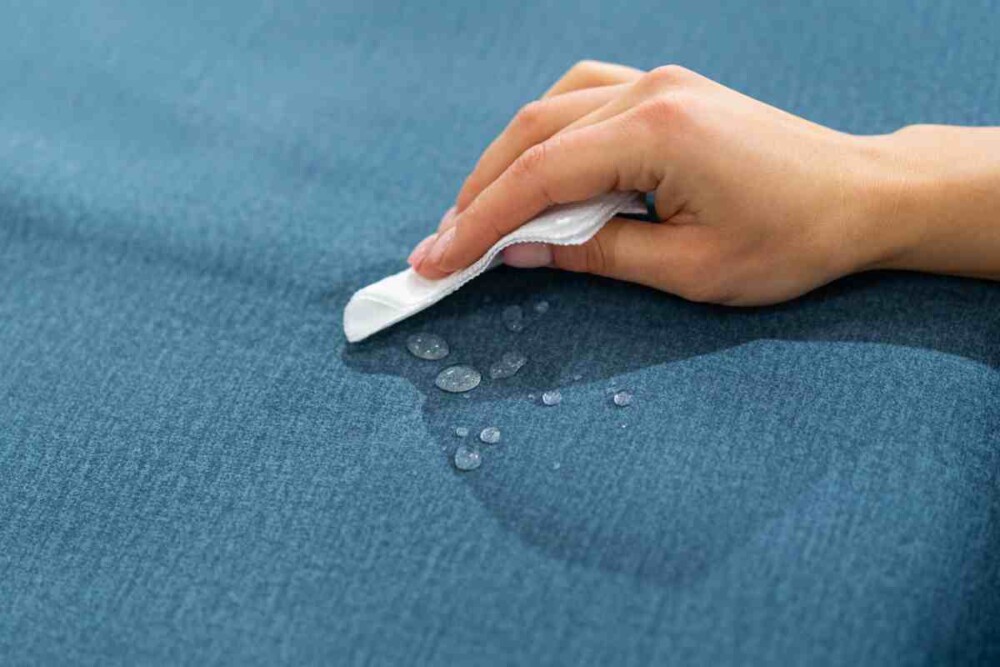
Water-repellent and oil-repellent finishes reduce surface tension, preventing liquids from immediately penetrating the fiber and allowing time to intervene. They should be distinguished from fabrics with an intrinsically compact structure, such as microfibers, where the effect derives from construction and not from treatment. Finishes fade with repeated washing, while structural compactness remains.

Outdoor upholstery fabrics

Outdoor upholstery poses a different problem than domestic upholstery: the dominant stress is not abrasion but ultraviolet radiation, accompanied by humidity and temperature changes. Bulk-dyed acrylic fibers and high-solidity polyesters represent the references of the category, together with the supports treated against mold formation.

Intrinsically fireproof upholstery fabrics

In the contract, the difference between a treated fabric and an intrinsically fireproof fabric is substantial. In the first case, the performance derives from a substance applied during finishing, destined to degrade with washing; in the second, the characteristic lies in the chemical structure of the polymer and persists for the entire life of the coating. For environments subject to periodic certification, the second solution is almost always more cost-effective over the life cycle.
choose upholstery

How to choose upholstery fabric based on its intended use

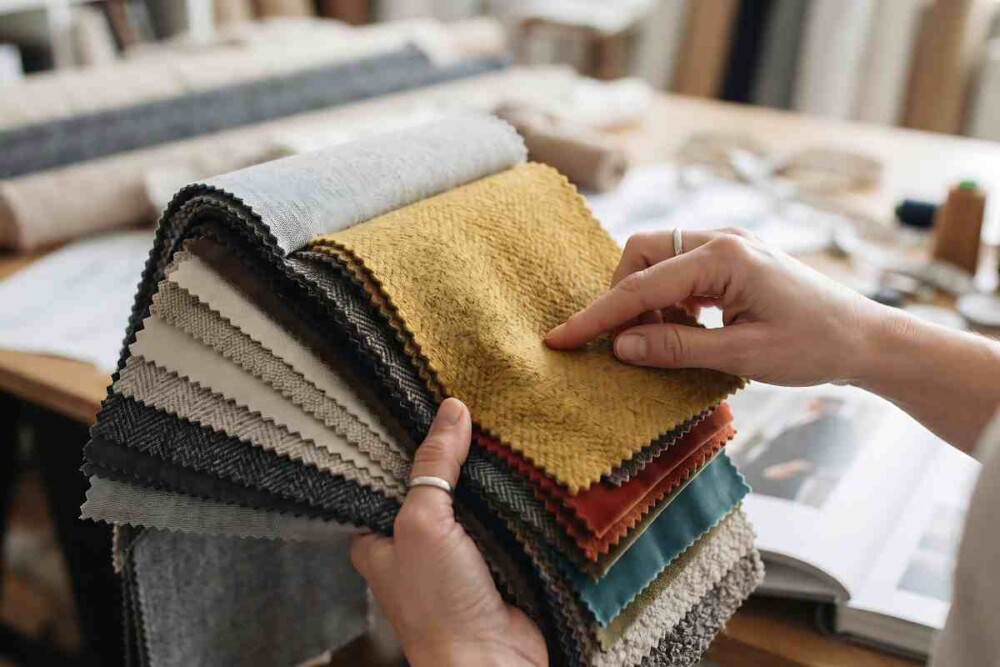
The most reliable method of guiding the choice is to start from the intended use and go back to the minimum requirements, rather than starting from the fabric and checking a posteriori whether it is adequate. The table summarizes the operational references.

Intended useMinimum MartindaleAdditional requirements
Cushions and decorative complementsNot decisiveAesthetic coordination, washability
Padded headboards and panels10.000Dimensional stability, light fastness
Chamber chairs and occasional seating15.000Good recovery from compression
Family sofas and dining chairs20.000 – 25.000Contained seam slip, washability
Offices and waiting rooms30.000Light fastness 5-6, pilling resistance 4-5
Hotels, restaurants, public spaces40,000 and overClass 1 IM on assembly, EN 1021-1 and 1021-2
Outdoor furniture25.000 – 40.000Mass dyed fiber, light fastness 7-8, anti-mold

Residential Upholstery: Priorities and Trade-offs

In the home, the choice is based on the balance between aesthetics, tactile comfort, and ease of management. Martindale doesn’t have to be maximized at all costs: exceeding usage requirements by a large margin often means forgoing softness without any real benefit. The factor that deserves greater attention is the presence of children or animals, which shifts the priority to the washability and compactness of the surface.

Contract Upholstery: Regulatory Obligations and Life Cycle

In the contract the logic reverses. Technical performance trumps taste, and documentation becomes an integral part of the supply: reaction-to-fire certifications, abrasion test reports, and maintenance sheets must be acquired before ordering, not after processing has begun.

Outdoor Upholstery: Light Before Wear

For furnishings exposed to the elements, the guiding criterion is color fastness to light, followed by resistance to humidity. A fabric with excellent mechanical strength but poor ultraviolet resistance loses tone within a season, making every other parameter irrelevant.
upholstery metre calculation

How much fabric is needed for upholstery: calculating the yardage

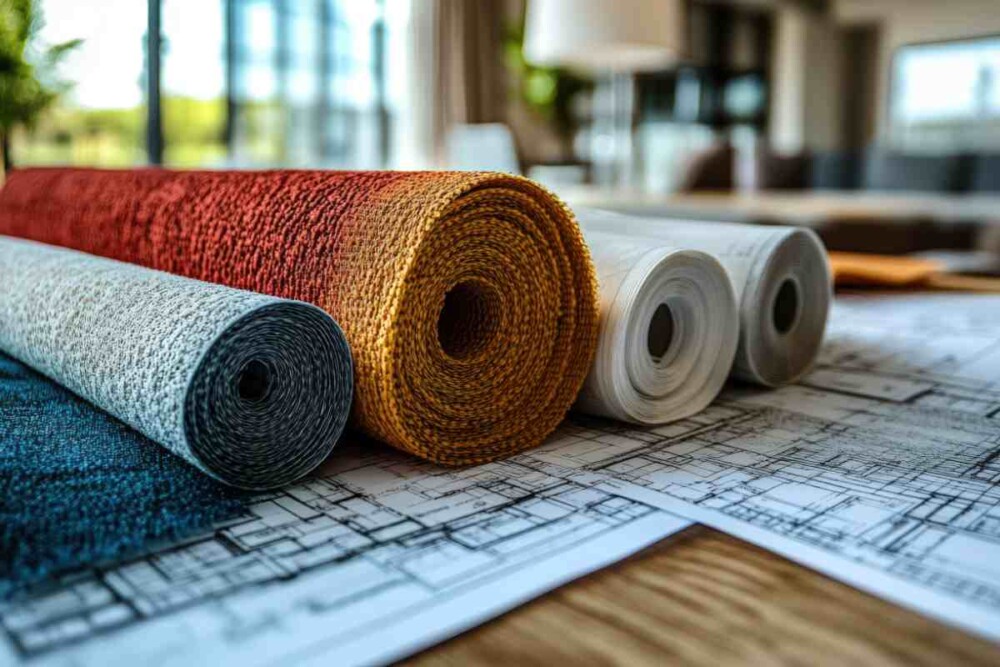
The requirement depends on the size of the furniture, the height of the piece, the drawing ratio and the presence of the pile. The values below are indicative and refer to a height of 140 centimeters with solid-colored fabric: they must always be verified on the actual model and on the upholsterer’s relief.

Element to be coatedIndicative Meter (height 140 cm)
Chair with padded seat0.5 to 1 meter
Chair with padded seat and backrestFrom 1.5 to 2.5 meters
Armchair3 to 5 meters
Two-seater sofaFrom 8 to 11 meters
Three-seater sofaFrom 12 to 16 meters
Marriage headboard3 to 4 meters
Cushion 45 x 45 centimetersAbout 0.5 meters

Drawing and incidence ratio on sizzle

The drawing ratio indicates the distance after which the pattern repeats, in height and width. In jacquards and large-format prints it can exceed fifty centimetres and in some cases reaches one metre. Each panel must be cut by aligning the pattern with adjacent ones, which results in a gap proportional to the ratio: on a sixty-centimeter design, the increase in requirements can exceed twenty percent compared to the solid color.

Hair direction and cutting direction

In velvets, suede and all surface oriented fabrics the pile reflects light differently depending on the direction. All panels should be cut in the same direction, without exception: two pieces cut in opposite directions appear of different shades even if they come from the same piece. The practical consequence is the impossibility of optimizing the positioning by rotating the panels, with a further increase in requirements.
upholstery maintenance

Upholstery fabric maintenance

The actual life of a coating depends on maintenance as much as on its intrinsic characteristics. The technical data sheets include international codes that indicate the permitted cleaning method: knowing them prevents irreversible damage during the first operation.

CodeAdmitted cleaning method
WCleaning with water-based products
SCleaning with solvents, excluding water-based products
WSBoth water-based products and solvents allowed
XSuction and brushing only, no liquid agents

Good upholstery maintenance practices

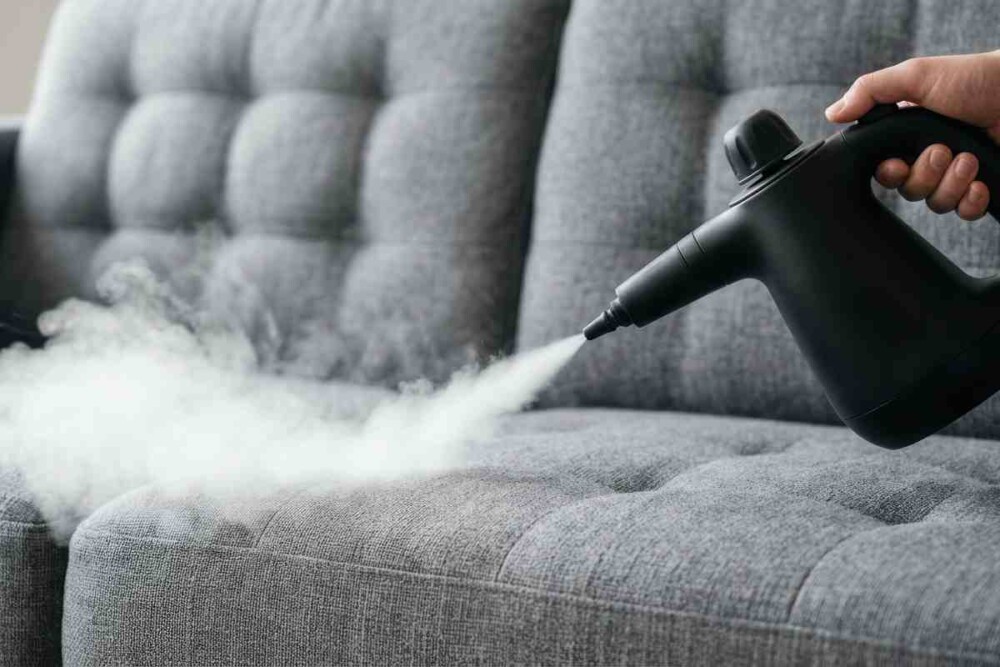
Some simple habits significantly extend the life of the coating. Regular suction removes particulate matter that acts as an abrasive between the fibers. The stains should be patted and never rubbed, because the rubbing pushes them deep and alters the surface. The removable cushions should be rotated periodically to distribute wear. Direct and prolonged exposure to sunlight should be limited, especially in intense tones. Before any treatment, it is always advisable to perform a test on a hidden area.
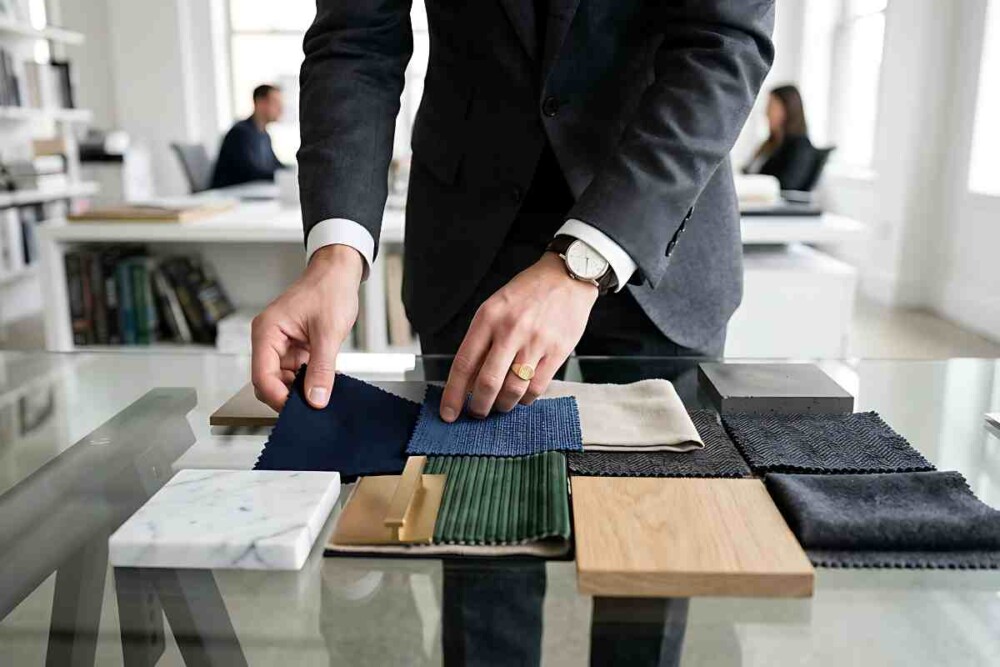
upholstery samples

Most frequent mistakes when choosing upholstery fabrics

Daily experience with upholsterers and ateliers highlights a limited number of recurring errors, which recur with considerable consistency and can be prevented with a preliminary check.

  • Only rate the Martindale. A high value does not compensate for poor color fastness or poor sewing behavior.
  • Employ a clothing fabric in upholstery. Clothing weights and armor cannot withstand the constant stress of the session.
  • Ignore the drawing report in the quote. It is the most common cause of insufficient footage and the consequent use of a different piece of the game.
  • Order at different times without checking the match. Different dye baths generate chromatic waste visible on the side-by-side panels.
  • Give the assembly as a certificate starting from the fabric. In the contract, Class 1 IM concerns the combination of covering and padding, not just the covering.
  • Neglect pre-washing in removable liners. Even minimal shrinkage after packaging renders the lining unusable.

Wholesale upholstery fabrics: the Cimmino experience since 1750

Manifattura Foderami Cimmino has been selecting and distributing fabrics for professional home decor since 1750. The company supports upholsterers, ateliers, upholstery manufacturers, and HO.RE.CA operators in choosing the right material for each project, with sampling, yardage sales, and wholesale fabric supplies available throughout Italy.

Choosing an upholstery fabric requires a comparison of usage requirements, regulatory constraints, and aesthetic performance: a comparison that should be addressed before ordering and not once the work has begun. Our technical office is available for the evaluation of data sheets and for the verification of compliance on contract projects.


FAQ – Frequently Asked Questions About Upholstery Fabrics

What is the strongest upholstery fabric?

High-density polyester fabrics, microfibers, and textured chenilles achieve the highest abrasion resistance values, frequently exceeding forty thousand Martindale cycles. However, the overall strength also depends on the solidity of the colour and the sewing behaviour, which must be checked together with the abrasion figure.

How many Martindale cycles do you need for a sofa?

For a sofa for regular family use the reference is between twenty thousand and twenty-five thousand Martindale cycles. For intensive use or in a contract environment the minimum value rises to forty thousand cycles.

What is the difference between an upholstery fabric and a curtain fabric?

Upholstery fabric works under load and friction, so it requires high weights, compact reinforcement, and certified abrasion resistance. Curtain fabric works suspended vertically and instead favors falling, lightness and light fastness.

Can I use clothing fabric to cover an armchair?

It is not advisable. Clothing fabrics have weights and structures designed for body draping and not for the continuous stress of a seat, resulting in premature wear and sagging of the seams.

How much fabric does it take to cover a three-seater sofa?

For a three-seater sofa, approximately twelve to sixteen meters of fabric are needed, 140 centimeters high and in solid color. With patterned or pile fabrics the requirement increases in proportion to the pattern ratio and the cutting direction constraint.

What is the best upholstery fabric for dogs and cats?

Microfibers and suede fabrics with a compact surface are the most suitable choice, because they do not have loops in which the claws can get caught and retain hair less. Bouclés and curly fabrics should be avoided.

Do upholstery fabrics need to be fireproof?

In the domestic sphere, there is no general obligation. In places subject to fire brigade control, such as hotels, restaurants and facilities open to the public, the fire reaction classification according to the Ministerial Decree of 26 June 1984 is required, with Class 1 IM being assigned to the cladding and padding assembly.

How do you clean upholstery fabrics?

The permitted method is indicated by the code reported in the technical data sheet. The acronym W allows water-based products, the S imposes solvents, the WS allows both, the X limits the intervention to suction and brushing. Stains should always be patted and never rubbed.

Better natural or synthetic fibers for upholstery?

Natural fibers provide superior hand and breathability, synthetics prevail over strength, dimensional stability and ease of maintenance. Blends are the most effective compromise in most projects, because they combine the appearance of the former with the performance of the latter.

logo Cimmino Aurea

Cimmino Aurea Catalogue: Fabrics for the Funerary Sector, Sacred and Liturgical Vestments

There are times when every detail counts. The covering of a funeral bonnet, the draping of an altar, the chasuble worn during a liturgical celebration: these are all elements in which fabric is not simply a material, but a silent language of respect, dignity, and beauty. And it is precisely to these moments that Manifattura Foderami Cimmino dedicates Cimmino Aurea, the line of fabrics designed for the funerary sector, sacred vestments and liturgical clothing.

With over 270 years of experience in the textile world, Cimmino brings to this catalogue of fabrics for sacred art the same attention to raw materials and production processes that characterizes each of his collections, from 1750 to today.

fabric covering coffin

Funeral Hood Padding: From Tradition to Personalization

The heart of the Aurea catalogue is represented by the fabrics for the internal lining of the coffins. The range ranges from bright satins like Keope Satin and Poly Jacquard Satin to textured solutions like Burlington Fabric, Mikado Fabric with its elegant Japanese-inspired diagonal weave, and the precious Duchesse Polyamide Satin, 300cm wide for seamless coverage.

For those looking for fabrics 280 cm high, ideal for large-format padding, the catalogue offers the Panama Yvonne (also in the Jacquard variant), the Canapone Opis, the Canneté, the Toscana LNT and the Scottie Lame versions and Basics, all OEKO-TEX® certified. Completing the offer are the Taffeta Unito Persia (300 cm) and the Jacquard Baia Velvet, with its particularly sought-after three-dimensional texture.

cloths for coffin covers

Woven fabrics for body covers, shrouds and edging

For the composition of the body, the Aurea catalogue includes tulle in different heights, the Tulle Messina (100 cm), the Tulle Critia (300 cm) and the Tulle Bomboniera with floral lace motifs, together with the semi-rigid Quito Extra net and Clara and Andalusia lace. All ready for embroidery for custom customizations. Linen 2006, pure linen certified OEKO-TEX®, represents the most valuable choice for shrouds and altar covers.

tessuti per paramenti sacri

Fabrics for sacred vestments and liturgical clothing

Chasubles, stoles, chasubles and other sacred furnishings find a targeted selection in the Aurea catalogue. The Vatican Canvas Polyvis in polyester-viscose blend and available in a wide color range to respond to the liturgical colors of each time. For solutions with a strong scenographic impact, the Havana, Cashmere and Eternity brocades, enriched with metal fibre, stand out for their classic relief designs, perfect for solemn celebrations. The Velour Arredamento Fabric and the 643 Chenille, both OEKO-TEX® certified, complete the proposal for ornamental catafalque covers and sacred vestments.

flag fabrics

Fabrics for complementary articles for the sector

The catalogue does not neglect operational needs. The Printed Flag, a ceremonial tricolor for civil and military commemorations, and the Maglina Cotone Frida for body recovery bags meet specific needs of the funeral department. The Fresco Valentina in polyester-viscose blend and designed for the staff uniforms, available in black, blue and charcoal grey. The 562 wire fiber mesh, also available in silver, adds a precious touch to ornaments and finishes.

Discover the Cimmino Aurea catalog and other online wholesale fabric catalogs available at cimminoshop.com.

fabrics for fine sofas

High-quality sofa fabrics: the materials that are in vogue among large manufacturers

When it comes to furnishing your home, the choice of fabric for the sofa is crucial to ensure not only comfort but also style and durability. Large furniture manufacturers are always looking for the best materials to offer high quality solutions to their customers. Manifattura Foderami Cimmino offers the most appreciated and used fabrics for sofas, helping you to choose the ideal material for your furniture.

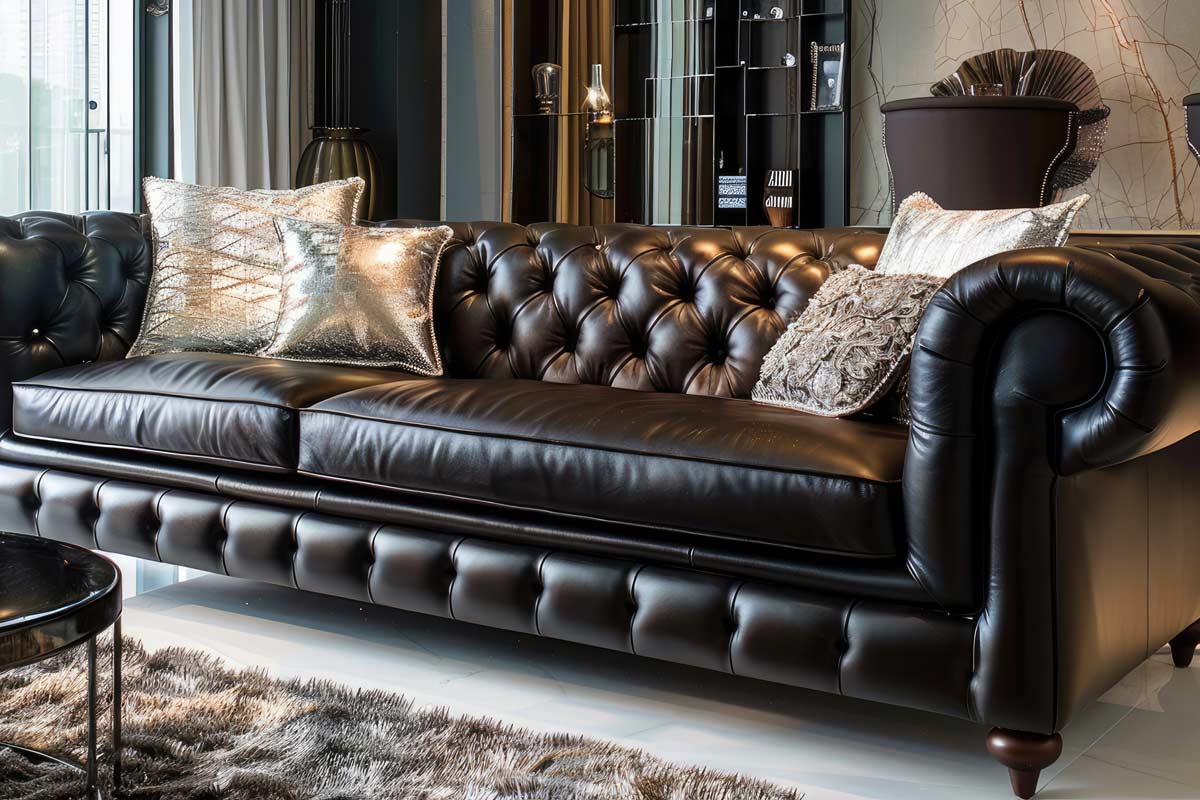
High-quality sofa in leather

The best fabrics for upholstery of valuable sofas according to large manufacturers

High-end sofa manufacturers know how important the choice of fabric is. Not only for the aesthetic appearance, but also for the resistance and ease of maintenance. Among the upholstery fabrics in the catalogues of Cimmino there are the best proposals to cover sofas in an elegant and functional way.

Velvet

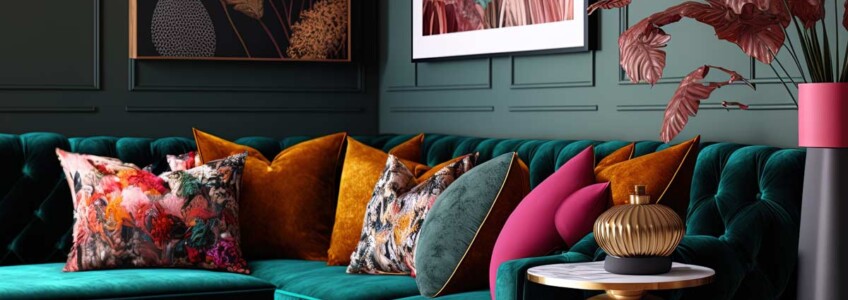
Velvet has always been synonymous with luxury. This fabric, with a soft and slightly glossy surface, is perfect for those who want a sofa that attracts attention. The Velvet Fabric Decor is available in a wide range of colors, from rich and dark tones to lighter and more delicate ones.

Velvet fabric furniture

Linen

Linen is another material highly appreciated by large producers for upholstery of sofas. Its natural texture and fresh, clean look make it perfect for both modern and classic environments. Linen is known for its breathability and strength, making it an excellent choice for those looking for a sofa that will last. Although it requires a little more maintenance than other fabrics, linen remains one of the most popular options for its refined appearance and versatility.

Microfiber

Texas suede fabric

Microfiber is an increasingly popular choice due to its stain-resistant properties and wear resistance. Texas Suede Fabric is extremely soft to the touch and easy to clean, making it ideal for families with children or pets. Microfiber is available in a wide range of colors and finishes, allowing it to adapt to any style of furniture.

Fabrics for classic and vintage sofas: ideal materials for a timeless style

For those who love classic or vintage style, the choice of the right fabric is essential to create a cozy and refined atmosphere. There are some fabrics that lend themselves better than others to be used as a covering for elegant sofas which dominate the centre of sumptuous living rooms.

Brocade

Brocade is a richly decorated fabric, often used in traditional furniture. Thanks to its intricate designs and robust texture, brocade fabric is ideal for sofas that want to convey elegance and opulence. This material is perfect for those who want a sofa that is not only comfortable, but also a real piece of art.

Jacquard

The jacquard workmanship fits perfectly to classic and vintage sofas. Thanks to its ability to reflect light, the Jacquard Bay Velvet fabric gives depth and warmth to any room, making it ideal for elegant and sophisticated living rooms. This material is very resistant and keeps its shape over time, making it ideal for sofas that must last years without losing their original charm.

Jacquard velvet bay

Modern sofa fabrics: contemporary options for elegant furnishing

If you prefer a more modern style, there are several fabrics that can help you achieve a contemporary and elegant look for your sofa. These fabrics also offer great versatility and resistance, offering a particularly practical solution for those who need easy-to-manage upholstery.

Eco-leather

Melissa fabric

Eco-leather is an excellent choice for those who want the look of the skin without the costs or ethical implications. Melissa fabric is durable and easy to clean, and comes in a wide range of colours and textures. The faux leather is perfect for those looking for a modern sofa that is both elegant and practical. Lepoc fabric is also widely used in the production of sofas made from faux leather or imitation leather that combine aesthetics and functionality.

Technical fabrics

Technical fabrics, such as polyester and nylon, are highly valued for their durability and resistance to stains. These materials, such as Canneté Fabric, are ideal for modern sofas, since they offer a clean and minimalist look. They are also easy to maintain and can be found in a variety of colours and finishes, making it easy to match with any decor.

Cannete fabric

Mixed fabrics

fabric benidorm

Blended fabrics, made from a combination of natural and synthetic fibres, offer the best of both worlds. These materials combine the strength of synthetic fibres with the softness and comfort of natural fibres. Mixed fabrics, such as the Benindorm fabric, are perfect for those looking for a modern sofa that is both aesthetically pleasing and functional.

Fabrics for sofas with patterns: how to choose the most suitable designs

If you are looking for a sofa that will be the star of your living room, fabrics with patterns are the right choice. However, it is important to choose the right pattern based on the overall design of the room, so that all textile elements combine with each other in harmony and there are no out-of-tune notes in the elegance of the environment.

Geometric patterns

The geometric patterns are perfect for modern and minimalist environments. These designs, characterized by clean lines and simple shapes, can add a touch of dynamism to an otherwise simple sofa. Zarina, striped fabric, works well in rooms with contemporary decor, where the contrast between shapes and colors can create an interesting visual effect.

Zarina Fabric

Floral motifs

Panama fabric yellow flower lipsticks

Floral motifs are ideal for classic or shabby chic environments. These designs, often rich in details and colors, can add a touch of elegance and femininity to any sofa. The floral motifs of Panama Rossetti Fabric are particularly suitable for sofas in bright and airy environments, where they can stand out without overloading the space.

Abstract motifs

For those who want a more artistic and original look, abstract motifs are the ideal choice. These designs can range from organic and fluid shapes to more daring and contrasting compositions. Abstract motifs work well in modern and contemporary environments, where they can become the focal point of the room.

Choosing the fabric for your sofa is an important decision that can greatly influence the look and functionality of your furniture. The best manufacturers rely on Manifattura Foderami Cimmino for the choice and purchase of high quality online fabrics for high-end sofas.

women’s parea fabrics

The best fabrics for women’s sarong coverings and trends 2024

As summer approaches, the choice of the 2024 sarong costume cover becomes a priority for those who want to be fashionable on the beach. Manifattura Foderami Cimmino recommends the best fabrics for women’s sarongs coverings and the 2024 trends sarongs coverlet to help you make the perfect choice.

Most popular fabrics for coverup pareos

With the approach of summer and days at the beach, choosing the right fabric for your beach robe becomes essential to ensure comfort and style. There are different materials to choose from, each with unique characteristics that can affect your experience at the sea.

Chiffon

The chiffon is a transparent and light fabric, known for its fluidity and softness to the touch. Thanks to these features, it is very easy to drape, making it an excellent choice for women’s beach robes. The main advantages of chiffon include its elegance and the ability to give a sophisticated look, perfect for beach evenings.

Marinella Chiffon fabric

The Chiffon Marinella is a transparent veil fabric in canvas armor, characterized by a soft hand and extremely light but durable. Thanks to its versatility and elegance, it is perfect for packaging a variety of refined and fashionable feminine garments.

chiffon Marinella

The Chiffon Marinella is ideal for creating women’s evening dresses, blouses, elegant blouses, scarves, stoles, elegant beach pareos and bedding. Its transparency and lightness add a touch of sophisticated delicacy to every garment.

Glitter Chiffon Fabric

chiffon glitter

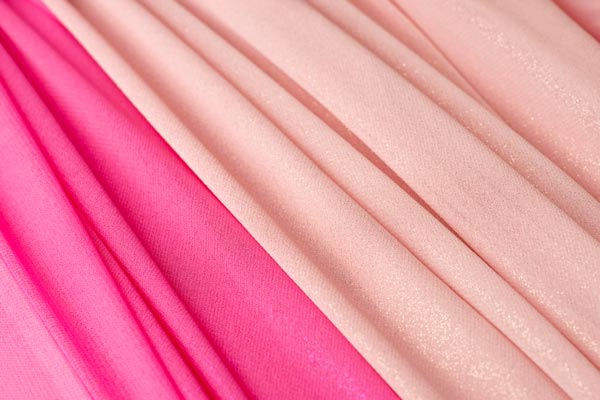
The Glitter Chiffon is a shiny transparent veil fabric, characterized by a soft hand, extreme lightness and resistance. This material, thanks to its sparkling reflections, adds a touch of glamour and sophistication to every creation.

The Glitter Chiffon is ideal for the packaging of women’s evening dresses, blouses, blouses, coverovers and elegant scarves. Its transparency and shiny details make it perfect for creating beach pareos that want to stand out for elegance and brightness, suitable for both special occasions and evening events.

Cotton

Cotton is a natural fabric widely used in women’s pareo fabrics for several reasons. It is breathable and lightweight, features that make it ideal for hot summer days. In addition, it is easy to wash and maintain, which makes it practical for frequent use. Another advantage of cotton is its convenience, which makes it accessible to a wide audience. There are several types of cotton used in sarongs, including lightweight cotton, organic cotton and wide-woven cotton, each with its own peculiarities that can meet different needs and preferences.

Fabric Batista Lietta

Batista Lietta is a lightweight cotton canvas with a soft hand, ideal for a wide range of applications thanks to its versatility and comfort. The combination of polyester and cotton makes it particularly durable and practical for different uses.

fabric batista lietta

The Batista Lietta is perfect for making women’s clothing and accessories, summer sarongs, nightshirts and children’s underwear. Its lightness and softness make it ideal for home decor projects and fabrics for children, offering comfort and delicacy on the skin.

Voile Harmonia fabric

voile harmonia fabri

Voile Harmonia Fabric is an extremely light cotton fabric, similar to a veil, which stands out for its softness and freshness. This fabric is ideal for making light underwear, women’s pareo sea and summer shirts, ensuring comfort and breathability.

Its lightness and softness make it also suitable for fabrics for children and for applications in the medical sector, where comfort and freshness are essential.

Linen

Linen is known for its freshness and ability to keep the body cool even on the hottest days, making it an excellent choice for pareos. This fabric offers many benefits: it is very breathable, natural and sustainable, and at the same time durable and durable. Matching a beach linen sarong is simple and versatile. It goes perfectly with straw accessories, is ideal with summer sandals and can be combined with tops in natural fabrics for a casual and chic beach wear.

Fabric Linen Clothing

The Linen Fabric Clothing is the ideal choice for those looking for a fresh and versatile material, perfect for the packaging of summer garments with fluid lines. Thanks to its composition in 100% linen, this fabric offers excellent breathability and comfort, making it suitable for a wide range of applications in the clothing industry.

linen fabric

Its light texture and ability to keep the body cool make it ideal for a sea sarong, ensuring an elegant and comfortable look.

Beach pareo trends and costume covers 2024

Sea fashion 2024 sees a return to bright colors and exotic prints. The 2024 fashion costume covers feature bold designs, with details such as fringes, embroidery and sustainable fabrics. The 2024 swimsuit cover trends include tropical patterns, fluorescent colors and lightweight yet durable fabrics, such as organic cotton and linen: they follow the 2024 swimsuit trends in patterns and color shades.

sarong

How to choose the perfect swimsuit cover

How to choose a headdress for the summer? Choosing the perfect costume covering sarong may seem like a challenge, but with some practical tips you can find the ideal option that will enhance your figure and adapt to different summer occasions. Considering your body type and the context in which the sarong will be worn are fundamental factors to make a conscious and fashionable choice.

Consider your own body type

Considering your body type is crucial to choosing the perfect sarong costume cover. If you have an hourglass shape, it is advisable to opt for women’s sarongs that highlight the waist, such as those with belts, which highlight your natural curves. If you have an apple shape, the ideal is to choose wide women’s parea that do not adhere too much to the body, so as to create a harmonious and balanced effect. For pear shapes, it is preferable to opt for pareos that draw attention to the upper body, perhaps with bright details or colors, diverting attention from the hips and balancing the overall silhouette.

chiffon sarong

Occasions and places

Choosing the right pareo depends very much on the occasions and places where you will wear it. For a day at the beach, they are ideal for light summer sarong fabrics such as cotton or chiffon, easy to wear and take off and perfect for a practical but fashionable look. If you are attending a pool party, opt for women’s silk or chiffon parei with elegant details that add a touch of sophistication to your outfit. For a stroll along the waterfront, linen is the perfect choice, offering a casual but chic look that will allow you to feel comfortable and stylish at the same time.

Choosing the right fabric for your pareo is essential to feel comfortable and fashionable during the summer. Whether you prefer the lightness of chiffon, the refinement of silk, the practicality of cotton or the freshness of linen, the important thing is to find, among the proposals of Cimmino fashion sea fabrics, the fabric that best suits your needs and fashion trends sea 2024.

wedding favors fabrics

The best fabrics for elegant wedding favors for every event

The choice of the best wedding favors fabrics is not only a matter of aesthetics, but a real business card for the most significant events, such as weddings, christenings or anniversaries. A detail that can make the difference in the guest experience, making every moment unique and unforgettable. In this article, we will explore the most suitable fabrics to create wedding favors that leave their mark.

wedding favors fabrics

Why the choice of fabric is crucial for wedding favors

The bonbonniere is a key element of every event, a symbol of gratitude and remembrance. The choice of fabric, in this context, plays a crucial role: a quality fabric elevates the design and the perception of the gift, communicating care and attention to the guests. The quality fabrics for wedding favors not only embellish the object, but increase its affective value and durability.

The fabric chosen for the favors is a direct expression of the style and personality of the event organizers. Whether it is a wedding, a baptism or an anniversary, the fabric can tell a lot about the taste and values of the hosts, from their predilection for luxury and elegance, highlighted by the choice of silk, to their commitment to sustainability, emphasized by the use of organic cotton or eco-friendly fabrics.

The bonbonniere is a symbol of gratitude to the guests, a way to say “thank you” for having shared such an important moment. A high quality or carefully chosen fabric reflects the importance that is attributed to this gesture of thanks, communicating appreciation and respect for the guests.

fabrics to create wedding favors

The most popular fabrics for wedding favors

What fabrics to use for elegant wedding favors? Let’s discover those selected by Manifattura Foderami Cimmino.

Silk

Silk, with its sheen and softness, is the luxury fabric par excellence. Ideal for wedding favors, adds a touch of elegance and unparalleled refinement. The silk for wedding favors is perfect for those who want to impress with class.

Linen

Linen is appreciated for its resistance and its ability to give a natural and refined look. Choosing linen for wedding favors means opting for a traditional material, such as Lino Tela 2001 Dolce, able to adapt to any style, from the most classic to the most modern.

Tulle

The tulle for wedding favors is an excellent choice for those looking for a material that combines elegance, versatility and convenience. Whether it is to gently wrap the confetti or to create aerial decorations, the Tulle Bonbonniere is able to transform each bonbonniere into a small masterpiece of style and delicacy, leaving an unforgettable memory of the event.

Cotton

The cotton is the ideal choice for those looking for sustainable fabrics for eco-friendly favors. Soft, resistant and easy to work, the Vichy Cotton Fabric is perfect for favors that respect the environment without sacrificing beauty.

Innovative and Eco-friendly fabrics

More and more space is given to innovative fabrics, which combine aesthetics and sustainability. Recycled materials, bamboo fibers or fabrics produced with low environmental impact techniques, such as Laminated Jute Canvas, represent the advanced frontier for eco-friendly wedding favors.

jute canvas for wedding favors

How to choose the right fabric for wedding favors

The choice of fabric should reflect the style and theme of the event. For a classic wedding, silk or linen may be the winning choice, while for an outdoor or eco-friendly event, organic cotton or innovative fabrics may be more appropriate. Considering seasonality is equally important: light fabrics for the summer, warmer materials for the winter.

The quality and type of fabric chosen directly affect the perception of the gift by the guests. A fine fabric, such as silk or linen, can elevate the wedding favor, turning it into an object of luxury and desire. On the contrary, an economic or chosen fabric without care can diminish the perceived value of the gift, even if the intention was genuine.

The durability of the fabric is another aspect to consider. A quality fabric not only resists better to the passage of time, but also ensures that the memory of the event can be preserved and appreciated for years. Fabrics such as linen and organic cotton, known for their resistance, are excellent choices for those who want their wedding favors to remain a lasting memory.

tulle for wedding favors

Customization and wedding favors trends

Customization is a growing trend: the personalized embroidery favors allows you to make each gift unique and personal. Current trends see a predilection for minimalism, with a focus on sustainable materials and designs that reflect authenticity and attention to detail.

The choice of organic fabrics for wedding favors, as well as luxury fabrics for wedding favors, therefore, plays a fundamental role in the art of creating tangible and significant memories. Fabrics are not only the material from which the favors are made, but the means through which emotions and values are transmitted.

Choosing with care the fabrics for wedding favors means giving a piece of history, a memory that will remain impressed in the hearts of guests.

woven wedding dresses

Fabrics wedding dresses: the best and most used

Choosing the fabric for a wedding dress is a crucial step in creating a masterpiece that captures the essence of this special day. Fabrics for wedding dresses are not only a detail, but the beating heart of each dress, which defines its style, comfort and elegance. Manifattura Foderami Cimmino guides us in the discovery of the best fabrics for wedding dresses, elegant and precious.

wedding dresses

Fine fabrics for wedding dresses: what are

Fine fabrics for dresses play a fundamental role in wedding fashion. Fabrics for wedding dresses such as silk, organza, satin, lace, crepe and cady are not only style choices, but represent quality and durability. A wedding dress made with fine fabrics not only looks magnificent, but also guarantees a perfect fit and unparalleled comfort. What are the fabrics to use to make wedding dresses? Here are the characteristics of the best products selected by Cimmino.

Crepe and Cady: Modern Elegance and Versatility

Crepe is a fabric for wedding dresses that stands out for its slightly ruched texture and its fluid fall. It is ideal for brides looking for a contemporary look, with a touch of sophistication and movement. The cady fabric, with its smooth surface and its heavier structure, offers a defined silhouette and structured elegance, stands out among the fabrics used for wedding dresses for more modern and minimalist cut dresses.

Crepe Zaira

Crepe Zaira is a lightweight fabric that stands out for its grainy and rippled texture. This particular feature makes it ideal for making a wide range of clothing. It is perfect for making blouses and blouses, offering a touch of elegance and femininity. In addition, it fits beautifully to the creation of dresses and skirts, thanks to its fluid fall and its refined appearance.

The Crepe Zaira is also an excellent choice for wide pants, which benefit from its lightness and comfort. Finally, it is widely used in the making of evening, wedding and ceremonial dresses, where its elegance and its unique texture add a touch of class and distinction to the garments.

Silk and Satin: Classic Elegance

Silk, with its smooth and shiny surface, has always been a fabric wedding dress synonymous with luxury and refinement. The satin, often made of silk, offers a unique sheen that captures the light in a sublime way, ideal for wedding dresses woven so that you can shine in the big day.

Raso Duchesse Color

The Satin Duchesse Color stands out for its extremely smooth and brilliant surface, accompanied by a remarkable texture to the touch. This fabric, known for its wide range of colors, is particularly appreciated for its ability to structure and shape the figure flawlessly. It is frequently chosen for the creation of wedding and evening dresses, thanks to its elegance and ability to give a sophisticated and refined look to the garments.

Organza and Tulle: Lightness and Volume

Organza, transparent and rigid, is a perfect wedding dress fabric to add volume without weighing the dress down. The tulle, with its fine and airy mesh, is often used for veils and overlapping layers, creating an ethereal and romantic effect.

Tulle Valeria Silk Hand

The Tulle Valeria Mano Seta is a semi transparent fabric, characterized by a soft and light texture. This material is mainly chosen for the realization of wedding veils, thanks to its delicacy and transparency. It also finds a wide application in giving volume to multilayer skirts, adding a touch of elegance and lightness.

It is also used to create fine drapes on wedding dresses, giving it a unique and sophisticated look. In addition to the wedding use, the Tulle Valeria Mano Seta is also appreciated in the creation of evening dresses and decorations, thanks to its versatility and beauty.

Lace: The Art of Detail

Lace, with its intricate textures and patterns, is among the bridal dress fabrics that never goes out of fashion. Used for delicate details or as the main element of the dress, the lace adds a touch of timeless elegance.

Pizzo Clara

The Pizzo Clara, belonging to the categories of Clothing, Ceremony Dresses, Ready Fashion, Bride & Ceremony, stands out for its softness and the delicate floral theme that characterizes it. This fabric, available in a wide variety of fashionable colors, is extremely versatile and is an indispensable element in the creation of elegant dresses and trendy accessories. Its texture and design make it ideal for adding a touch of sophistication and uniqueness to any garment or accessory.

The choice of fabric for the wedding dress: criteria and considerations

When it comes to selecting the wedding dress fabric, several elements come into play. The decision is influenced by factors such as the season in which the wedding takes place, the general theme of the event, personal preferences in terms of style and, of course, the budget available. It is crucial to consider the reaction of each of the fabrics wedding dresses to different environments: some are better suited to outdoor summer weddings, while others are ideal for indoor winter ceremonies.

What are the factors to consider when choosing wedding fabrics?

  1. Comfort: It is essential that the chosen fabric guarantees comfort for the entire duration of the event.
  2. Seasonal Adaptability: Light and breathable wedding dress fabrics are preferable for summer weddings, while more full-bodied materials are better suited for winter weddings.
  3. Dress Style: Each fabric wedding dress lends itself to certain styles of dress. For example, satin is often chosen for tight-fitting models, while organza is ideal for creating volume in skirts.
  4. Budget: Although high quality fabrics tend to cost more, there are good quality alternatives that can fit on more limited budgets.
cloth wedding dresses

Bridal fabrics: trends and innovations

In the world of bridal textiles, trends constantly evolve. Recently, there has been a growing interest in sustainable and eco-friendly fabrics, which respond to the growing demand for more environmentally friendly weddings. Technological innovation also plays an important role, with the development of fabrics that offer greater comfort and adaptability.

The choice of fine fabrics for wedding dresses is an exciting and fundamental journey in the creation of a dress that not only celebrates love and beauty, but that remains imprinted in memories.

Whether it’s silk, satin, organza, tulle or lace, Manifattura Foderami Cimmino has selected the best fabrics wedding dresses: discover them now!

stretch fabric

Stretch fabrics: what they are and what they are for

When we choose an item of clothing, we usually tend to choose what gives us comfort and makes us feel comfortable. A fabric that allows us to move in total freedom without sticking. The stretch fabric is one of the most used fabrics in clothing because, just as its name suggests, it allows you to move without feeling “attached”. But what is stretch fabric? How many types of stretch fabrics exist?

Today we discover, together with Manifattura Foderami Cimmino, what and what are the stretch fabrics and their uses in the world of clothing.

elastic fabric

What is stretch fabric?

What is stretch fabric? The elastic fabric or, as we said, stretch fabric is a fabric that has the characteristic of “stretching”. It is in fact produced with elastic threads called “corespun” (that is, covered elastic core) combined with other non-elastic yarns that can be of any type, from wool to cotton, from cashmere to alpaca, from silk to linen. These fibers can also be mixed together.
The characteristics of stretch fabrics are the extreme comfort and the ability to resist deformations and creases. The stretch fabrics for clothing, in fact, guarantee maximum fit and maximum comfort, allowing total freedom of movement. In addition, they are highly tear resistant and manage to keep the humidity very low, they are in fact easy to dry.

Where is the elastic fabric?

The stretch fabric was born mainly for sportswear but, thanks to its ability to adapt and its comfort, it has expanded into the leisure clothing sector and gradually to the more classic fabrics. Stretch fabrics are found in many products, from socks to jeans. Wide is its use also in underwear and stretch fabrics for clothes.

elasticized fabrics

How to measure the elasticity of a fabric?

In order to measure the elasticity of a fabric it is necessary to have a ruler and, resting the fabric on it, exercise an average effort without exaggerating. Based on how many centimeters you will have moved from the initial point, how much will be the degree of elasticity.
It should be noted that there are two types of elasticity of a fabric:
–2-way stretch fabrics that have warp or weft elasticity. They are comfortable enough to wear, but not suitable for sportswear. In addition, the 2-way stretch fabric does not return to its original shape;
–4-way stretch fabrics can extend in both directions, transversely and longitudinally, which creates better elasticity and makes them perfect for sportswear.

How to wash stretch fabric?

Although the elastic fabric is a very resistant type of fabric, you still have to be careful when washing. Generally to wash stretch fabrics it is good to use water and dry them in the air, this will help to maintain elasticity over time. Therefore avoid the dryer. Another tip that can help prevent excessive twisting and tension of the fabric is to use a mesh bag in which to insert the stretch fabric before inserting it into the washing machine. To treat particular stains, apply some mild liquid detergent before washing and rub gently.

What are the stretch fabrics?

There are various types of stretch fabrics. They differ in the fibers used in their creation. Let’s see together what they are:

Elastan

Elastane is also known as Lycra or Spandex. This type of fabric can stretch up to 400% of its size, but once mixed with other materials, it can still lend up to 20% of its elasticity to the coupled fiber. Stretch fabrics contain different percentages of elastane, depending on the type of garment, but usually do not exceed this amount since a large amount of this fabric could make the garment uncomfortable. In our catalog you will find various fabrics containing elastane, for example our Elastic Ity Fabric, widely used for casual and sports clothing as very durable.

ity elastic fabric
shiny elastic sweater

Knitted fabrics

Knitted fabrics owe their elasticity to the way they are produced, using woven fibers in rings. The “meshes” from which this elastic fabric is composed give the elasticity, which increases when mixed with other types of elastic fibers. Here, for example, you will find our fantastic Shiny Elastic Sweater. In 15 sparkling colors, this fabric is suitable for women’s clothing, classic, elegant and sporty.

stretch cotton

Stretch cotton is the result of the fusion of natural cotton with elastic microfibers, added in different percentages. The end result is a fresh and sweat-absorbing elastic fabric that makes it very useful in underwear, sportswear and even for shirts just like our Popelin Stretch Shirts fabric.

stretch poplin shirt

These are just the main fabrics, discover the other beautiful stretch fabrics on our website.

modern curtain

The best fabrics for modern curtains

What is the piece of furniture that contributes, more than all the others, to customize the house with the right style finding the perfect balance between functionality and aesthetics? The curtains, of course! They not only offer privacy and protect from sunlight, but are also a decorative element that can completely transform the appearance of a room.

Depending on the style of furniture prevalent within our house we will choose traditional curtains or modern curtains: in both cases the choice of the right fabric is essential to ensure a harmonious and impeccable final result.

Together with Manifattura Foderami Cimmino we discover how to choose the right fabric for curtains and which are the best fabrics for modern curtains.

What are modern curtains: types of curtains for a modern style

Modern curtains are distinguished by clean design, simple lines and quality fabrics. Often, modern curtains avoid frills and excessive decorations, opting instead for a minimalist and sophisticated look.

The category of modern furniture curtains includes panel curtains, roller blinds and roman blinds. Modern special curtains can also present unique details, such as horizontal bands, geometric patterns or interesting textures.

How to choose the fabric of curtains for modern curtains

The choice of fabric of curtains depends on various factors, including the type of room, exposure to light and the desired style. For rooms with plenty of light, you might consider light and translucent fabrics that allow light to filter gently.

For rooms where you want more privacy, such as the bedroom, heavier and opaque fabrics might be the ideal choice. It is also important to consider the maintenance of the fabric of curtains: some fabrics can be washed in the washing machine, while others require more delicate care.

fabrics for modern curtains

What are the best fabrics for modern curtains

There are numerous fabrics ideal for modern curtains. Here are some of the most popular:

  • Linen: Linen is a natural and breathable fabric, perfect for creating a light and airy look. It is ideal for bright rooms and offers an elegant and refined look.
  • Mixed: Mixed fabrics, such as cotton and polyester, offer the beauty of natural fabrics with the durability and ease of maintenance of synthetic fabrics.
  • Devore fabrics: These fabrics feature designs that create intricate and detailed patterns, ideal for those who want modern detail curtains.
  • Fabrics with horizontal bands: These fabrics feature bands of different colors or textures, creating a dynamic and modern visual effect.
modern curtains

What colors and patterns to choose for modern curtains

The color palette for modern curtains includes a wide variety of shades, from neutral to brighter ones and you can also choose different patterns that blend perfectly with a modern style.

White, beige, grey and other neutral shades are always a safe choice for modern curtains. These colors offer a clean and minimalist look, and easily fit into any color scheme. Navy blue and dark green are deep and saturated colors, perfect for creating a sophisticated and contemporary atmosphere and therefore particularly suitable for rooms with modern and linear furnishings.

Pastel shades are also among the possible choices for modern curtains: colors such as powder pink, light blue and mint green can add a touch of freshness and lightness to the rooms. Let’s not forget, then, the metallic shades: gold, silver and copper are colors that can add a touch of luxury and brilliance to modern curtains, especially when used in details or finishes.

As for the patterns for modern curtains we focus on geometric patterns, such as circles, squares, triangles and lines that add a dynamic element without being too intrusive. Vertical stripes can add height to a room, while horizontal stripes can enlarge it visually. Both thin and wide stripes are suitable for a modern look.

Simple designs like small dots, stars or other small minimalist motifs can add interest without overloading the space. Although not technically a fantasy, textures like jacquard or chenille can add depth and interest to curtains without the use of bright colors or complex designs. Finally, leaves, flowers and other elements of nature represented in a stylized and graphic way are perfect for modern curtains, especially if made in neutral or monochromatic shades.

Fabrics for modern curtains selected by Manifattura Foderami Cimmino

What are the fabrics for modern curtains not to be missed in the always updated catalog of Manifattura Foderami Cimmino? Let’s find out together!

Curtain Linosa

A fabric for modern curtains with linen effect available in white and in various shades of beige and gray.

curtain Linosa
curtain Maiori

Curtain Maiori

For very long modern curtains is particularly recommended this fabric in height 310cm with light-colored notes.

Curtain Georgette United

A fabric for home decor in a modern style, with a soft hand and a range of colors easy to match.

curtain Georgette
curtain Nantes

Curtain Nantes

Ideal for modern furniture is this transparent fabric in light colors in height 330 cm with lead.

Curtain Nizza

Fabric for modern curtains available in a wide variety of light colors: height 290 cm with lead for this non-veiled material.

curtain Nizza
curtain Laos

Curtain Cinzata Laos cm 310

Height 310 cm with leaded leather effect for this high quality fabric declined in ten trendy and fashionable colors.

Curtain Alabama

The patterned bands make this fabric particularly suitable for modern environments to make curtains in natural colors.

curtain Alabama
curtain Nevada

Curtain Nevada

Curtain for use modern furniture with a single and striped pattern, with natural colors and soft and fluffy hand.

Ready to transform your home in a modern style? Manufacturing Lining Cimmino with the best fabrics for curtains!

Cosplay Costume

The best fabrics for cosplay

Cosplay is an activity that allows all fans of cinema, comics, anime and video games to immerse themselves in the world of their favorite characters. Through the creation of accurate cosplay costumes and the interpretation of the characters themselves, cosplayers manage to bring imagination to life and share their passion with the community. A unique way to celebrate popular culture and creative expression.

But to create an authentic and impressive cosplay costume, it is crucial to choose the right fabrics.
In this article we will explore the best fabrics for cosplay and provide useful tips on how to select the perfect material for your next costume. Firstly, however, let’s find out in detail what it is.

What is a cosplay?

Cosplay, a term that derives from the combination of the words “costume” and “play”, is an activity that involves the interpretation of fantasy characters through the use of clothes that are faithful to the character and setting. Cosplayers are passionate players who dedicate time and energy to creating their own costumes, often from scratch, to represent the characters of their favorite universes. It is not just about wearing a costume, but to completely immerse yourself in the character, recreating his appearance, his personality and even his movements.

Cosplay Costume

How to do and where to buy cosplay costumes?

If you want to make a cosplay costume, here is a step-by-step guide to get you started in the best way.

Start by selecting the character you want to play. Choose someone who inspires you and who you feel attached to. Research the character, look at reference images from different angles and study the details of the costume.

Carefully examine the character’s costume. Observe the fabrics used, the colors, the details of the designs and the accessories. Ask yourself which parts of cosplay you can create from scratch and which you could buy or edit from existing outfits. Make a detailed list of the materials needed to make each part of the cosplay costume.

Look for fabrics to make cosplay costumes available in the catalog of Manifattura Foderami Cimmino. Choose materials that come as close as possible to the appearance and texture of the character’s original costume. Make sure you also buy the tools you need to make your costume, such as cloth scissors, sewing machines and decoration materials.

Start creating your costume by following the details of the design. Carefully measure each part of the costume to make sure it fits properly. Use your sewing skills to assemble the various parts, making sure you make strong seams. If you need help, look for online tutorials or join local cosplayer groups to exchange tips and tricks with other fans.

Once you have made the main parts of the costume, go to the stage of finishing and details. Add decorations such as buttons, sequins, beads or appliques to make the costume even more faithful to the original. Be sure to also pay attention to accessories such as shoes, weapons or items characteristic of the character. You can buy them ready or create them yourself using materials such as polystyrene or cardboard. Even “makeup and wig” are an integral part of cosplay costumes. Study the makeup of the character and look for an online tutorial to get a realistic result.

cosplay dress

Fabrics for cosplay costumes

The world of cosplay offers endless possibilities to transform into beloved characters from anime, manga, video games and movies. But to create an authentic and impressive costume, it is crucial to choose the right fabrics.

Cotton

Cotton is one of the most versatile and affordable fabrics to make cosplay dresses. It is soft, breathable and easy to work with, making it ideal for costumes with prints or designs. It is available in various textures and weights, so you can choose the type of cotton that best suits your character. For example, for anime costumes or horror themed , you can opt for the Cotone Digital Halloween 2021, perfect for Halloween too.

Fabric Cotton
polyester fabric for cosplay costumes

Polyester

Polyester is another popular fabric for cosplay dresses. It is durable, economical and is often used to create clothes with a futuristic style or with a glossy finish. Polyester can be easily colored and printed, allowing a wide range of options for costumes cosplay.
On our online shop you will find many polyester fabrics, such as: Maglina Ragno SB, ideal for making the Spiderman costume, and the most classic Tessuto Polyspan and Tessuto Twill Monaco Fabric.

Velvet

Velvet is the perfect fabric for elegant costumes or prominent characters. Velvet is available in various variants, each of which offers a unique visual effect, and can be obtained with both natural fibers such as cotton and synthetic such as polyester. Its beauty and ability to capture light make it an excellent choice to create impactful cosplay clothes. Vellutino Kenya, available in different colors, is definitely ideal for making cosplay costumes cheap and practical but elegant. If you are looking for a texture similar to velvet but with an even softer touch, you can opt for Ciniglia 643 fabric.

Chenille fabric for cosplay costumes
Faux fur for cosplay costumes

Faux Fur

For those who want to play bold and brave characters, synthetic leather might be an option to consider. This fabric offers a look similar to real skin, but at a lower cost and without the involvement of animals. The Pelliccetta pelo lungo melange is perfect for creating costumes of fairy-tale or legendary characters, such as Viking kings inspired by the TV series Vikings.

Browse the catalogue of Manifattura Foderami Cimmino
and discover all the main fabrics for cosplay clothing online!

Underware women-men

The best fabrics for underwear

Underwear has appeared since ancient times; starting from the Egyptians and the ancient Romans, who used it under their tunics, just think of the linen bandages used to protect the skin.

Over time the market has changed and evolved its garments according to the needs of the wearer. Since underwear is the first layer of clothing that we wear and therefore the one most in contact with our skin, it needs the right precautions especially in fabrics and also in coloring.
Both as regards the choice of women’s underwear and men’s underwear is necessary to make a suitable choice that gives adequate comfort and the right perspiration of the skin in order not to cause allergies or give off unpleasant odors. But how to choose suitable underwear? What does it actually include? What fabrics for underwear to choose? Let’s see it together with Manifattura Foderami Cimmino.


What is meant by underwear? And what does that include?

The expressions underwear define the set of clothing items worn under clothes and is used indifferently for both men’s and women’s underwear.
As for men’s underwear, the category is more limited in fact the man uses mainly 3 categories: underwear, t-shirts and socks. In the underpants section there are several elements such as briefs, boxers and suspenders. This last is a sort of bag with the function of containing the genitals that is used purely in sports. The briefs instead is a low-rise garment with elastic waistband, made of cotton or microfiber, which absorbs sweat and prevents the genitals from having too high a temperature. The boxer instead looks like a kind of very short shorts in which, however, the genitals are not collected but are more free. The t-shirts are the classic short or long sleeve shirts, with a V-neck or round, that are worn under shirts or other jerseys, while the socks are garments for leg and foot that allow to absorb sweat and prevent skin irritation.

Men's underware

Women’s underwear, on the other hand, is a wider category both in terms of number of items and stylistic choice. In fact, as we know, there is also lingerie that refers only to women’s garments and includes those most particular and refined garments.
Ladies’ underwearin fact, already for the underwear category is more assorted because next to the briefs we have the string, the thong and the culotte: string and thong have the buttocks almost completely uncovered and are therefore very sensual, the culotte instead has a higher waist and covers the whole butt with a slight containment function. The item of underwear for women par excellence is given by the bra that has the function of covering and containing the breast. There are various models and sizes but all now have a real function of clothing. The underwear for women is also composed of accessories such as: body, sheaths restraining and socks.

women's underwear


What is the most suitable fabric for underwear?


To make the most suitable choice for the best fabrics for underwear, it is advisable to pay attention to one of the most important steps, namely the different materials that make up the garments. There are many materials used for the production of underwear, but they are essentially divided into two main sections: that of natural fabrics and synthetic fabrics.
Natural fabrics are certainly the most suitable for those who put in the foreground respect for their body and the environment, among these the main ones used for underwear is cotton or silk for lingerie.
Synthetic fabrics are made from fibres obtained from petroleum derivatives and are often combined with other types of fabric, including microfiber.

Women’s underwear

Let’s go into more details to understand its characteristics and differences and therefore choose the underwear that best suits our needs.


Cotton


Cotton is a natural fiber that is taken from the cotton plant that grows in warm climates. The higher the percentage of this single component, the higher the quality. Cotton is a durable and breathable material, it does not irritate the skin and is not excessively adherent. The underwear woman, in particular, the one made in cotton is perhaps the most comfortable and breathable of all the fabrics on the market as it is a soft, light, natural and hypoallergenic material can keep the PH of the skin stable.
On our website you will find the Voile Harmonia Fabric, which features 100% cotton and natural colors so it turns out to be very light, soft and fresh.
Or, great for nightgowns, our Batista Mako’ Davos Sanforizzato, 100% cotton.


Microfiber


Microfiber is a combination of ultra-thin fibers such as elastane and polyamide. The extreme lightness of the fiber makes the microfiber fabrics soft and smooth to the touch while ensuring resistance and lightness and is also a highly breathable material.
In fact, often, men’s underwear and women’s underwear in microfiber is used in sports, because the absence of annoying seams does not create problems during sports activity.

On our website you can find a soft and elastic Venice Extra Fabric composed of 92% Polyester and 8% Elastane;

for a more resistant and sport-friendly microfiber fabric, we present Elastic Ity Fabric composed of 95% polyester and 5% elastane.
Suitable for delicate sports such as dance is our Costina Era Fabric, made of 95% polyester and 5% elastane.


For other underwear fabrics, we invite you to take a look to our catalog!