


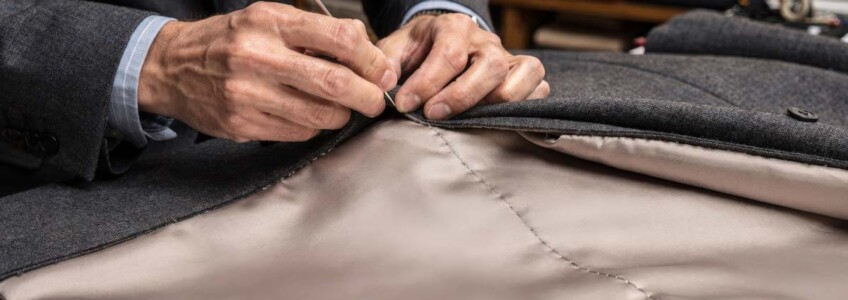
In common parlance, the terms lining and interlining are often confused or used synonymously. In tailoring practice and textile production, however, they respond to completely different technical functions. Understanding this difference is essential for those who work in clothing packaging, furniture padding, or accessory making, because choosing the wrong fabric in one of the two layers compromises the final rendering of the garment. Manifattura Foderami Cimmino, which since 1750 has provided the best lining fabrics to tailors, ateliers, and upholsterers, offers a comprehensive technical comparison between the two materials to definitively understand the difference between lining and interlining.
What is Lining: Definition and Function
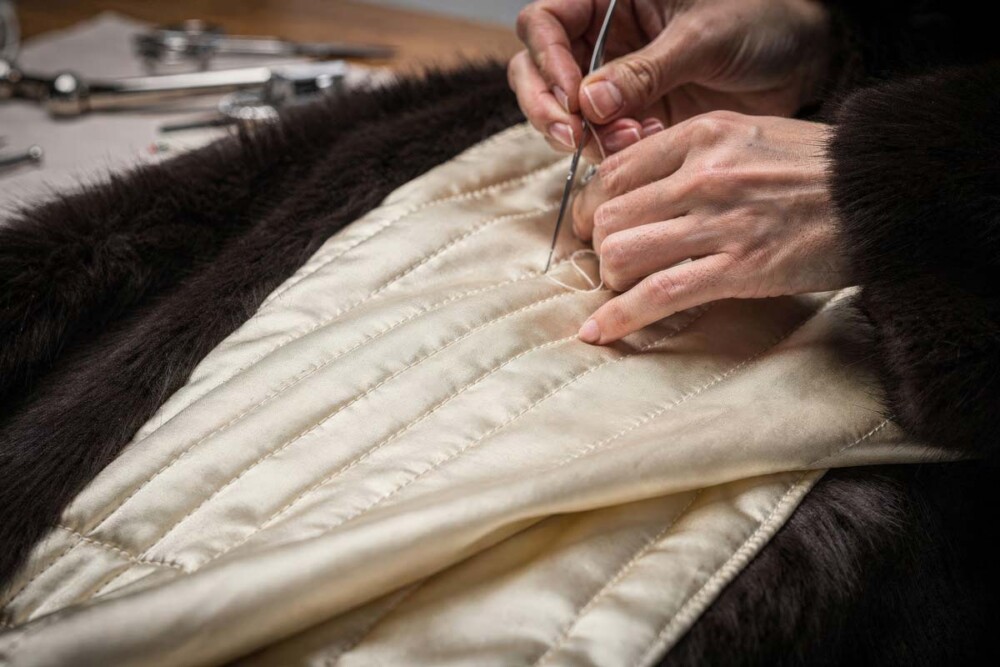
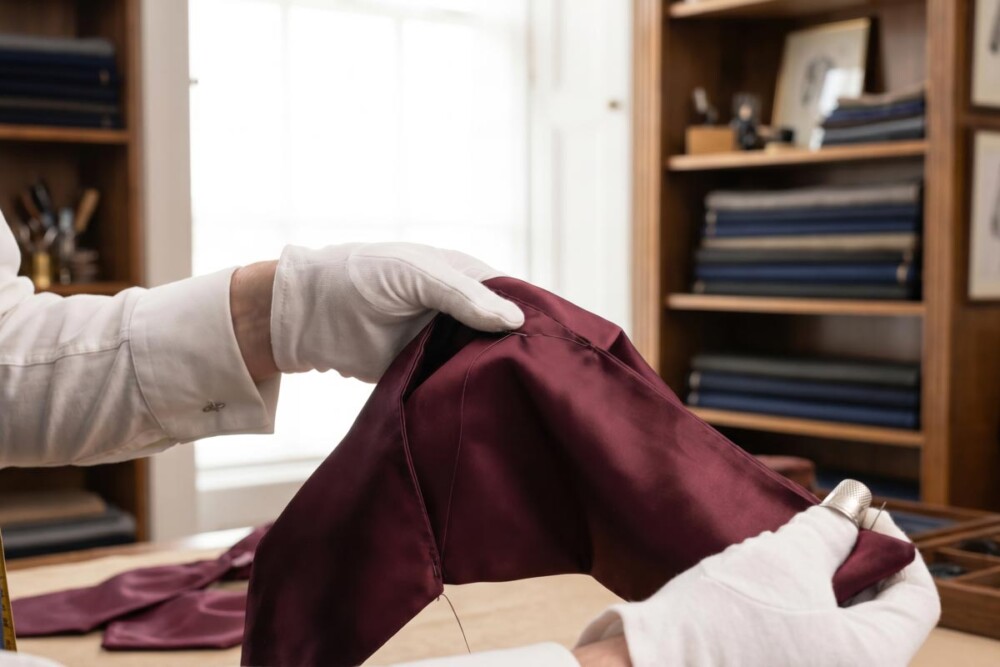
Lining means a fabric covering applied inside a garment, accessory or furnishing element, with the main purpose of aesthetically and functionally completing the finished product. The lining is generally visible when the garment is opened, worn, or observed from the inside: this is the case with the inside of a jacket, the upholstery of a bag, or the back of a sofa.
The main functions of the lining are:
- Aesthetic finish: hides seams, margins and padding, ensuring a well-groomed look
- Comfort: Reduces friction between the outer fabric and the skin or clothing underneath, also facilitating fit and movement
- Outer fabric protection: limits wear due to rubbing, sweating and repeated washing
- Perceived value: a quality lining, in satin, viscose or silk, increases the overall value of the garment
The most commonly used fabrics for linings are generally of artificial or synthetic origin, such as viscose, acetate, polyester, polyamide, chosen for a good ratio between flowability, lightness and cost. Silk satin or cupro is still used in high-end productions. Among the most common armors is the saglia lining, appreciated for its wear resistance.
What is interlining: definition and function
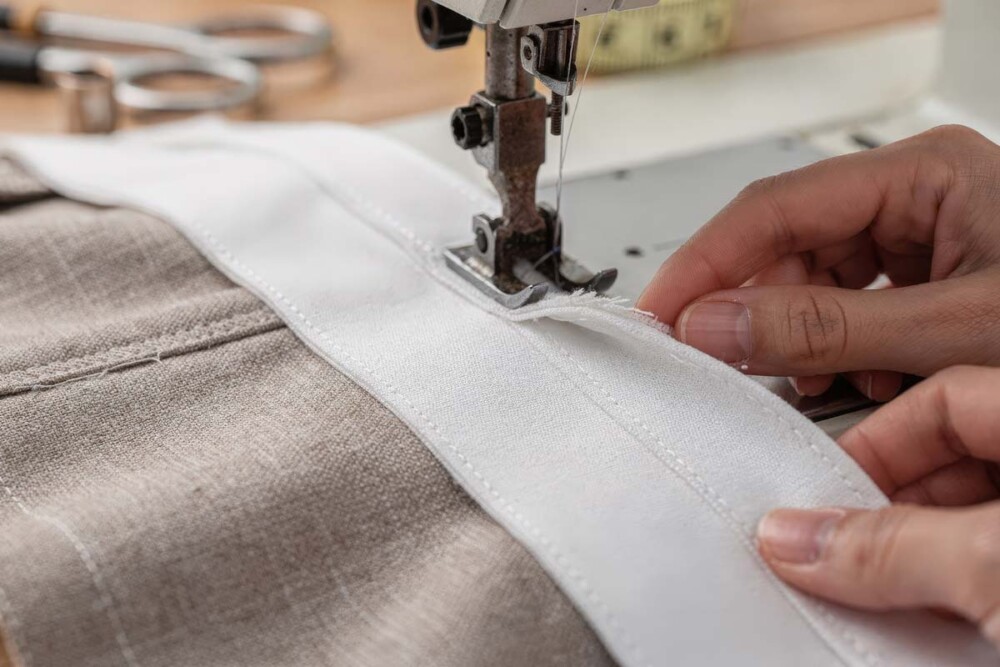
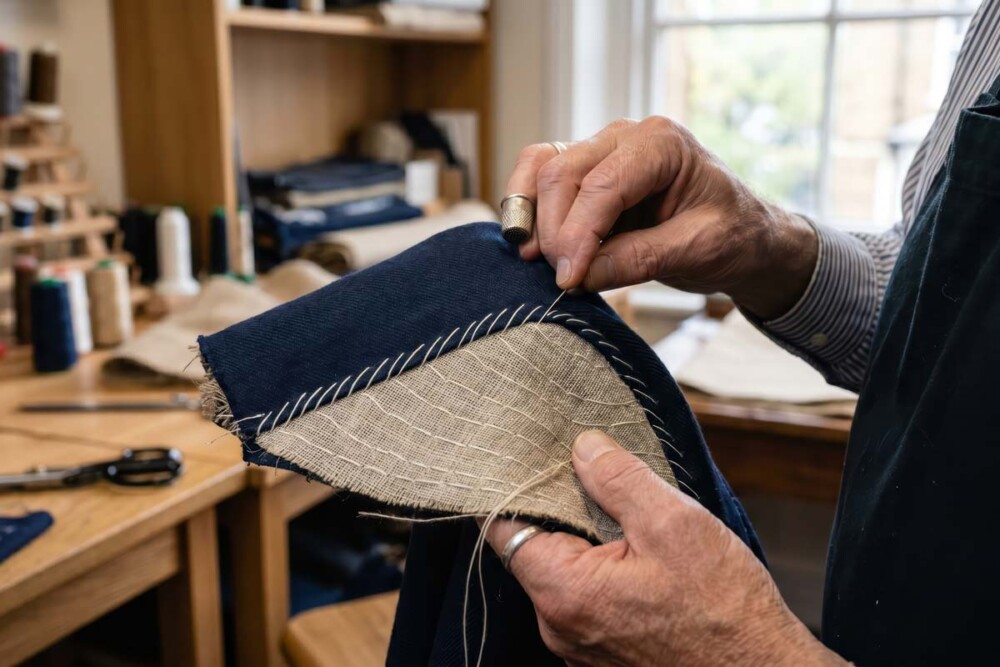
The interlining is a layer of fabric, generally not visible, inserted between the outer fabric and the lining (or between two layers of fabric) with the aim of ensuring structural support, shape and dimensional stability. Unlike the lining, the interlining does not have an aesthetic function: its task is purely technical-constructive.
The main functions of the interlining are:
- Stiffening and shape: Gives structure to collars, lapels, cuffs, belts and other areas that need to maintain a precise shape over time
- Stabilization: Prevents the outer fabric from warping during cutting, sewing, washing and ironing
- Reinforcement at critical points: protects areas most subject to mechanical stress, such as buttonholes, pockets and belts
- Thermal insulation: in some applications it helps improve garment insulation
Interlining is divided into two large production families: woven (made with woven threads, more stable and suitable for defined shapes) and non-woven (obtained by tying the fibers without spinning, more economical and suitable for projects with lower rigidity requirements). They can also be applied by sewing or by fusible fusion.
Lining and interlining compared: the technical table
| Feature | Lining | Interfacing |
| Primary function | Aesthetics and comfort | Structural and support |
| Position | Visible inner layer | Intermediate layer, not visible |
| Contact with the skin | Frequent | Rare or absent |
| Typical materials | Viscose, acetate, polyester, satin, silk | Cotton, technical fabrics, tricot, non-woven fabric (TNT) |
| Application method | Sewing | Sewing or thermoadhesion |
| Effect on shape of garment | None or marginal | Decisive |
| Examples of use | Interior jackets, bags, sofas | Collar, lapels, belts, pockets |
Are lining and interlining used together?
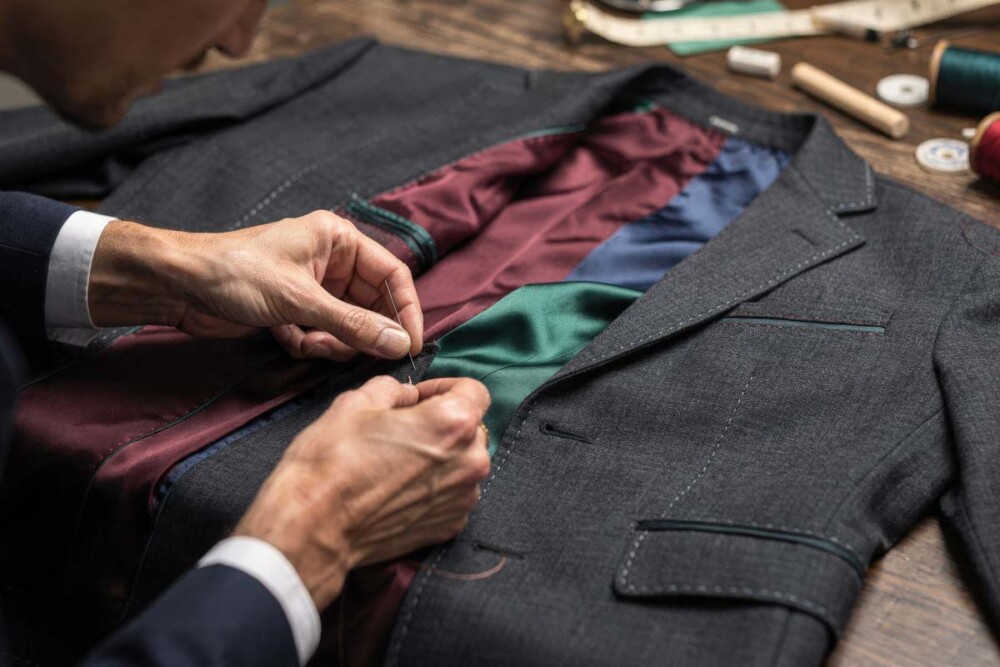
When working with clothing fabrics and especially for a quality tailoring garment such as a jacket, coat, or structured formal dress, the two layers work synergistically: interlining is applied directly to the outer fabric (or to a portion of it, such as the front or neck) to define its shape, while the lining is sewn successively to line the inside of the garment and hide the workings. They are therefore not in competition, but in succession: first the structure, then the finish.
In less structured garments, such as lightweight outerwear, plain bags, or accessories, only the lining may be present, without interlining, when a rigid shape is not required. However, the opposite is rare: an interlining without a lining would leave a technical fabric not designed for that function visible and in contact with the skin.
How to choose between lining and interlining: practical criteria
- If the goal is shape: collars, lapels, belts, hats → interlining
- If the goal is finish and comfort: interior of jackets, bags, ceremonial garments → lining
- If the garment requires both functions: first apply interlining in the structural areas, then lining as a complete covering
- For the home decor sector (sofas, armchairs): the most correct term is liners for the outer covering and pillowcases for the inner cushions, while interlining in this area is less common and limited to technical padding
Discover Cimmino fabrics for linings and interlinings
Manifattura Foderami Cimmino offers a Foderami line of lining fabrics and interlining fabrics, selected to ensure the technical performance required for every tailoring project, from clothing to furniture. Browse the always up-to-date selection and find the best wholesale fabrics online for your projects.
FAQ – Frequently Asked Questions about Difference Between Lining and Interlining
No. The lining is a visible finishing layer with aesthetic and comfort function; the interlining is a structural layer, generally invisible, that serves to give shape and stability to the outer fabric.
No, it’s not advisable. A lining, even a heavy one, does not possess the stiffening and dimensional stability properties typical of an interlining, and does not guarantee the same result in shape holding.
Before. The interlining is melted or sewn directly onto the outer fabric in the cutting and assembly stage, while the lining is applied in the final packaging stage.
No one, by definition. Lining fabrics (viscose, acetate, satin) and interlining fabrics (technical fabrics, TNT, tricot) have compositions and finishes designed for different functions and are not interchangeable in the Cimmino catalogue.
