


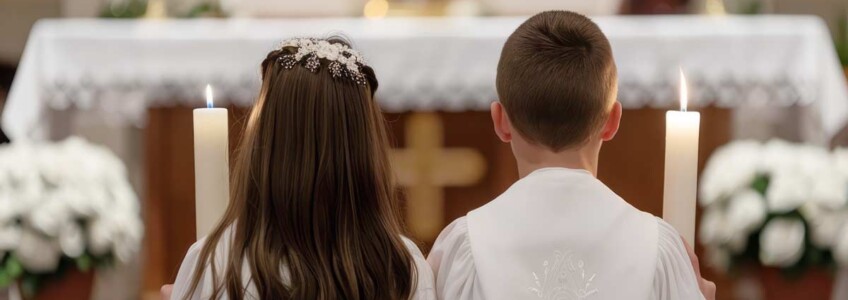
First communion is one of the most anticipated moments in the life of a child and his or her family. Whether you’re making a custom dress, customizing a traditional tunic, or creating a DIY project, it all starts with one key choice: the right fabric.
But how do you navigate cotton, tulle, satin, organza, lace, and linen? The answer depends on several factors: the type of dress, the climate in which the ceremony takes place, the sensitivity of the child’s skin, the desired level of formality and, of course, the budget. Manifattura Foderami Cimmino analyzes in detail the best options for girls and boys, with practical guidance on the composition, workability and maintenance of fabrics for communion dresses.
How to choose fabric for a communion dress: the criteria to evaluate
Before going into the merits of individual tissues, it is useful to have a clear method. The choice of fabric for a communion dress is not just an aesthetic issue: it involves practical aspects that, if neglected, can compromise the comfort of the child and the success of the garment.
Comfort and safety on children’s skin
The skin of the little ones is delicate and sensitive. Low-quality synthetic fabrics, stiff seams, or non-breathable materials can cause irritation, especially on hot days in May and June, the time when most of the first communions in Italy are celebrated.
For this reason, it is advisable to favor fabrics made of natural fibers (cotton, linen, silk) or mixed fabrics of good quality, possibly with OEKO-TEX® Standard 100 certification, which guarantees the absence of harmful substances in contact with the skin. Inner liners, for example, should be cotton or viscose to ensure breathability.
Seasonality and climate: communion fabrics for spring and early summer
Communion generally falls between April and June: a period of varying temperatures, with days that can be very hot in the sun and cool in the evening. The ideal fabrics are light and breathable, capable of keeping the child comfortable during the church ceremony and the subsequent reception.
Materials such as batiste cotton, lightweight linen, crepe fabric, and chiffon offer a good balance between elegance and thermoregulation. Heavier fabrics such as duchesse satin or textured taffeta are better suited to autumn communions or cooler climates.
Aesthetic rendering and sartorial workability
A fabric that falls well on is not necessarily easy to sew. Those who make their own clothes must consider the ease of cutting, the tendency to fray, the need for backing covers, and the stability of the wash. A poplin cotton, for example, is much easier to work than a silk organza or a slippery satin.
The Best Communion Dress Fabrics for Girls: Features and Uses
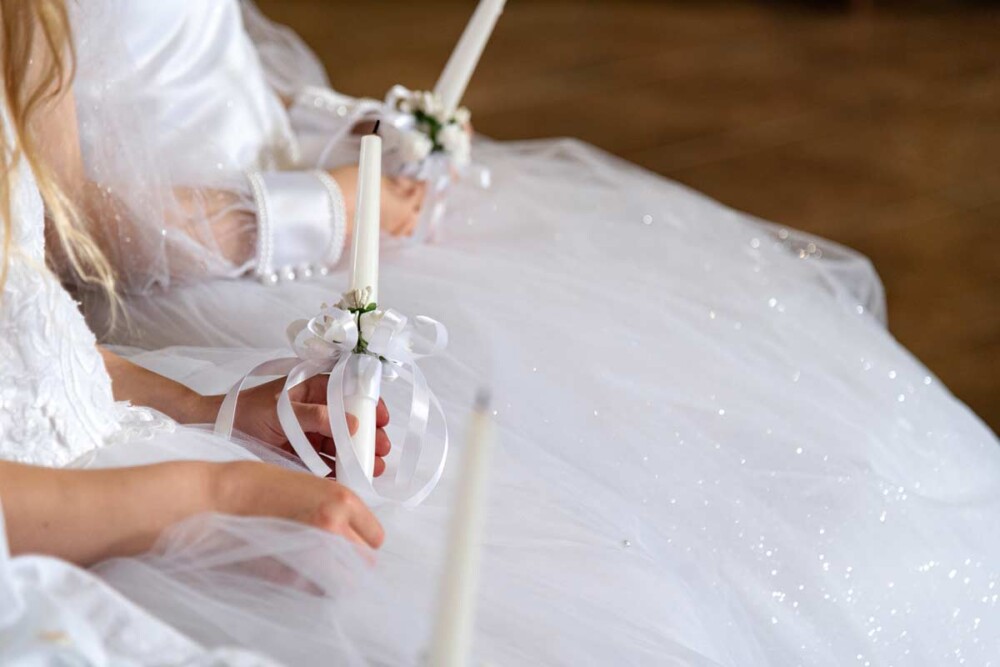
A little girl’s communion dress offers a wide creative freedom, from classic “little bride” designs with a full skirt and layers of tulle, to more modern and minimal lines with empire cuts and flowing fabrics. Here are the most used fabrics and their characteristics.
Tulle Communion Dress: Volume, Lightness, and Magic
Tulle is probably the most iconic fabric for girls’ communion dresses. Lightweight and semi-transparent, it is composed of threads that intertwine to form a fine, stable network with a fair amount of elasticity. It is mainly used for multi-layered skirts, bodice overlays and decorative details such as ruffles.
The choice of tulle hand makes all the difference: a soft tulle creates delicate drapes and fluid movements, ideal for full, romantic skirts. A stiffer tulle, on the other hand, is perfect for creating volume and structure in the skirt, without the need for internal circles.
Tulle Dora
Light, ethereal, almost impalpable: the Tulle Dora is the fabric that transforms a first communion dress into a little dream of elegance. Made of 100% polyamide with a weight of just 28 gr/mtl, it offers delicate transparency and a soft hand, perfect for creating vaporous overlays, multi-layered skirts and details such as veils, bows and puff sleeves.
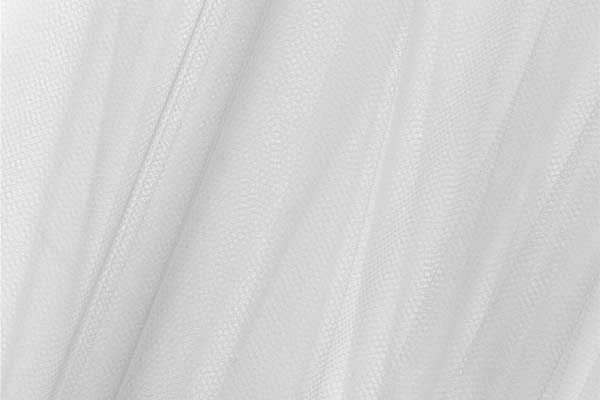
With a height of 280 cm, it allows you to work large volumes without joints, ensuring a clean and harmonious result. It is OEKO-TEX® Standard 100 certified, an important guarantee when it comes to fabrics intended for girls’ skin: it means it has been tested for the absence of harmful substances. Available in various shades, Tulle Dora lends itself both as a main fabric and as a complement to enrich dresses in satin, organza or lace.
Tulle Semirigido Europa
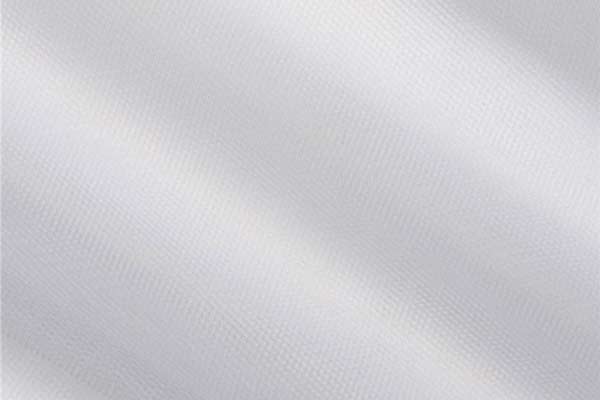
If the first communion dress needs volume and structure, the Tulle Semirigido Europa is the right choice. His semi-rigid hand sets him apart from soft tulles: he holds his shape decisively, creating full, defined silhouettes that remain impeccable throughout the ceremony.
Composed of 100% polyamide, it weighs just 18 gr/mtl and is certified OEKO-TEX® Standard 100, so tested and safe even in contact with delicate skin of girls. With a height of 150 cm and a non-stretch structure, it is ideal for creating overlapping layers that give that “cloud” effect so beloved in communion dresses, without losing definition in the movements.
Compared to a soft tulle like Dora, Europe works in a complementary way: where the former glides and caresses, this one supports and sculpts. Many seamstresses combine them together, the semi-rigid as a structural base, the soft as an outer layer, to obtain wispy but full-bodied skirts.
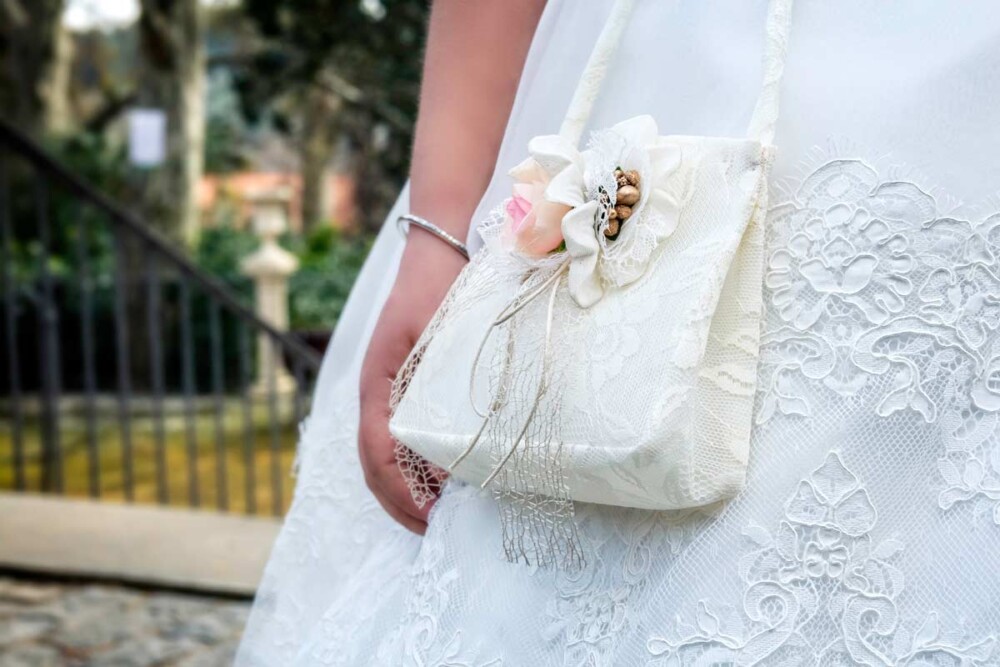
St. Gallen lace and lace for communion dress: artisanal elegance and tradition
Lace is synonymous with refinement in ceremonies. In the case of communal clothes it is used for bodices, sleeve inserts, skirt edges and decorative applications. The most suitable types are Chantilly lace (lightweight, with floral motifs on a tulle base), guipure lace (more structured, without a mesh bottom) and St. Gallen lace.
Pizzo San Gallo deserves a separate mention: it is a perforated embroidery made on cotton, particularly appreciated in ceremonial fashion. Pizzo San Gallo is widely used in girls’ clothing due to its delicate aesthetics.
Pizzo Clara
For those who want a first communion dress that goes beyond simple tulle, the Pizzo Clara introduces an extra element of refinement: a medium-pattern floral design that runs across the entire surface of the fabric, creating an elegant decorative effect without being excessive.
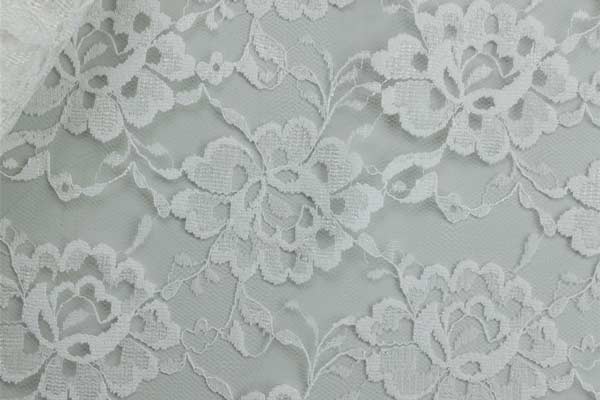
The hand is soft and slightly silky, thanks to the composition of 60% polyamide and 40% viscose, which combines strength and pleasantness to the touch. Weighing 89.6 gr/mtl and 140 cm tall, Pizzo Clara has a fuller texture than tulle.
It lends itself to creating bodices, sleeves, decorative inserts or entire overskirts for formal wear, adding depth and texture to the finished garment. Paired with a satin or jersey bottom, the contrast between the transparency of the lace and the fullness of the underlying fabric creates a highly appreciated play of levels in the communion dress packaging.
Pizzo San Gallo Extra
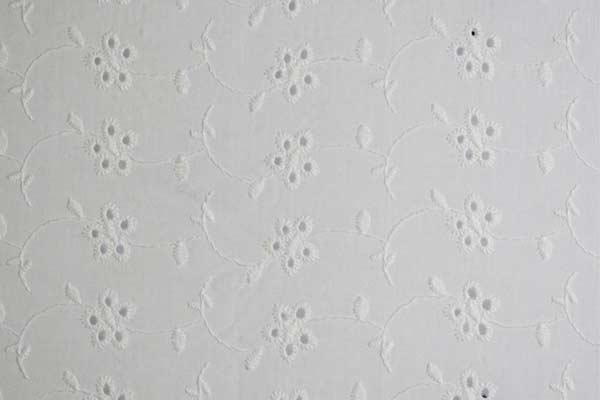
Those looking for a first communion dress with a more natural and traditional character find a precious ally in Pizzo San Gallo Extra. Made of 100% cotton with the classic embroidered eyelet pattern, it is a fabric that tells an ancient history of textile craftsmanship: St. Gallen was born in the Swiss embroidery tradition and retains intact that quality of sober elegance, never flaunted.
Cotton makes it breathable and comfortable on the skin, something not to be underestimated for a little girl who will have to wear the dress for several hours, often on already hot spring days. Weighing 130 gr/mtl and 140 cm tall, it has a more structured texture than tulle and synthetic lace: it lends itself to the creation of romantic-flavored one-pieces, bodices, decorative aprons, or inserts that break up the lightness of tulle with a textured and authentic touch.
Satin Communion Dress: Brightness and Style for Structured Dresses
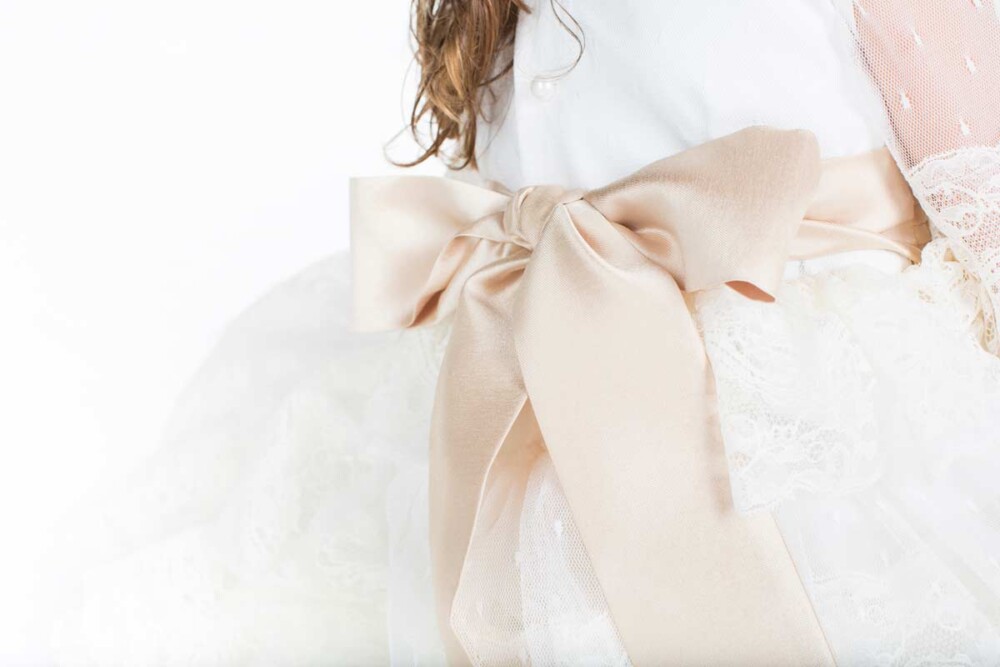
Satin gives formal wear that unmistakable brightness, given by its shiny and compact surface. For a girl’s communion dress it is particularly suitable for bodices, waistbands and bell skirts. You have to be careful about the type of satin you use because this fabric can be slippery to sew. Those working with this fabric should use thin needles, a short straight stitch, and frequent pins to prevent the fabric from shifting during cutting.
Raso Fortuna
In a First Communion dress, satin is often the foundation fabric: it gives body, shine, and that sense of special occasion that distinguishes a formal garment from an everyday dress. The Raso Fortuna, in 100% polyester, it offers the classic smooth and shiny surface of satin at an affordable cost, with good wrinkle resistance and ease of processing that makes it suitable even for those who sew at home.
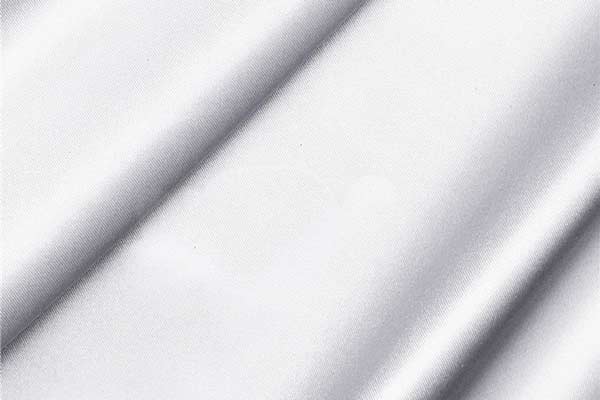
Weighing 180 gr/mtl and 150 cm high, it has a more substantial hand: it is the fabric of a slip, a structured skirt, a waistband or a dramatic bow. Under a layer of soft tulle, the Fortuna Satin creates that contrast between opacity and transparency that defines the silhouette of the dress, giving visual depth and preventing excessive transparency.
Raso Saturno

Raso Saturno is a fabric with a shiny, smooth surface, with a fluidity in the drape that makes it particularly suitable for making formal dresses.
In a first communion dress it can play different roles: base for soft skirts that fall with naturalness, inner lining that gives structure and covers the transparencies of the tulle, or decorative element for bands, bows and details with a luminous finish.
Composed of 100% polyester, with a weight of 180 gr/mtl and a height of 150 cm, it has good resistance to creases, a practical advantage not negligible for a dress that will have to remain impeccable from the church to the reception. The smooth surface also makes it easy to work with and pair with open-weave fabrics like tulle and lace, creating the play of contrasts between shiny and matte, between solid and transparent, that characterizes the most refined formal dresses.
Raso Duchesse Jy
Raso Duchesse Jy is a fabric with a smooth and luminous surface and a significantly more substantial hand than traditional satins.
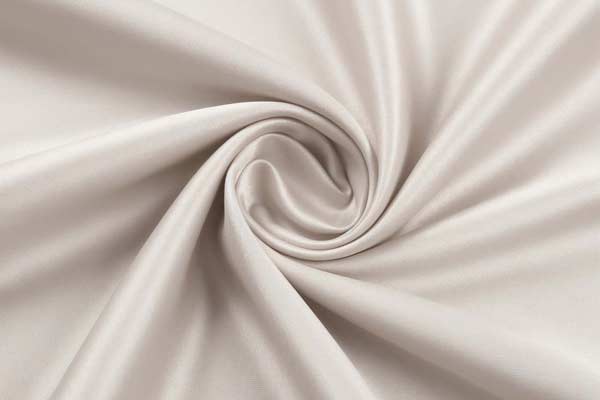
Weighing 247.5 gr/mtl in 100% polyester, it has that controlled rigidity that makes it capable of sculpting the silhouette and maintaining the shape of the garment, a feature that in the context of the first communion for children results in vests of defined volume, structured bow ties, waist bands and decorative details that remain impeccable throughout the ceremony.
The duchesse’s sheen is more intense and deep than that of a light satin: it captures the light decisively, creating a scenic and formal effect that immediately signals the special occasion. With a height of 150 cm, it works with ease and lends itself to clean cuts and precise stitching thanks to the compactness of the weft.
Organza Communion Dresses: Delicate Transparencies and Overlays
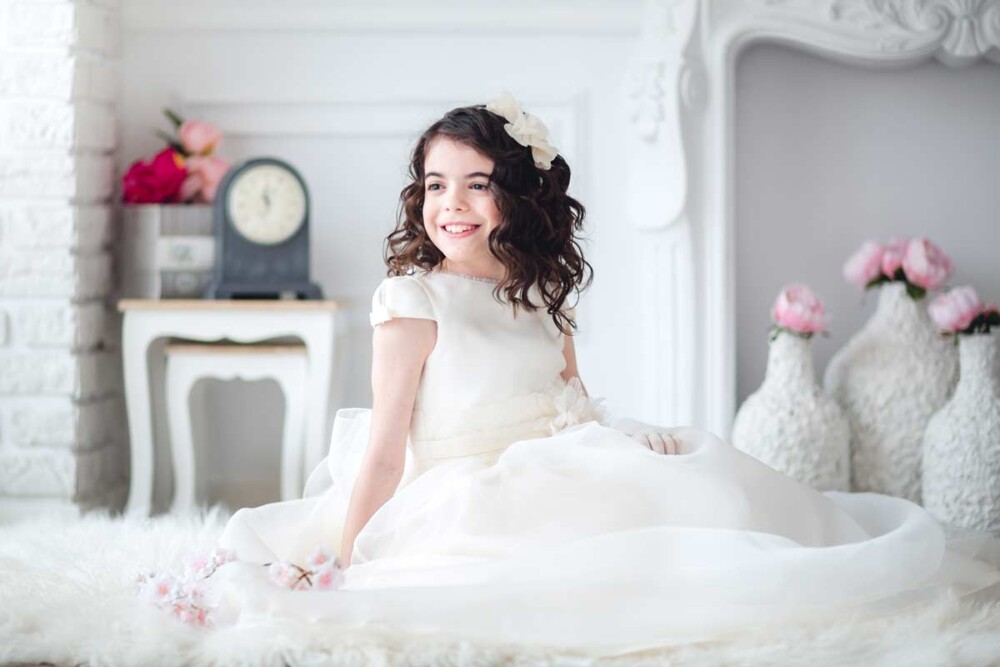
Organza is a thin, transparent fabric with a slightly crispy hand, traditionally woven in silk but now also available in polyester and cotton blend. In girls’ communion dresses, it finds its best use in the overlapping layers on skirts, puff sleeves and decorative bows. Its natural stiffness allows it to maintain volume without weighing down the garment.
Organza Arcobaleno Unito
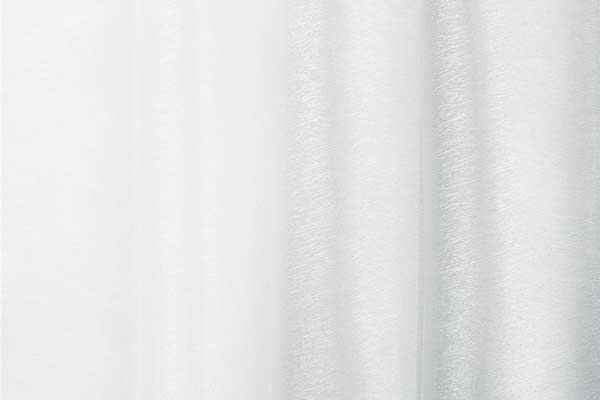
Organza Arcobaleno Unito brings a luminous transparency and controlled rigidity to the first communion dress that distinguish it from tulle. In 100% polyester, with a weight of just 33.6 gr/mtl and a height of 140 cm, it is a thin, non-stretch fabric with a shiny surface, capable of reflecting light with a more “glazed” and defined effect than the diffuse softness of tulle.
Her stiff hand makes her ideal for textured details that need to hold their shape: puff sleeves, overskirts that open precisely, bows that stay straight and voluminous, or decorative inserts on the bodice. Unlike tulle, which creates volume by accumulating layers, organza already works with just a few layers, providing a scenic effect with less bulk and more visual lightness.
Tessuto Organza Lumina
Organza Lumina is the choice for those who want to add a touch of light to their first communion dress without sacrificing elegance. The lurex threads woven into the weft capture and reflect light, creating a gentle scintillation that animates the fabric with every movement of the little girl.
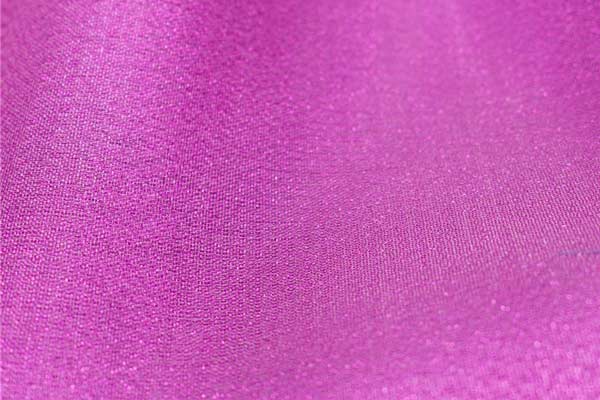
In 80% polyester and 20% polyamide, with a weight of 87 gr/mtl and a height of 145 cm, it has a fuller consistency than traditional organzas: it holds its shape well while maintaining a light transparency. This makes it suitable for details that need to capture attention without dominating, such as a waistband, a bow on the back, a skirt trim, a shoulder veil.
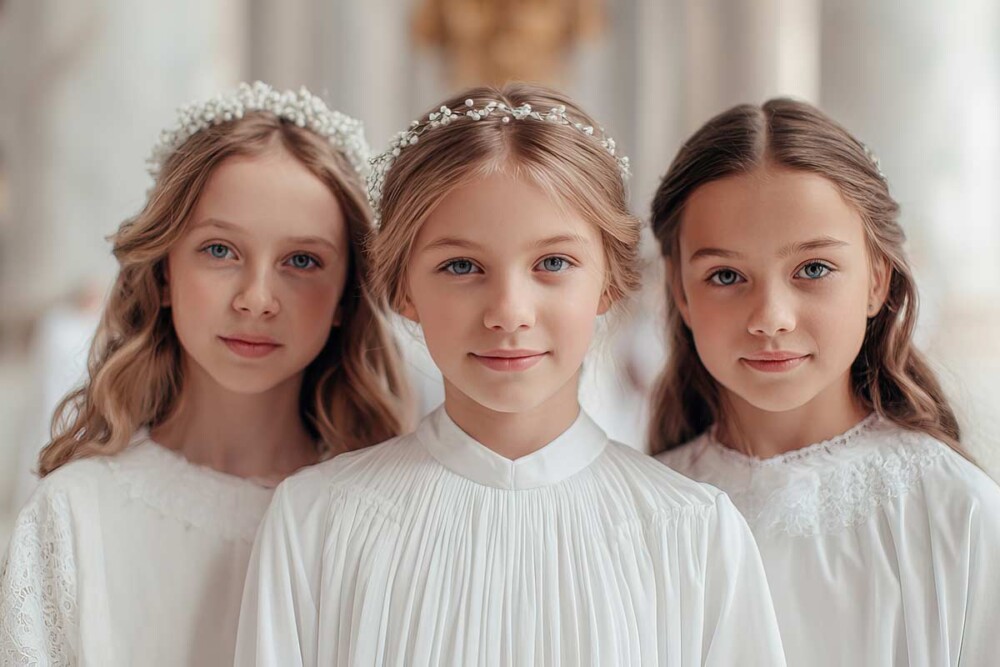
Batiste cotton and poplin for communion dresses: freshness for simple dresses and tunics
For those who prefer a more sober and clean style, cotton remains the safest and most versatile choice. The batiste is a very light canvas with a soft hand, perfect for slip dresses and tunics. The poplin is slightly more structured and durable, ideal for models with pleats, bodices and tailoring details. Both are easy to cut, sew, and iron-an excellent choice for DIY projects.
Batista Lietta
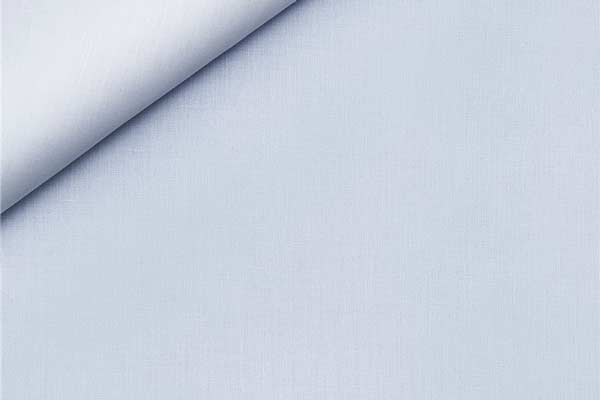
Batista Lietta is the fabric that works silently behind the scenes of a well-made first communion dress. In a blend of 65% polyester and 35% cotton, with a weight of 129 gr/mtl and a height of 150 cm, it is a compact, smooth and matte canvas, the tunic fabric par excellence.
Its role is to ensure comfort, cover transparencies and give the garment a neat fit. The cotton component ensures a fair amount of breathability, while the polyester contributes to the strength and ease of maintenance, an aspect that is far from secondary for a dress that, after the ceremony, will have to be washed and kept as a memento.
Camiceria Popeline Egitto Sanfor
Popeline Egitto Sanfor is a 100% cotton with a fresh and compact hand, designed for quality shirtmaking but also perfectly suited to the creation of first communion tunics.
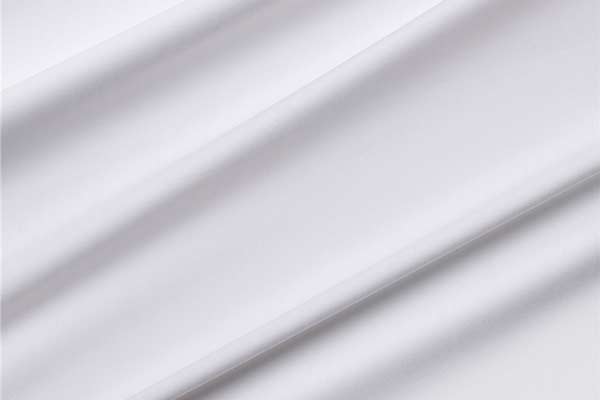
Sanforized workmanship is a technical detail that makes a difference in everyday practice: the fabric is pre-treated to minimize shrinkage after washing, so the tunic maintains its original fit even after several machine cycles. Weighing 181 gr/mtl and 150 cm high, it has a full but not heavy texture, which gives the garment a clean fall and a smooth, even surface.
Children’s Communion Dress Fabrics: From Classic Suit to Tunic
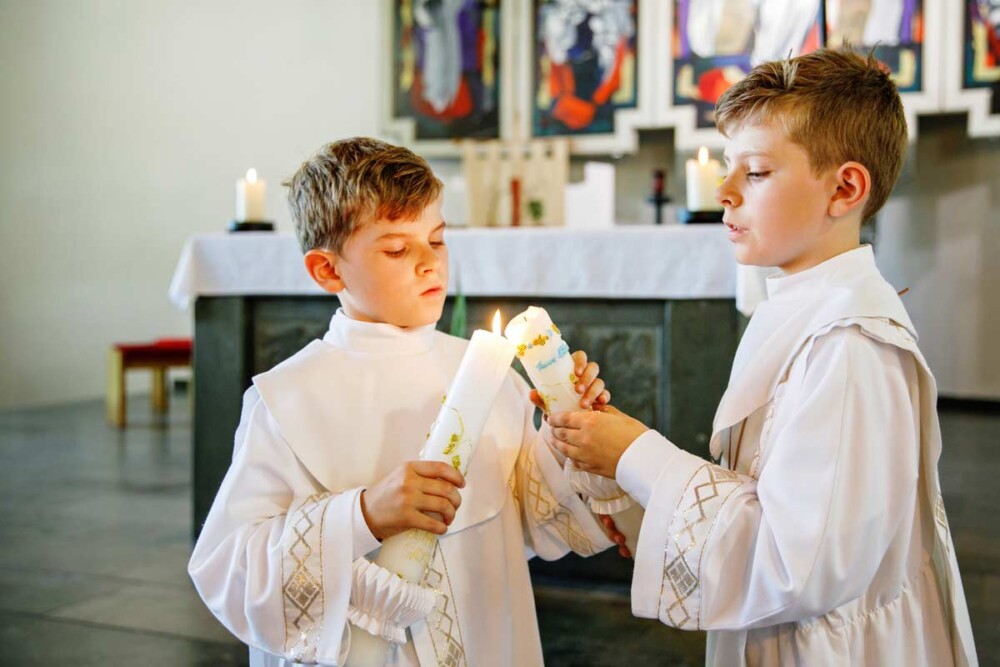
For children, the communion dress can take two main forms: the elegant ensemble (jacket, trousers and shirt) or the traditional white tunic. In both cases, the choice of fabric must balance elegance and practicality, considering that an 8-10 year old child needs to move freely.
Linen and linen blend communion dresses: freshness and character for the elegant ensemble
Linen is the summer fabric par excellence. Fresh, breathable and naturally antibacterial, it is perfect for the trousers and jackets of spring and summer communion suits. Its only limitation is its tendency to wrinkle, which can be mitigated by choosing flax-cotton or flax-viscose mixes, which are more stable and less prone to wrinkling.
Lino 2006 Dolce
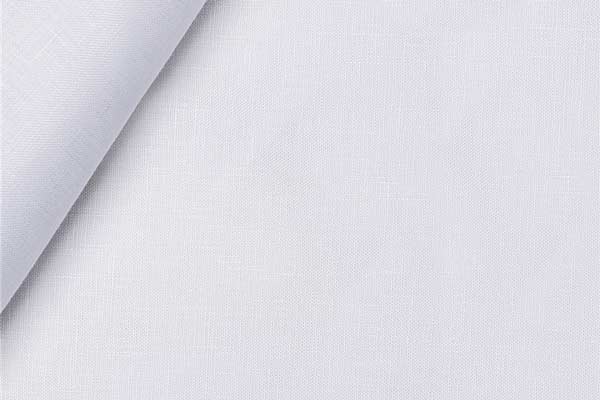
Lino 2006 Dolce is a 100% linen fabric with a soft hand and natural character, ideal for making first communion garments for children with a fresh and relaxed taste. Weighing 105 gr/mtl, it is a lightweight and breathable linen, perfect for spring and summer ceremonies, when comfort becomes as much a priority as elegance.
Linen has an unmistakable texture, that light “lived” appearance that communicates naturalness without sacrificing refinement. It lends itself to the creation of shirts, soft-cut trousers, deconstructed vests and broken suits, with that carefully crafted ease that characterizes the men’s ceremony at its best. Those who choose linen for a child’s communion choose a fabric with personality, which improves with use and tells of an ancient textile tradition.
Tessuto Lino Abbigliamento
Tessuto Lino Abbigliamento is a 100% linen with a significant weight that makes it suitable for the packaging of structured garments for the child’s first communion: jackets, trousers with pleats, vests and matching outfits. It is the type of linen that gives body and presence to the finished garment, with a natural and composed fall that communicates elegance without forcing.

With a height of 135 cm, in solid color and not elasticized, it offers a smooth and regular surface that lends itself to clean cuts and precise lines. The natural fiber guarantees breathability and freshness, essential qualities for ceremonies that fall in the spring and summer months in which the baby will move, run, sit for a long time, and a fabric that breathes makes all the difference.
Cotton for communion shirt and tunic: breathability and ease of maintenance
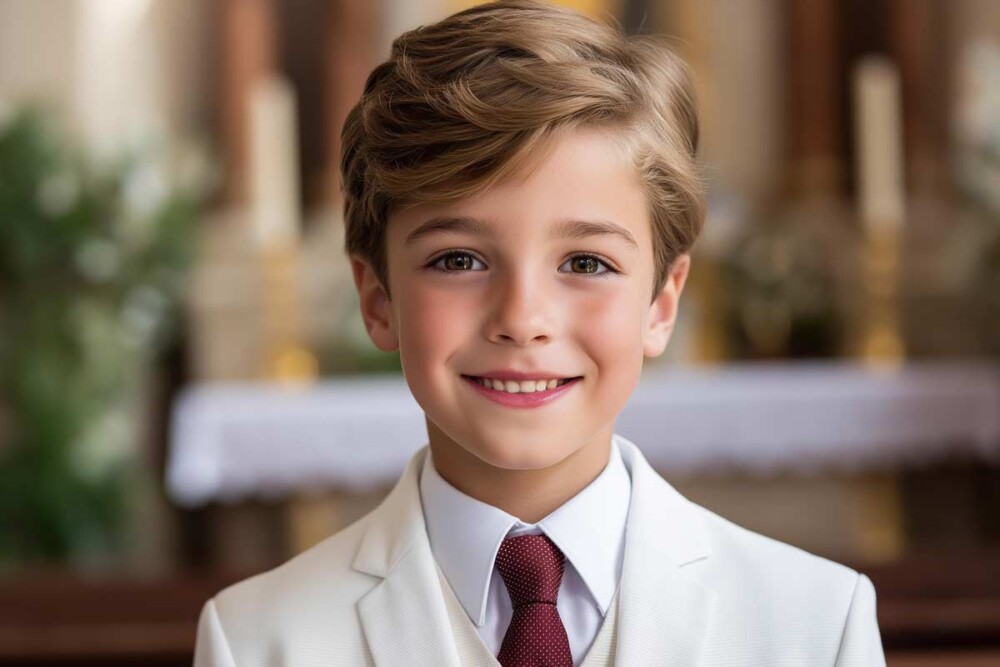
The white shirt under the jacket should be poplin cotton or twill cotton: fabrics with a smooth, compact surface, elegant yet breathable. For the traditional tunic a medium-weight cotton is the most practical option. Experts recommend a slightly stiff cotton, which “falls well” and holds the folds of the side folds without sagging.
Fil à Fil Londra Sanforizzato
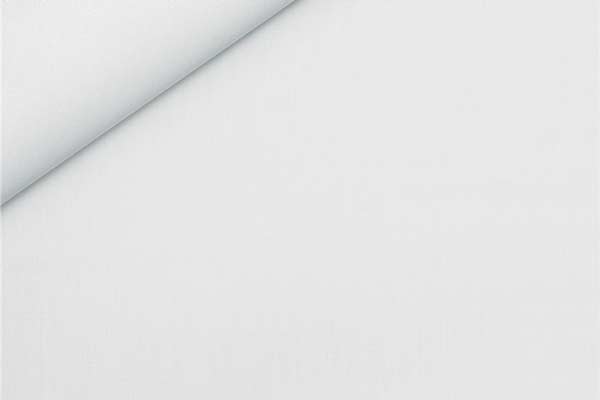
Fil à Fil Londra is a 100% cotton with a subtly refined look, perfect for first communion shirts and tunics for children. The peculiarity lies in the weave: white and colored threads alternate in the canvas weave, creating a surface with a slight dotted effect that moves the fabric without resorting to patterns or prints.
Weighing 172.5 gr/mtl and 150 cm high, it has a full texture that gives the shirt or tunic a neat fall and a well-groomed look. The sanforized workmanship ensures dimensional stability after washing: the garment maintains its original shape and fit, a practical advantage that families particularly appreciate for a garment intended to be washed, ironed, and perhaps kept as a keepsake.
Camiceria Oxford Cardiff Sanfor
Oxford Cardiff is a 100% cotton with the characteristic Panama weave that defines oxford fabrics: a more open and visible weave than the classic canvas, which gives the surface a slightly grainy texture and an informal-elegant appearance.

It is the quintessential button-down shirt fabric, translated into the context of a child’s first communion in shirts and tunics with a sober character but with personality. With a weight of 199.5 gr/mtl and a height of 150 cm, it is a full-bodied and resistant fabric that communicates solidity and quality to the touch. The sanforized workmanship ensures that the garment maintains its size after washing, avoiding shrinkage that would compromise the fit.
The sturdiness of the oxford makes it a particularly practical choice for children: it is a fabric that tolerates wear and tear well throughout the day, is not easily marked and can be reused even after the ceremony as a shirt for other occasions.
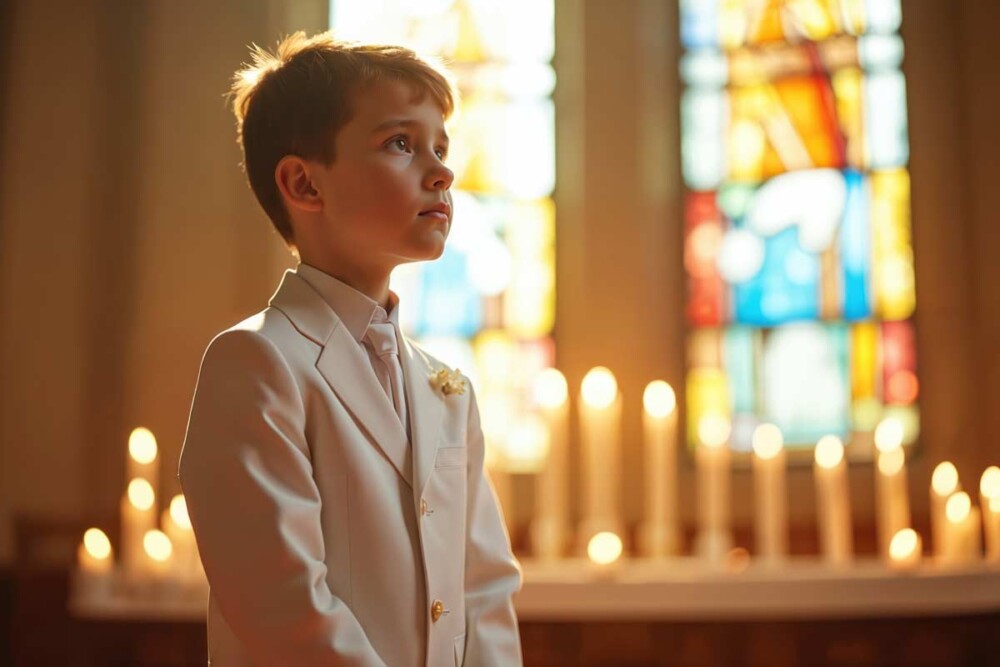
Crêpe marocain: flow and fall for trousers and communion jackets
Crepe marocain is a fabric with a slightly grainy surface and a smooth fall, making it suitable for both deconstructed jackets and soft trousers. It’s a more sophisticated alternative to cotton for those who want a tailored First Communion suit.
Crepe Marocain Agadir
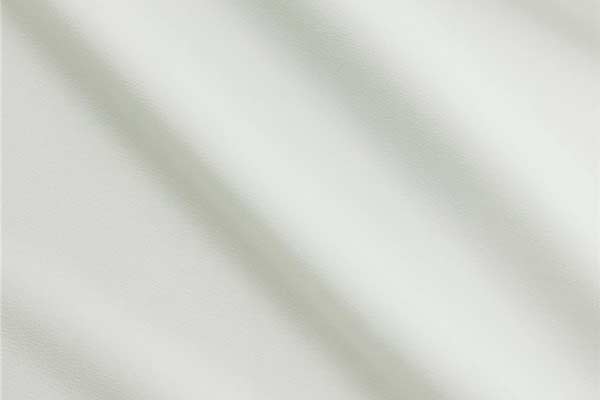
Crepe Marocain Agadir is a double-sided fabric with a soft, flowing hand, with a double core that offers interesting creative possibilities: one side shiny and shaved, the other matte and frizzy.
In the packaging of first communion jackets and trousers for children, this feature allows you to play with contrasts: the shiny side as an exterior for a more formal effect, or the frizzy side for a more sober and material look, depending on the desired result.
In 100% polyester, with a weight of 145 gr/mtl and a height of 145 cm, it is a fabric that drapes naturally and falls softly along the body, giving garments an elegant line without rigidity. For a formal outfit, it results in smooth-fitting jackets and clean-dropping pants, with a well-groomed look that doesn’t force the baby’s movements. The crepe surface also has the practical advantage of masking the small creases that inevitably form during a long day of ceremony.
Tessuto Crepe Cady Atena
Crepe Cady Atena is the most structured fabric among those suitable for making first communion clothes for children. Weighing 390 gr/mtl, it has a full, compact hand that gives garments a sartorial and defined look, ideal for classic-cut trousers, constructed jackets and vests that must maintain an impeccable line.

The composition of 97% polyester and 3% elastane introduces a slight elasticity that makes the difference in comfort: the fabric accompanies the child’s movements without pulling or forcing, a concrete advantage during a long day between ceremony and celebrations. The cady surface gives garments a clean and contemporary look.
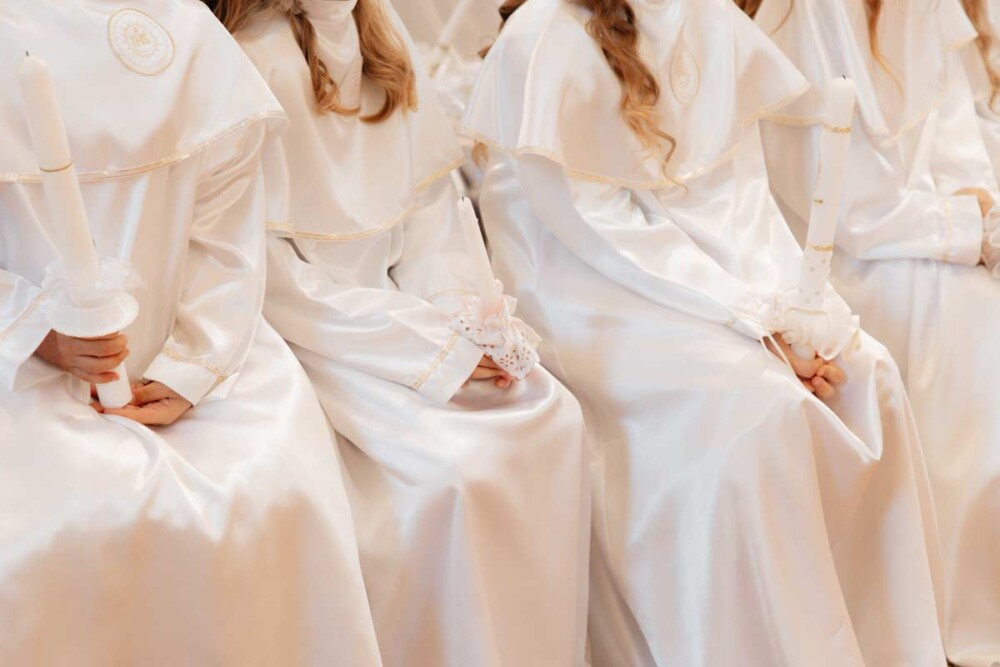
Which fabric to choose for each type of communion dress
Here are the most commonly used fabrics for First Communion: for each, the main applications, the level of workability, and the recommended fibers are indicated.
| Fabric | Ideal for | Workability | Recommended fibers | Season |
| Soft tulle | Multi-layered skirts, overlays, veils | Medium | Polyamide, silk | Spring-summer |
| Rigid tulle | Skirt volume, structured layers | Medium | Polyamide, polyester | All |
| San Gallo lace | Bodices, inserts, sleeves girl | Easy | 100% cotton, | Spring-summer |
| Elastic lace | Bodices, appliques, tight-fitting clothes | Medium | Poliammide, elastan | All |
| Duchess satin | Bodices, headbands, structured skirts | Difficult | Polyester, silk | Autumn-winter |
| Organza | Overlays, sleeves, bows | Difficult | Silk, polyester | Spring-summer |
| Batiste cotton | Tunics, simple dresses, DIY | Easy | 100% cotton, | Spring-summer |
| Cotton poplin | Shirts, structured bodices, tunics | Easy | 100% cotton, | All |
| Linen / linen blend | Baby suits, jackets, trousers | Medium | Linen, linen-cotton | Spring-summer |
| Crêpe marocain | Jackets, soft trousers, flowing skirts | Medium | Polyester, Viscose | All |
DIY First Communion Dress: Which Fabric to Choose for Home Sewing
Packing the communion dress with your own hands is an ambitious but achievable project, provided you choose the right fabric for your level of experience. Here are some practical tips for those who decide to sew a DIY formal dress.
Recommended fabrics for beginners: cotton and cotton blend
Poplin cotton and batiste are the most accessible fabrics for beginners. They cut easily, don’t slip under the sewing machine, and tolerate mistakes well: the seams can be unstitched and redone without leaving any obvious marks. For a children’s tunic or a girls’ linear dress, 2-3 meters of good quality cotton can suffice.
Fabrics for expert seamstresses: satin, organza and layered tulle
Those with experience can try more challenging fabrics. Satin requires precision in cutting (it must be cut in a single direction, following the direction of the fabric) and sewing (short straight stitch, adjusted thread tension). Organza should be handled with care because it tends to fray: it is advisable to finish the edges with a topcoat or a seam cutter before assembly. The layered tulle, finally, requires patience in aligning the different layers, but the result can be spectacular.
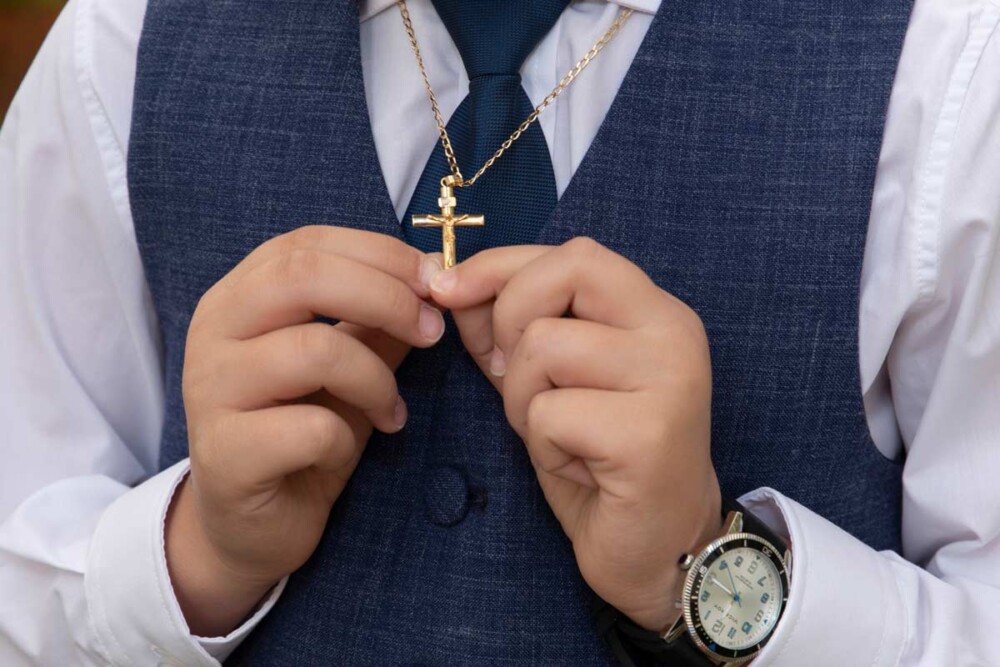
Colors and pairings: the palette of communion fabrics
White remains the color of choice for First Communion, a symbol of purity and spiritual renewal. But there is no single white: optical white, bright and luminous, is different from warm ivory, cream, and milky white. The choice depends on the fabric (satin makes white brighter, cotton more natural) and the baby’s complexion.
In addition to white, delicate pastel tones such as blush pink, light blue, beige, and sage green are commonly accepted, often used for belts, headbands, bows, and decorative details that enrich the dress without altering its sobriety. For children’s suits, navy blue, pearl gray, and sand beige are elegant alternatives to the classic black suit, which is more suitable for adults than children.
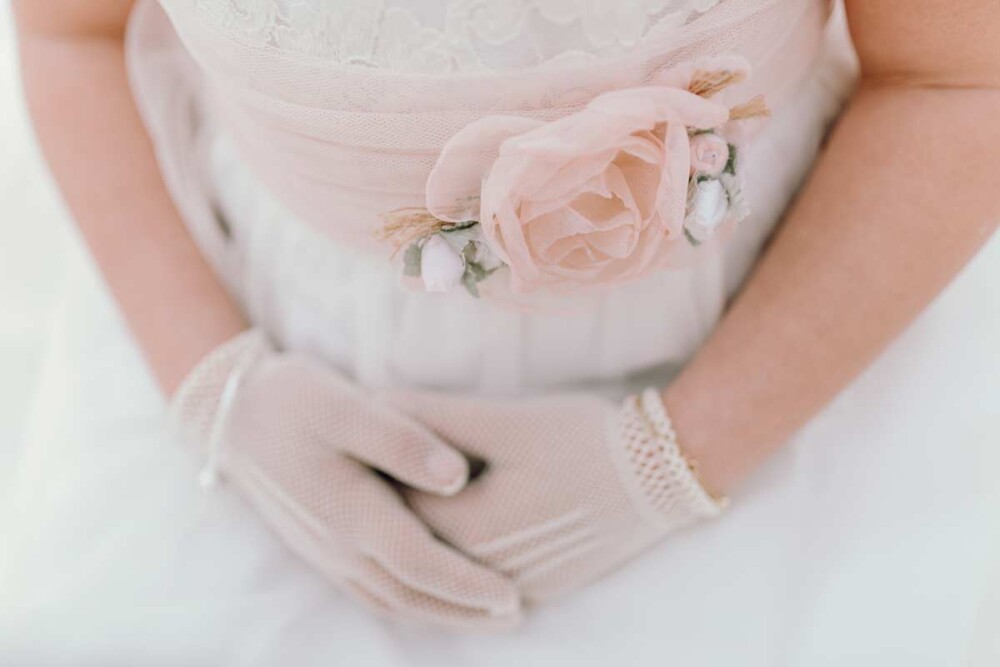
Care and maintenance of communion fabrics: how to store your dress
A communion dress is worn only once, but it is often desired to keep it as a family memento. Proper maintenance of the fabric is essential to preserve its integrity and beauty over time.
- Cotton and linen: Machine washable at 30-40°C with mild detergent. Iron inside out with a hot iron. Store in breathable fabric bags, never in plastic bags.
- Satin and silk: hand wash in cold water with neutral soap, or professional dry cleaning. Don’t squeeze. Iron inside out with a low-temperature iron and interposed cloth.
- Tulle: Hand washable gently. To remove creases, use steam remotely without touching the fabric. Do not iron directly.
- Lace: hand wash in cold water. Lay flat on a towel. Do not hang to avoid warping. Iron on the reverse side, on a soft surface, so as not to crush the embroidery relief.
- Organza: hand wash, flat dry. Iron with a steam iron at low temperature, using a protective cloth.
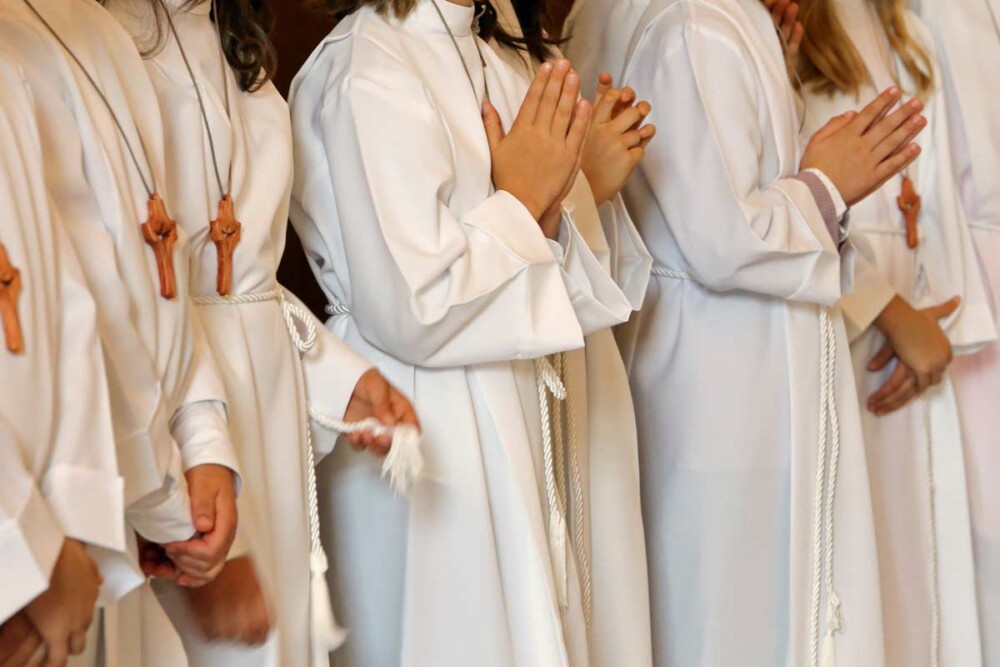
Where to buy communion fabrics online in Italy: Cimmino’s proposal
Choosing the fabric for a communion dress is much more than a technical decision: it is a gesture of care towards the child and towards the solemnity of the moment. Whether it’s a fluffy tulle for a little girl who dreams of feeling like a princess, a fresh linen for a lively child, or St. Gallen lace for a craft tailoring project, each fabric tells a story.
Manifattura Foderami Cimmino accompanies tailors, artisans, and sewing enthusiasts in this selection with a comprehensive and qualified textile catalog, available online at cimminoshop.com. Browse the formal dress fabric sections and discover the perfect fabrics for the upcoming communion season.
FAQ- Frequently Asked Questions about Communion Dress Fabrics
The best fabric depends on the type of dress, season and level of formality. For girls, soft tulle and cotton St. Gallen lace are the most versatile choices. For children, linen and poplin cotton offer the best relationship between elegance and comfort. In general, fabrics made of natural or OEKO-TEX® certified fibers guarantee safety on the skin of little ones.
Five factors are evaluated: comfort on the child’s skin, seasonality (light and breathable fabrics for spring communions), type of dress (loose skirt, full skirt, tunic), level of formality of the ceremony and workability of the fabric, especially for self-sewers. Starting from a test fabric prototype is always a good idea.
Yes, it is a project within the reach of those with basic tailoring skills. For beginners, the recommended fabrics are poplin cotton and batiste, which are easy to cut and sew. More experienced seamstresses can work with satin, organza, and layered tulle, which require greater precision and appropriate equipment (thin needles, seam cutters, silk pins).
Tulle is ideal for creating volume and movement in the skirt, especially in multi-layered models. Lace, on the other hand, is more suitable for decorative details such as inserts, borders and bodices. The two fabrics combine very well: a tulle skirt with lace appliques is one of the most classic and elegant solutions.
Low-quality synthetic fabrics that are not breathable, materials that are too rigid (such as heavy mikado) that limit the child’s movement, and fabrics with aggressive chemical finishes should be avoided. Even very delicate fabrics like pure silk chiffon, while beautiful, are not recommended for children because they stain and damage easily.
For a simple children’s tunic you need about 2-2.5 meters of fabric (150 cm high). For a girls’ dress with a full skirt, an average of 3-4 meters is needed, to which 1-2 meters of lining must be added. For a children’s jacket-trouser set, calculate 2.5-3 meters overall. It is always advisable to buy about 20-30 cm more for any errors or adjustments.
Communion fabrics can be purchased by the meter at cimminoshop.com with shipping throughout Italy. Manifattura Foderami Cimmino, with over 270 years of experience in the textile sector, offers tulle, lace, satin, organza, cotton, and crepe in the variations best suited to the ceremony, with detailed technical data sheets for each product.
The tulle and lace should be washed strictly by hand, in cold water with neutral soap. Do not squeeze, do not spin. Lay flat on a clean towel. To remove creases from the tulle, use a remote vaporizer without touching the fabric. The lace should be ironed on the reverse, on a soft surface, so as not to crush the relief of the pattern.
