


An outdoor tent is worth as much as the fabric that makes it up. It is the fabric that decides whether a structure will last for years in the light of the Mediterranean or fade after just one summer, whether it will truly protect against sudden rain or whether it will retain mold and unpleasant odors. For those who make awnings, canopies, sails, and screens, from the upholsterer to the atelier, to the enthusiast who decorates their terrace, choosing the material is the most important technical decision. Manifattura Foderami Cimmino explains what features distinguish a quality outdoor curtain fabric, what materials exist and which solutions in its catalogue respond to every design need.
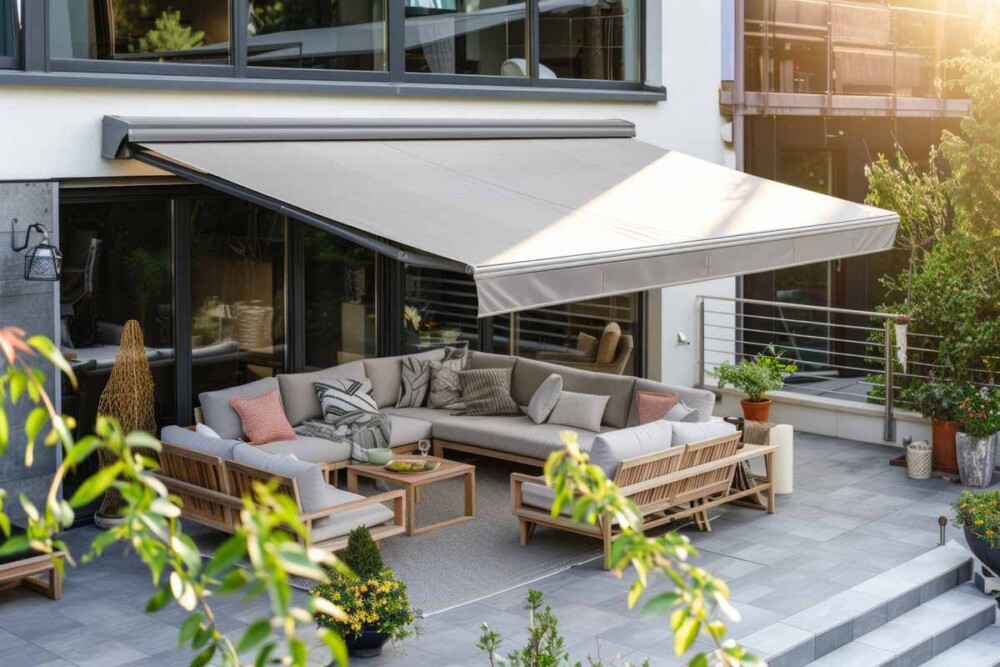
What an outdoor curtain fabric is really for
An outdoor fabric is not simply a durable fabric: it is a technical material called upon to perform multiple functions simultaneously. Before evaluating the materials, it is useful to focus on the objectives that the tent must achieve.
- Sunscreen and UV shielding: Reduce heat and glare by creating usable shade on terraces, gardens, and outdoor seating.
- Held against rain and humidity: thanks to water-repellent finishes or waterproof structures that allow you to experience the space even in uncertain weather.
- Thermal comfort and efficiency: Screening glass reduces interior overheating and air conditioning use.
- Privacy and livability: filter your eyes without sacrificing light and natural ventilation.
- Aesthetics and enhancement of space: color, texture and fabric drop define the character of the external environment.
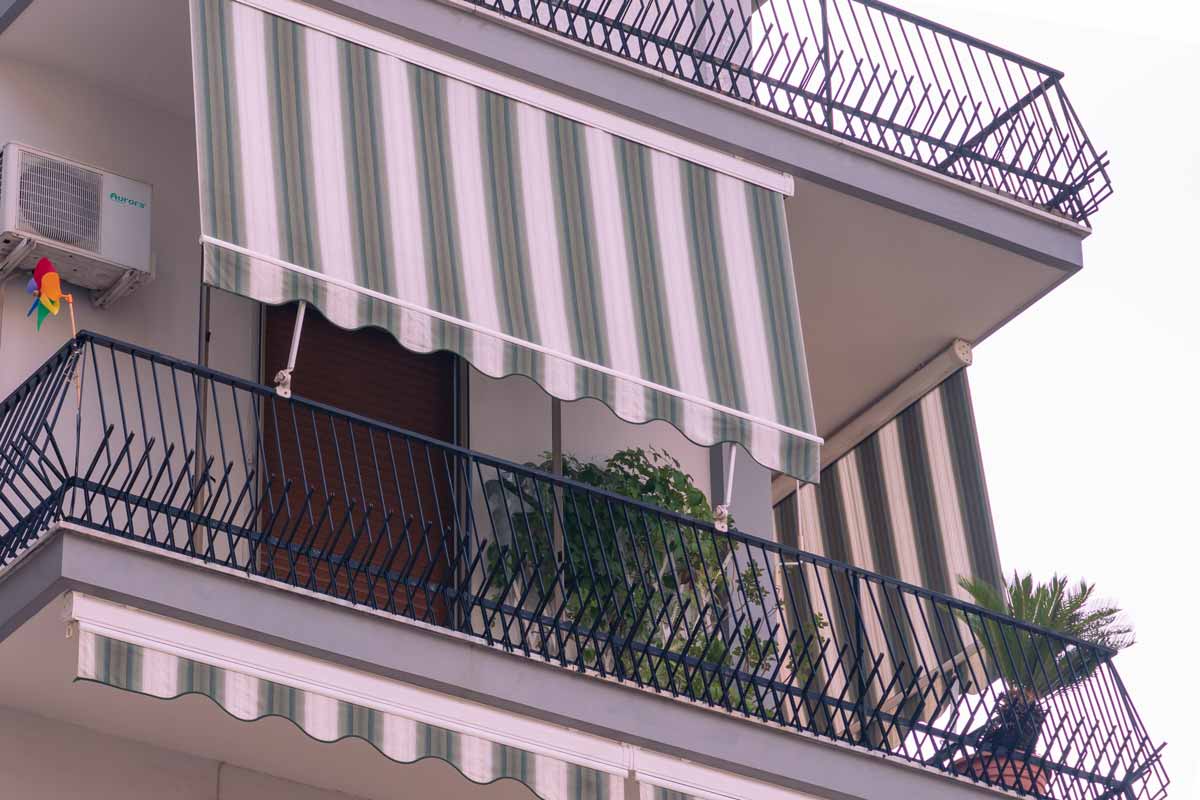
The characteristics of a quality outdoor fabric
Not all fabrics hold up the outdoors equally: what sets a quality outdoor material apart is its ability to maintain unchanged performance and aesthetics season after season. Here are the technical parameters that really determine its durability.
UV resistance and color fastness
It is the decisive parameter. A good outdoor fabric must shield UV radiation and, above all, keep the color stable over time. The difference is made by the dyeing method: mass-dyed materials (the fiber is colored before spinning) guarantee a significantly higher color fastness than surface-dyed fabrics, because the pigment passes through the entire fiber.
Behavior towards water and moisture
There are two levels not to be confused. A water-repellent fabric repels splashes and light rain, allowing the fiber to breathe: it’s the ideal solution for slanted awnings, where water slips away. A waterproof fabric, typically coated or made of PVC, completely blocks the passage of water and is suitable for flat roofs and commercial environments. The choice depends on the inclination and use of the structure.
Mechanical, wind and mould resistance
An outdoor tent works under tension and is exposed to gusts, chafing and persistent humidity. Tough fibers, compact weaves, and mold-resistant treatments are needed to prevent fungal growth in shady or coastal areas. Tear resistance is particularly critical in sails and large surfaces exposed to wind.
Weight, height and yield in pack
Weight (weight in grams per square meter) indicates the body of the fabric: the higher it is, the greater the coverage and structure, at the expense of lightness. The height of the patch, on the other hand, determines how many seams are needed to cover a given light: generous heights reduce joints and improve aesthetic performance. These are data that the professional always evaluates before budgeting for a package.
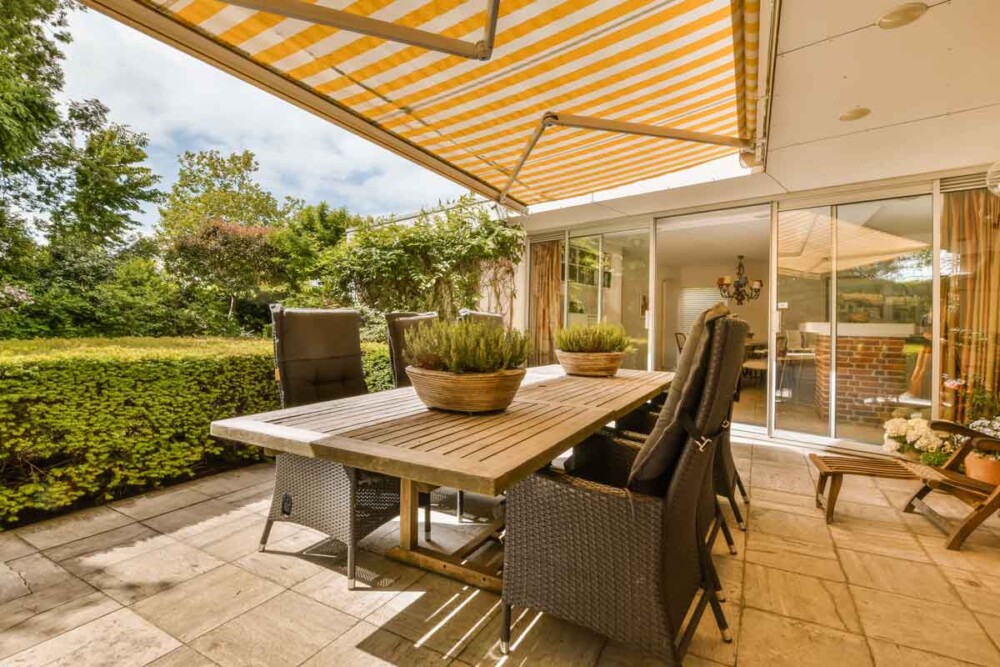
The most used materials for outdoor curtains
Each material has a precise performance profile. Knowing its strengths and limitations allows you to combine the fabric with the project, the climate and the budget.
Solution-dyed acrylic
It’s the reference for awnings. Bulk-dyed acrylic fiber combines excellent UV resistance, excellent color fastness, and good breathability, which helps keep the shaded area cool. It resists fading and mold and, with a water-repellent finish, handles light rain well on inclined surfaces.
Polyester
Appreciated for toughness, lightness and ease of maintenance. It is often treated with anti-UV and water-repellent finishes that increase its durability outdoors. It is a versatile base, suitable for both shielding and technical drapes, and lends itself to specific treatments such as fireproofing.
Technical fabrics and micro-perforated screens
Screen fabrics, micro-perforated, filter light and heat while allowing glimpses of the outside and providing ventilation. They are the typical choice of vertical roller blinds (drop blinds) and commercial facades, where solar control and outward vision are needed.
PVC and coated materials
100% waterproof and very wind resistant, they are indicated for flat covers, gazebos and outdoor closures. They can be opaque or transparent (cristal) and ensure maximum protection from the elements in professional and commercial contexts.
Meshes and knitted fabrics
Mesh or marquisette-type nets allow the passage of air, shielding insects and part of the light. They are the solution for those who want to shade or protect themselves from insects without completely closing the space, maintaining natural ventilation.
| Material | UV Resistance | Water | Body | Ideal Application |
| Solution-dyed acrylic | Very high | Water-repellent | Medium | Awnings, canopies, terraces |
| Polyester | High (if treated) | Water-repellent | Medium | Shielding, technical draperies |
| Micro-perforated Screen | High | Filter | Low | Drop curtains, facades |
| PVC / spread | High | Waterproof | High | Flat covers, outdoor seating, gazebos |
| Networks / mesh | Medium | Not waterproof | Low | Antinset, ventilation, light shade |
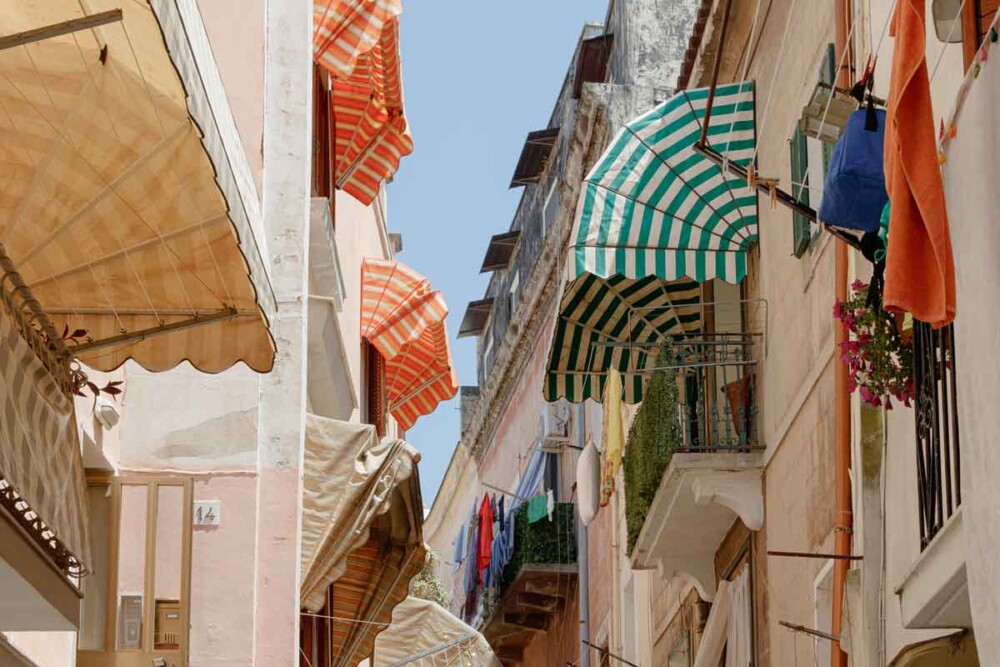
How to choose the right fabric for your outdoor tent
The choice of outdoor curtain fabric is never abstract: it always starts from three concrete variables: where the curtain will be installed, what climate it will be exposed to, and what use it will have to support. These are accompanied by weight, height of the patch, budget and planned maintenance.
Sun-exposed terraces and balconies
Where the sun beats directly for many hours, the top priority is colorfastness combined with solid UV shielding. Bulk-dyed acrylic represents the most reliable choice here, because it maintains unchanged hue and performance even after seasons of intense irradiation. A water-repellent finish and proper drape tilt complete protection against sudden summer downpours.
Gardens, pergolas and large surfaces
For pergolas and covers of large square footage, the mechanical strength and height of the patch become decisive: generous heights reduce the number of seams and improve aesthetic performance, while an adequate weight guarantees stability under tension and under its own weight. In frequent winds, it is best to prefer compact weaves and tough fibres, capable of withstanding chafing and gusts.
Outdoor, premises and commercial spaces
In commercial environments, the tent works every day and must withstand continuous wear and tear and weather, as well as comply with any fire reaction regulatory requirements for places open to the public. PVC and waterproof coated fabrics ensure total protection such as gazebo curtains, flat roofs and outdoor seating closures, while for glass facades the micro-perforated screen allows you to shield the heat while maintaining the view towards the outside.
Verandas, loggias and semi-open rooms
When the goal is to filter light without closing the space, semi-transparent fabrics and mesh are the protagonists: they regulate brightness and privacy while preserving ventilation and lightness. They are modern curtain fabrics ideal for loggias, verandas and gazebos, to be combined with more covering screens for moments of more intense sunshine.
In addition to these assessments, there are some cross-cutting variables. The weight must be calibrated to the ratio between desired coverage and light handling; the budget affects the choice between premium mass-dyed fibers and cheaper treated alternatives; maintenance focuses on materials that are easy to clean and have low dirt retention. It is a good rule, finally, to always require sampling to evaluate hand, color and behavior in real light before proceeding with the packaging.
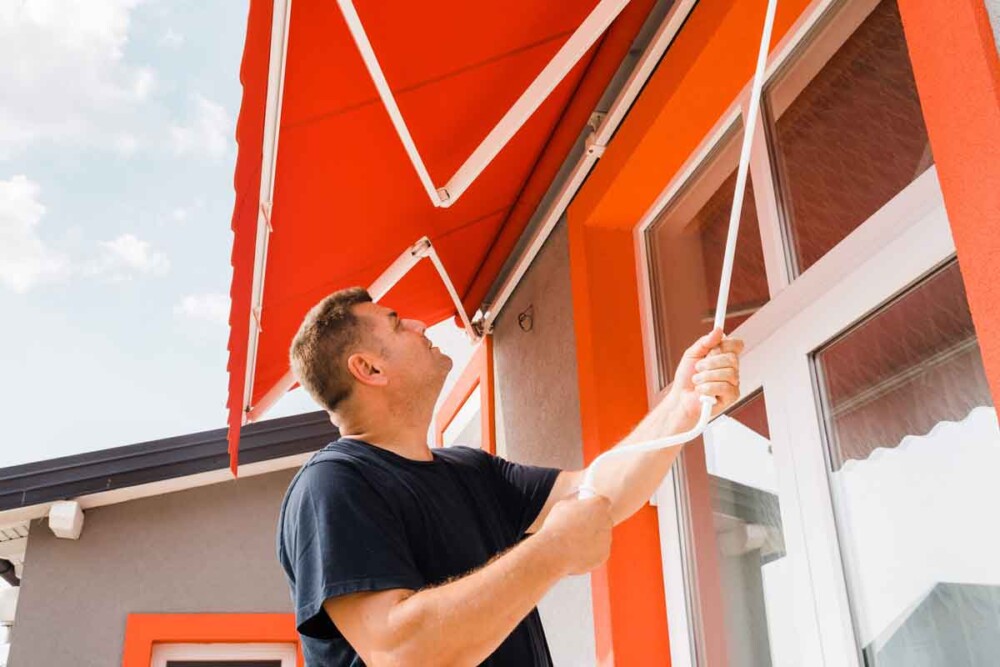
The outdoor curtain fabrics selected by Manifattura Foderami Cimmino
Among Cimmino’s textile proposals for home decor, here are the most suitable solutions for outdoor curtains and open spaces.
Tenda Sole
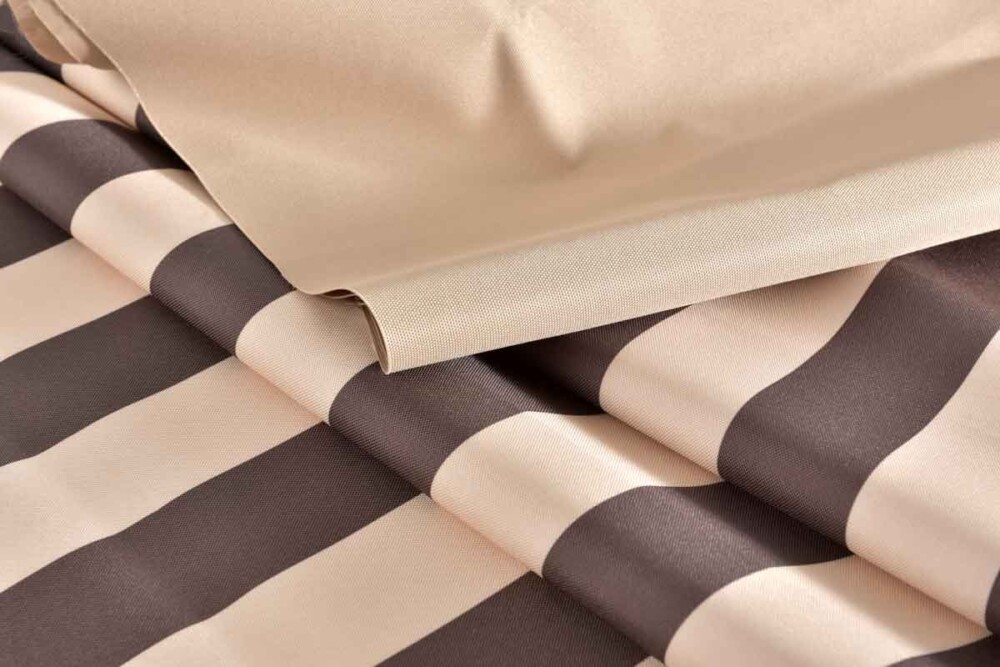
Tenda Sole is the acrylic fabric par excellence dedicated to outdoor awnings. Made of 100% acrylic, it is characterized by high resistance to UV rays, fading and mold, qualities that make it ideal for creating durable shade areas on gardens, terraces and balconies.
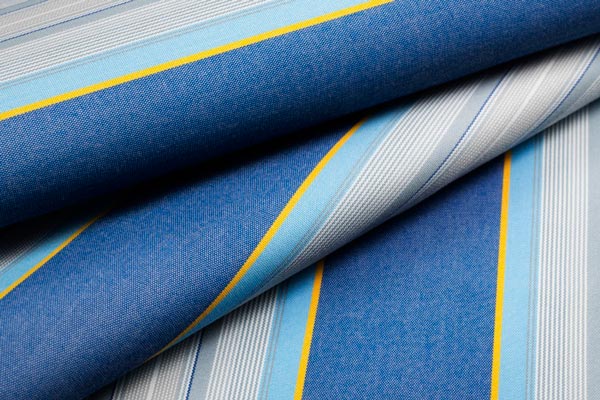
It is available in solid color and colored bands, with a height of 140 cm, weight of 315 gr/mtl (225 gr/m2) and packaging in 15-meter pieces; the non-stretch structure ensures dimensional stability in the package.
Tessuto Dark Ignifugo
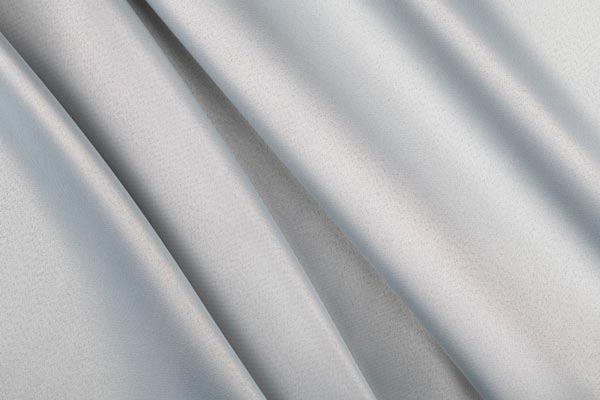
Tessuto Dark Ignifugo is a technical solution in 100% polyester that combines blackout and fire retardant properties. With a generous height of 300 cm and a weight of 250 gr/m2 (750 gr/mtl), it guarantees a uniform fall and compact panels free of transparencies.
It is indicated where safety and light control are priorities and is characterized by the ability to limit combustion, perfect for blackout curtains.
Tenda Velo Unito
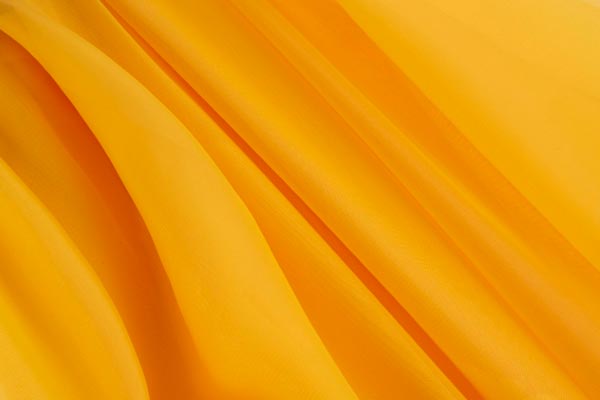
A refined choice for verandas, loggias and semi-open spaces where you want light shade without sacrificing transparency. Its versatility also makes it workable for decorative applications.
Zanzariera Quito Extra
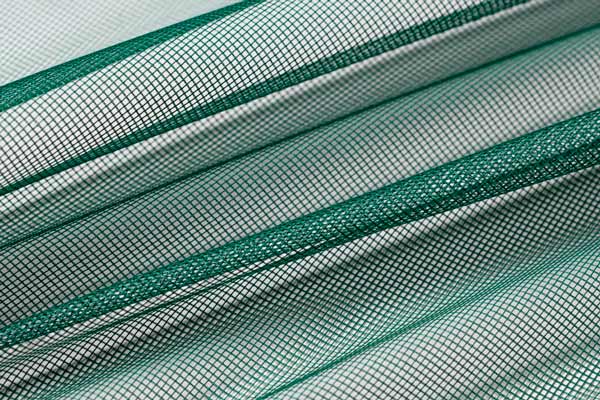
Zanzariera Quito Extra is a 100% polyester mesh fabric, available in two different heights (145 cm and 195 cm), designed to fit both windows and doors. With a low weight of 36 gr/m2, it is lightweight and easy to install, and is characterised by the treatment that makes it resistant to UVA rays, wind and weather.
It provides a discreet yet effective barrier against mosquitoes and insects, preserving visibility and air circulation: the ideal complement for experiencing the outdoor space in the warm months.
Tessuto Outdoor
Tessuto Outdoor was created expressly for the external environment, where it must combine technical performance and aesthetic rendering. Made of acrylic-based blend (80% acrylic, 20% polyester) and offered in height 160 cm, it has a weight of 220 gr/m2 (352 gr/mtl) which gives it body and a stable fall.
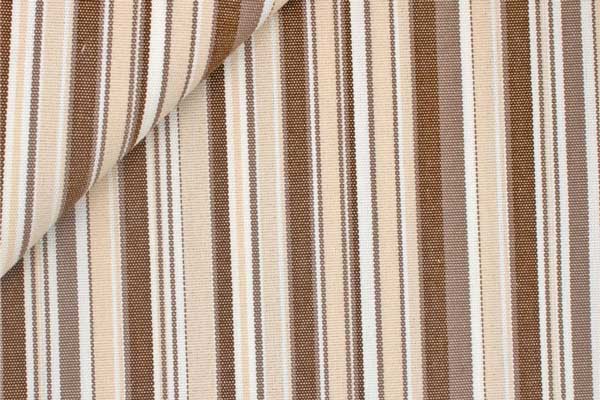
The acrylic component ensures good color retention under solar radiation and weather resistance, qualities that make it suitable for screening and textile complements in open spaces. Its versatility allows it to be used to give character to terraces, gardens and outdoor convivial environments, combining protection and decorum.
Maintenance and durability of outdoor curtain fabrics
Proper maintenance significantly extends the life of the fabric. The general rule is to regularly brush dry dust, remove leaves and debris before they retain moisture, and wash stains with warm water and neutral detergent, avoiding high-pressure jets and bleach that attack fibers and finishes. It is essential to rewind or store the curtain only in perfectly dry fabric, to prevent mold and streaks. Bulk-dyed materials, such as acrylic, tolerate these operations better than surface-dyed fabrics.
Trends and palettes for outdoor spaces
The trendy aesthetic for outdoor spaces rewards natural tones of sand, terracotta, sage green, stone grey and textures that recall materials such as wood and linen, in harmony with Mediterranean architecture. Alongside the neutrals, the broad lines in tone-on-tone version and the sober contrasts stand out, which enhance the outdoor seating and terraces without weighing them down.
Custom-made outdoor curtain fabrics: Cimmino’s proposals
Since 1750 Manifattura Foderami Cimmino selects and distributes fabrics for professional packaging. The company works alongside upholsterers, draperies, and ateliers throughout Italy to choose the most suitable material for each outdoor project, including sampling, yardage sales, and wholesale supplies. Explore the entire selection of outdoor fabrics and request a quote on the Cimmino Shop, or contact our team for a technical consultation dedicated to your project.
FAQ- Frequently Asked Questions about Outdoor Curtain Fabrics
For most awnings, the reference is mass-dyed acrylic, for UV resistance and colorfastness.
Bulk-dyed acrylic combines sunscreen, color fastness, and breathability. For flat roofs or commercial uses where total waterproofness is needed, PVC or a coated fabric is preferred, while for glass facades the micro-perforated screen allows you to maintain the view towards the outside.
Bulk-dyed acrylic excels at keeping color in the sun; polyester is cheaper and more versatile, especially when treated as UV-resistant.
For a highly exposed terrace and maximum aesthetic durability, mass-dyed acrylic is generally the best choice. Polyester, lightweight and easy to maintain, is an excellent alternative when equipped with anti-UV and water-repellent finishes, and lends itself to technical treatments such as fireproofing.
It is not waterproof, but water-repellent: it repels light rain and splashes if the curtain is tilted.
Acrylic lets water slide on sloping surfaces but is not a total barrier. For 100% waterproof protection, for example on flat covers or for outdoor closures, you need to focus on PVC or coated materials.
With quality mass-dyed material and proper maintenance, we are talking about many years of service.
Durability depends on fiber quality, dyeing method, exposure, and care. Mass dyed fabrics, always stored dry and clean without harsh products, maintain performance and color much longer than surface dyed fabrics.
This means that the color is inserted into the fiber before spinning, ensuring much higher fade resistance.
In bulk dyeing the pigment passes through the entire fiber, so the color resists solar radiation for a long time. In thread or piece dye, the color is applied to the surface: more versatile on patterns but less stable under intense sun.
