


Satin is often treated as a single material, but the correct way to wash, iron, or sew it depends on the fiber it is woven from. A cotton satin for sheets can withstand the washing machine at 60 °C, while an acetate satin for linings, in the same conditions, risks losing shape and shine already in the first wash. In this guide Manifattura Foderami Cimmino explains how to recognize the fiber of a satin, how to wash satin in the washing machine or by hand, how to iron and stain it without ruining the surface and what precautions to take when cutting and sewing. Those looking for the differences between satin, satin, silk, and polyester find it all in the guide to satin types.
How to recognize satin and its fiber before washing it
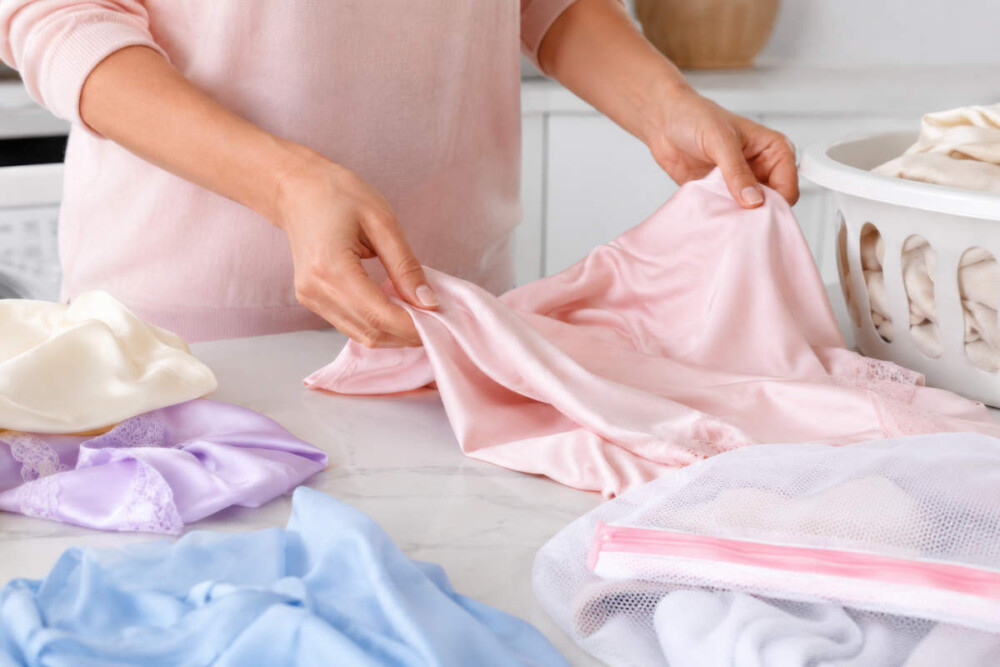
Satin is recognized by the smooth, shiny surface on the obverse and matte on the reverse, an effect due to the satin armor. This feature, however, says nothing about the fiber, and it is the fiber that determines how to treat the fabric. Before deciding whether satin goes to the washing machine, hand or laundry, it is therefore advisable to follow a precise order: label, touch test and, when a certain answer is needed, combustion test.
How to read the label and composition of satin
The fabric label or data sheet shows the composition as a percentage and the maintenance symbols: they are the most reliable source and prevail over any general rule. In melee satins, such as acetate and viscose or cotton and elastane, it is advisable to take the precautions required for the gentlest fiber. Our guide to fabric composition is useful for reading acronyms and symbols correctly.
How to recognize silk satin by touch and light
Silk satin heats up quickly on contact with the hand and in light shows a soft sheen, with reflections that change depending on the angle. Polyester satin, on the other hand, tends to have a more even, mirrored reflection and a hand that stays fresh longer, while cotton satin has a more subdued shine and a drier, more compact hand. These are useful but not conclusive clues, because finishing and scrums can make the fabrics very similar.
The combustion test to recognize silk, acetate, cotton and polyester
When a certain answer is needed, tailors and laboratories resort to the combustion test: a few threads are taken from the edge of the fabric, held with tweezers over a non-flammable saucer, and brought closer to the flame, observing how they burn, what odor they emit, and what residue they leave.
| Fiber | Flame behavior | Smell | Residual |
| Silk | It burns slowly and tends to shut off on its own | Burnt hair | Dark ash crumbling between your fingers |
| Cotton and viscose | Burn quickly with yellow flame | Burnt paper | Gray ash, light and crumbly |
| Acetate | It melts as it burns | Pungent, similar to vinegar | Hard and irregular lump |
| Polyester | It melts and retracts from the flame, with dark smoke | Sweetish, chemical | Hard bead that doesn’t crumble |
Maintenance table of fiber satin
Once the fiber is identified, the following table summarizes how to wash, iron, and dry each type of satin, along with the risk of shrinkage and breathability.
| Satin fiber | Washing | Water temperatur | Iron | Drying time | Narrowing | Breathability |
| Silk | By hand or dry | Cold, max 30 °C | 2 stitches (about 150 °C), from the reverse with cloth | In the air, stretched out, in the shade | Low if you respect the temperature | High |
| Acetate and cupro | Dry recommended | Cold, only if the label allows water | 1 point (about 110 °C), with cloth | Spread, without squeezing | Medium | Good |
| Viscose | By hand or delicate, if admitted | Cold or warm, max 30 °C | 2 points, from the reverse | Spread, without squeezing | Medium-high | Good |
| Cotton (including rasatello) | Washing machine | 40 °C colored, up to 60 °C white | 3 points (about 200 °C), best if slightly moist | In the air or dryer at low temperature | Possible at first wash | High |
| Polyester | Washing machine, delicate program | 30–40 °C | 1–2 points, with cloth | In the air, dries quickly | Negligible | Low |
How to wash satin: in the washing machine, by hand or dry
The most frequently asked question is whether satin can be machine washed. The answer depends on the fiber: cotton and polyester satin do, while silk and acetate satin generally don’t. The following instructions are organized by fiber and garment type.
How to wash cotton satin sheets and pillowcases
Cotton satin sheets, including rasatello, machine wash at 40°C if colored and up to 60°C if white, when the label allows. To wash cotton satin, a liquid detergent is preferable, because powdered detergent can leave residue on the smooth surface, while fabric softener should be used sparingly: excess weighs down the hand and reduces the absorbency of the cotton. It’s best not to fill the basket beyond half its capacity, so the sheets move freely and form fewer creases. Satin pillowcases should be washed inside out to protect the shiny side from rubbing.
Those who make bedding should remember that cotton satin can shrink in the first wash: for this reason, it is good practice to wash the fabric before cutting, or to allow a margin on the finished measurements.
How to wash a polyester satin shirt, pajamas, or dress
A polyester satin shirt, as well as satin pajamas or a dress of the same fiber, is machine washed on the gentle program at 30–40 °C, following these steps:
- Turn the garment over and close buttons and zippers.
- Place it in a mesh bag, which protects it from pulled wires.
- Set a low centrifuge, no later than 600–800 rpm.
- Lay it out on a hanger right away, because the creases get fixed while the fabric is still hot and damp.
How to wash silk satina
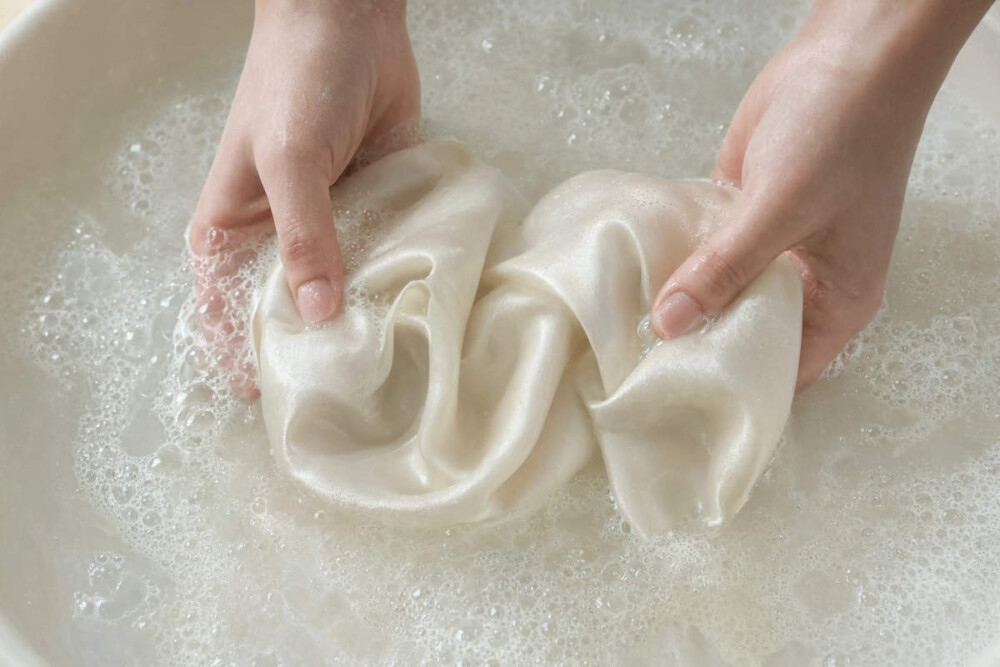
Silk satin is hand washed in cold water, at most 30 °C, with a silk-specific or neutral detergent. It should be soaked for a few minutes and gently stirred, without rubbing or twisting, then rinsed in water at the same temperature; a spoonful of white vinegar in the last rinse helps maintain the shine. For structured clothes, lined or decorated garments the safest choice remains dry cleaning in a trusted laundry.
How to wash acetate and viscose satin
Acetate, cupro, and viscose are fibers widely used in linings and lined clothing, and are particularly sensitive when wet. Viscose loses resistance when in contact with water and can shrink; acetate fears heat and solvents, and the acetone in many nail solvents dissolves it. Dry cleaning is the recommended solution for these shaves. If the label allows water, proceed as for silk, by hand and cold. In garments packaged with a lining, the more restrictive indication between that of the outer fabric and that of the lining applies.
How to wash satin curtains
Cotton satin curtains or cotton and polyester blend can be machine washed with the delicate program at 30 °C and low spin, after removing hooks and rings and checking the label. For large sheets, it’s best to wash one at a time, so the basket doesn’t overload and you avoid deep creases. Curtains should be put back on while still slightly damp: the weight of the fabric helps smooth out creases during drying. Professional washing is more prudent for silk satin curtains or curtains with sewn thermal linings.
How to dry satin without deforming it
Satin should never be wrung out: to remove excess water, roll the garment in a terry towel and press lightly. Silk, acetate, and viscose dry flat on a flat surface, away from direct sun and heat sources; polyester on a hanger; cotton in the air or in a dryer at low temperature, if the label allows. The metal drying rack can leave marks on the shiny side, so it is best to place a cotton cloth or use a plastic rest.
How to iron satin without leaving shiny marks
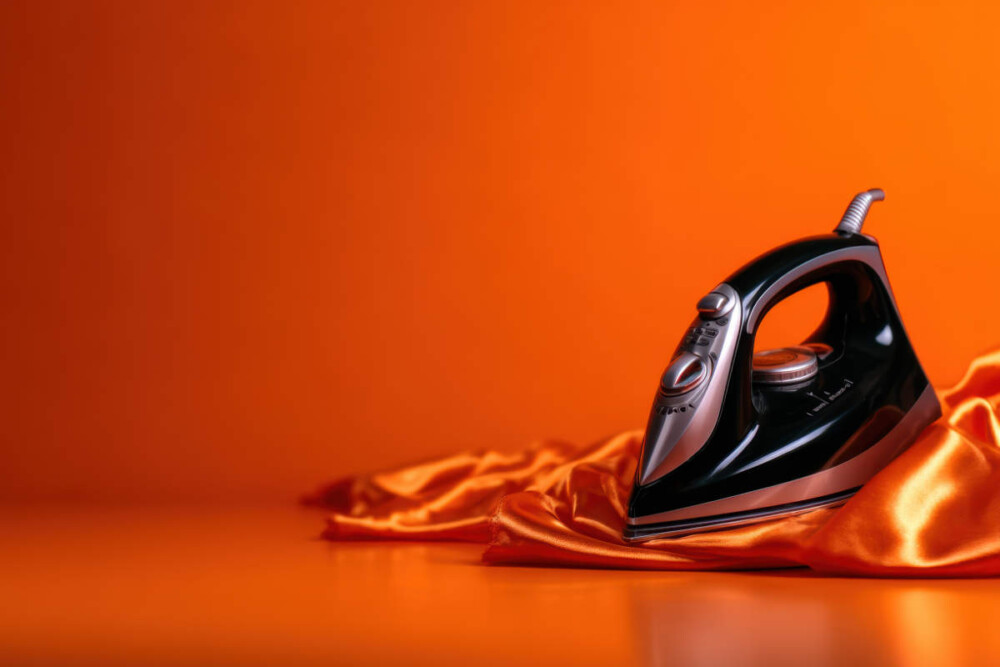
The most common problem when ironing satin is polishing, that is, a brighter halo left by the iron plate, which is much more noticeable on satin than on other armor. The correct procedure is the same for all fibers; only the temperature, indicated in the maintenance table, changes.
- Check the temperature on the label or in the fiber chart.
- Always iron from the reverse side of the fabric.
- Place a thin cotton or organza cloth between the iron and satin.
- Place and lift the iron instead of sliding it back and forth, so as not to deform the fabric.
- Dose steam: Water droplets can leave streaks on silk and acetate, so it’s best to use remote steam or a vertical vaporizer.
- Protect the seams with a strip of paper under the margins, so that their thickness does not leave an imprint on the right.
- Allow the garment to cool on a flat or hanger before storing.
How to Iron a Satin Shirt
To iron a polyester satin shirt, work from the inside out at a low temperature, or refresh it with a vertical steamer held a few centimeters from the fabric. You start with the neck and cuffs, then move on to the sleeves, yoke, front and back. A silk satin shirt requires the same attention, with a medium-temperature iron and a protective cloth; often, simply hanging it in the bathroom during a hot shower helps smooth out light creases.
How to iron satin sheets
Cotton satin sheets iron best when still slightly damp, with the iron on high and inside out, to preserve the shine of the exposed side. Those who prefer to avoid ironing can lay them out tightly immediately after washing and fold them just dry: the compact surface of cotton satin helps limit creases.
How to stain and clean satin
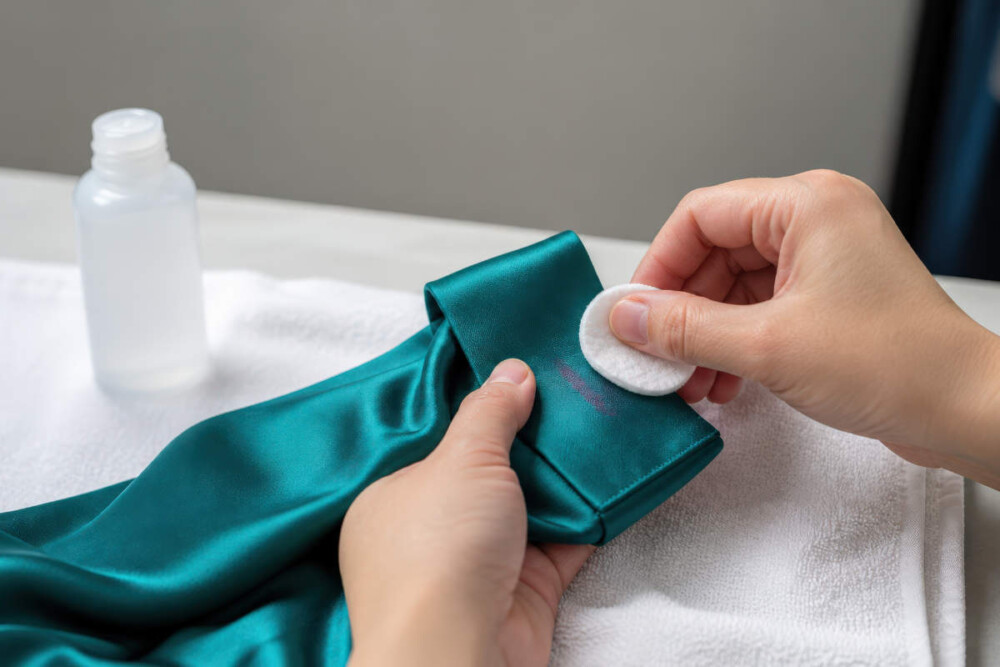
The ideal process for cleaning satin depends, again, on the fiber, but some rules always apply. Before applying any product, it is best to try it on a hidden part, such as an internal margin or the hem. The stains are dabbed from the outside towards the center, without rubbing: the rubbing breaks the superficial loosening of the satin and leaves a dull area.
Does satin stain with water? How to avoid halos
Silk, acetate, and viscose satin can stain even with simple drops of water, which, when dried, leave a visible halo because they locally modify the surface of the fiber. Polyester satin and cotton satin are affected much less. To remove a halo from silk satin, the entire area is evenly moistened, for example with a vaporizer, and left to dry without heat, thus the edge of the stain disappears. On acetate, or on valuable items, it is more prudent to go to a laundry.
How to remove oil and sweat stains from satin
To remove oil stains from satin, immediately sprinkle them with talcum powder or cornstarch, which absorbs the fat. Let it sit for a few hours, brush off the powder, and finish with a mild detergent, patting it down inside out. Sweat stains on cotton or polyester satin are treated with a solution of water and white vinegar, while an active oxygen product can be used on yellowed white cotton satin, respecting the label. To stain silk and acetate satin, chlorine-based bleach, which irreversibly damages them, should be avoided.
How to Clean Satin Wedding Shoes, Bags, and Accessories
Satin shoes, clutches and bags should not be put in the washing machine or immersed in water. The dust is removed with a soft-bristled brush; the stains are dabbed with a white cloth moistened with water and mild soap, proceeding in small areas. After cleaning, the shoes are filled with paper towels to maintain their shape and left to dry away from heat sources. To clean silk satin wedding shoes, or with appliques, it is best to rely on a shoemaker or a specialized laundry.
How to sew satin without it fraying
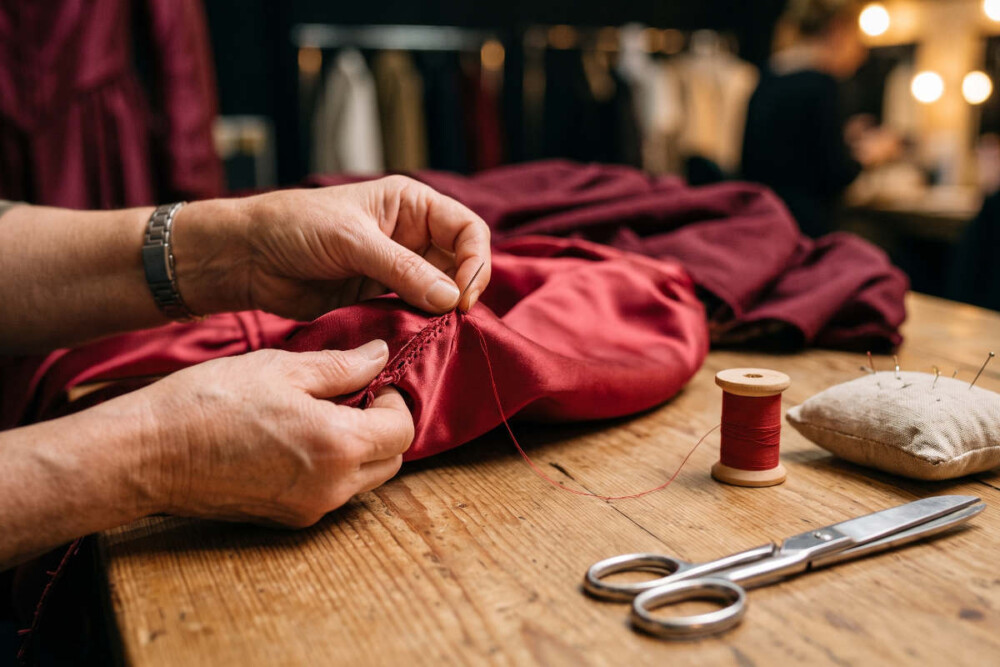
The satin armor has long unties, that is, threads that run to the surface for several passes before being tied. It is these unties that give the fabric its shine, but they also make it slippery, easy to fray at the edges and sensitive to pin and needle marks. For formal fabrics, you’ll find a dedicated in-depth guide on how to sew a formal dress.
How to cut satin
Satin cuts in a single layer, on a wide plane and without tension on the fabric. Since it reflects light differently depending on the direction, all the pieces of the pattern should be arranged in the same direction, otherwise the cloths of the finished garment will be of different tones. Weights are used to secure the pattern, or thin silk pins placed only inside the seam allowance. A sheet of tissue paper can be laid out under the lighter shaves, which prevents the fabric from slipping and cuts along with it. The straight line must be respected precisely, because even a minimal deviation is noticeable in the fall.
What a needle and thread to use to sew satin
To sew satin, a Microtex needle is used, which, thanks to its thin tip, passes through the fibers without pulling them: 60/8 or 70/10 for light and fluid satins, 80/12 for medium-weight ones and for duchesse satin. The needle should be replaced with each new project, because even a slightly worn tip can engage the threads and leave a stretch mark. Thin polyester thread is suitable for most satins, while silk thread can be used for silk satin, which integrates better with the surface. A stitch length of 2–2.5 mm and slightly reduced tension prevent the seam from curling, and the double-carry, or Teflon, foot helps advance the two layers evenly.
Sewings and hems to prevent satin from fraying
The choice of seam depends on the weight of the satin and the type of garment, as reported in this practical table.
| Sewing or hemming | When used |
| French seam | Lightweight satins: completely encloses the margin and is clean on both sides |
| Hong Kong trim (bias-wrapped margins) | Heavy satins and duchesses, in unlined garments where the interior remains visible |
| Overlocker | Linings and series productions, to quickly finish margins |
| Stitching | Cotton satin linen, to withstand frequent washing |
| Rolled hem | Light satins: shirts, scarves, slips |
| Hand invisible hem | Clothes, when the point must not appear on the right |
| Hem with horsehair | Full formal skirts, to support the fund |
Frequent mistakes in satin processing and how to fix them
Most defects that appear when working satin always repeat the same and have precise causes: an unsuitable needle, too high thread tension, too hot iron, or pieces cut in different directions. Recognizing the problem on the garment allows you to immediately trace the error and correct it before it happens again on other drapes. The following table collects the most common defects encountered when cutting, sewing, or ironing satin, with the most likely cause and the remedy to adopt.
| Problem | Cause | Remedy |
| Curled seam | Voltage too high or point too short | Reduce tension, stretch the stitch to 2.5 mm |
| Threads pulled along the seam | Worn or unsuitable needle | Microtex needle new |
| Pin marks on the right | Pins in the body of the fabric | Weights or pins only in the margin |
| Drapes of different tone | Pieces cut in opposite directions | Cut everything in the same direction |
| Shinier areas after ironing | Iron too hot or in direct contact | Iron from the inside out with cloth |
| Water rings | Drops on silk or acetate | Moisten the area evenly or go to the laundry room |
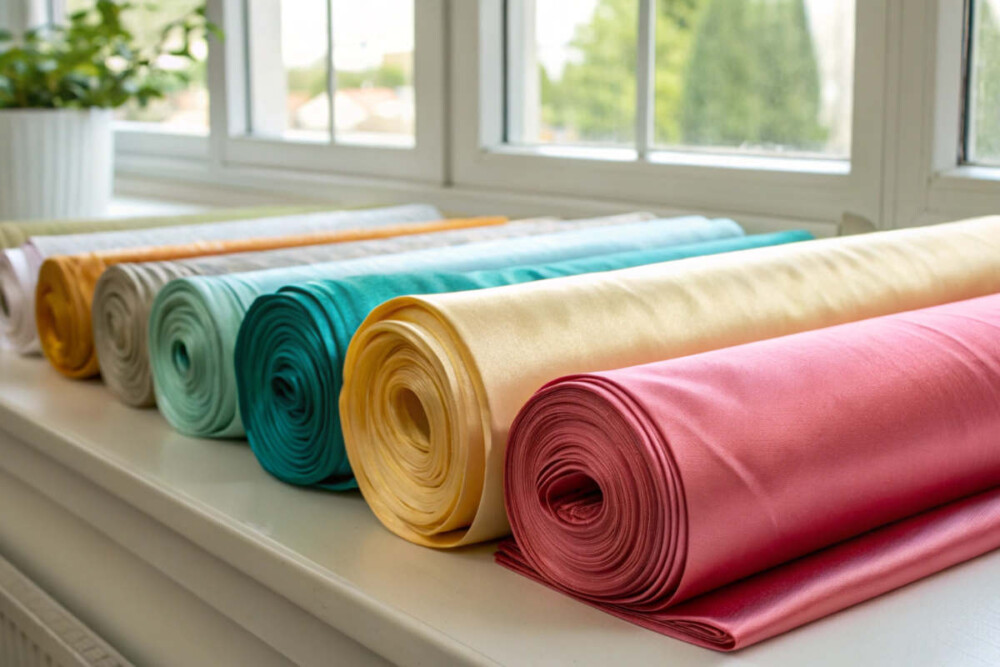
The satin fabrics available at Cimmino Shop for clothing, linings, linens and curtains
The instructions in this guide apply directly to the satins in the Cimmino catalogue, which cover different fibres and intended uses: acetate, viscose and cupro for linings and dresses, cotton for bedding, polyester for costumes and fittings, cotton and polyester blend for draperies.
Raso Viareggio
Raso Viareggio is a 100% polyester fabric with a smooth, even surface and a glossy finish that reflects light well, even under the spotlights of a fashion show or stage. It is designed for Carnival and cosplay costumes, set-ups and scenographic decorations, that is, projects in which brilliance, full color and visual rendering at a distance count.
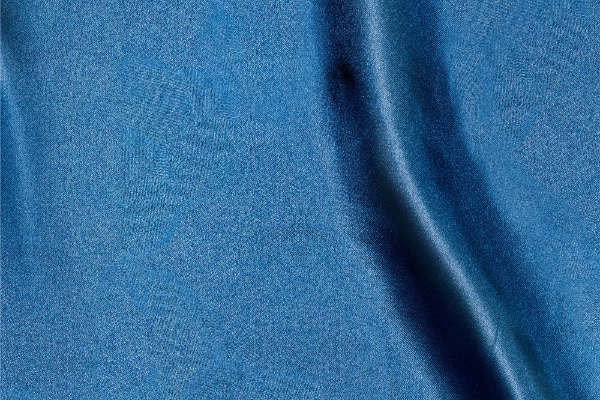
Weighing 135 g/ml (90 g/m2) and standing 150 cm tall, it is a lightweight, non-stretch satin: it drapes smoothly but maintains the lines of the cut, and is easy to work even on large surfaces. It is available in several solid colors and in 30-meter pieces, a convenient size for workshops and continuous production. It is certified OEKO-TEX® Standard 100, which certifies the absence of harmful substances.
Raso Superga
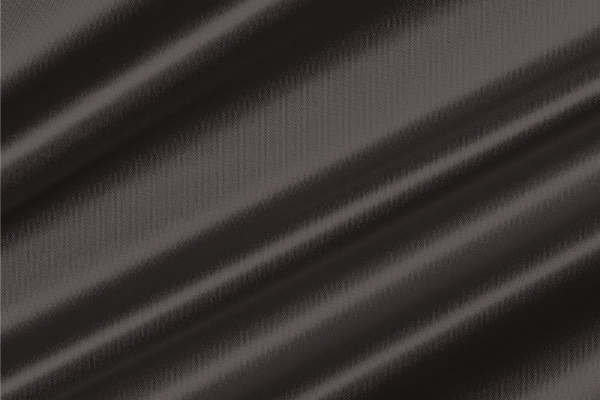
Raso Superga is a 60% acetate and 40% viscose fabric that combines the typical shine of satin with the softness and smoothness of viscose. The silky hand and smooth fall make it suitable both as a lining, where it facilitates the wearability of the garment and finishes its interior, and as the main fabric for day and evening dresses, skirts, jackets and fashion accessories.
With a height of 140 cm and a weight of 173 g/ml (124 g/m2), it has a good balance between lightness and body: it follows the lines of the garment without weighing it down and accompanies the movement with naturalness. It is available in a range of fashion colors that adapts to both classic and contemporary collections. It is certified OEKO-TEX® Standard 100, which certifies the absence of harmful substances.
Raso Saturno
Raso Saturno is a 100% polyester fabric with a smooth and shiny surface, which stands out for its fluidity in draping and good resistance to creases. They are two useful qualities both in long-worn garments, such as formal wear, and in processes where the fabric must remain in order from cut to delivery.
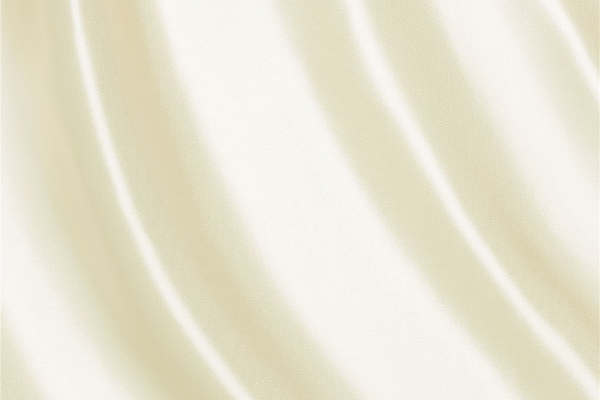
With a height of 150 cm and a weight of 180 g/ml (120 g/m2), it has more body than a light satin and still falls softly. This makes it suitable for evening and ceremonial dresses, Carnival costumes and decorations, as well as lining jackets, coats and hats. It is certified OEKO-TEX® Standard 100, which certifies the absence of harmful substances.
Raso Carnevaluxe

Raso Carnevaluxe is a 100% polyester fabric with a smooth, soft and bright surface, designed for projects where the costume needs to be noticed. The satin finish intensifies the colors and highlights cuts, applications and details. For this reason it is suitable for Carnival costumes, cosplay, theatrical outfits, set-ups and decorations for events.
With a height of 150 cm and a weight of 180 g/ml (120 g/m2) it has a body sufficient to support volumes and scenographic constructions, remains pleasant to the touch and is easily packaged even in series. Synthetic fiber makes it resistant to repeated use, an important quality for costumes intended for multiple shows or multiple seasons. It is certified OEKO-TEX® Standard 100, which certifies the absence of harmful substances.
Raso Duchesse Jy
Raso Duchesse Jy is a 100% polyester duchesse satin with a smooth, luminous surface and a consistent structure, which allows you to shape the silhouette with precision. The supported body is suitable for built bodices, full skirts and trains, which maintain the shape without weighing down the garment.
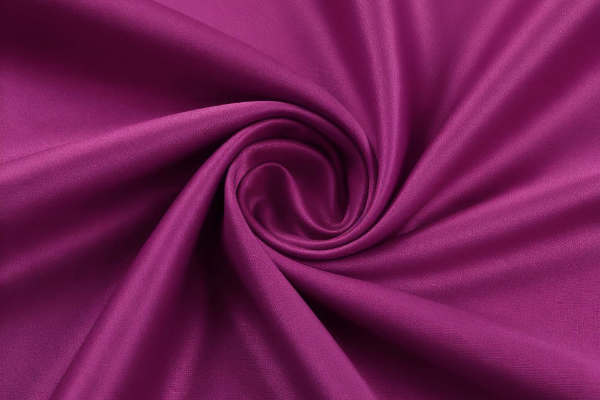
The satin finish distributes light fully and evenly and gives the dress a formal elegance, which is noticeable both in a ceremony and in a reception room. With a height of 150 cm and a weight of 247.5 g/ml (165 g/m2), the fabric is worked with good sartorial yield from cut to package and is suitable for wedding dresses, evening dresses and formal garments. The wide range of colors allows it to be used both for the classic wedding dress and for creations in bolder shades. It is also a concrete choice for ateliers who work on commission and want to keep raw material costs down. It is certified OEKO-TEX® Standard 100, which certifies the absence of harmful substances.
Tessuto Raso Elegant
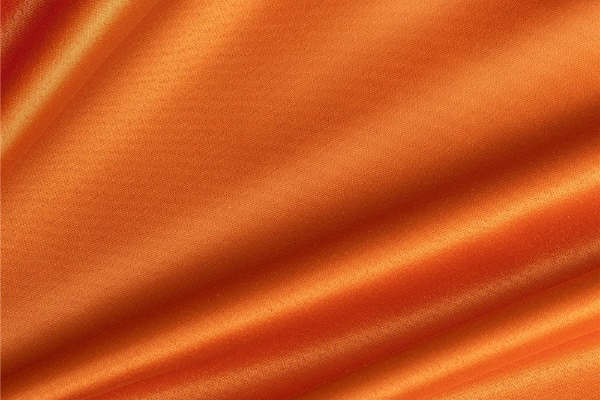
Tessuto Raso Elegant is a drape satin made of 55% cotton and 45% polyester, with a smooth, even surface and a controlled shine that illuminates the environment without being excessively bright. The cotton component gives it a pleasant hand and a more natural look.
Polyester gives it dimensional stability and resistance to daily use, important qualities for a fabric that remains exposed to light and hung for long periods. The height of 330 cm allows you to make window curtains and high French doors with a single sheet, without visible joints. The weight of 235 g/m2 (775.5 g/ml) gives it the body needed to fall into regular folds and to also make drapes, curtain covers and decorative panels.
Raso Poly Jacquard
Raso Poly Jacquard is a satin fabric in 100% polyester with jacquard designs, that is, patterns obtained directly in weaving and not printed. For this reason, the decoration remains clear and does not wear out with use. On the shiny base of the satin the pattern emerges by reflex contrast, and to the surface is added a discreet workmanship that is appreciated up close.
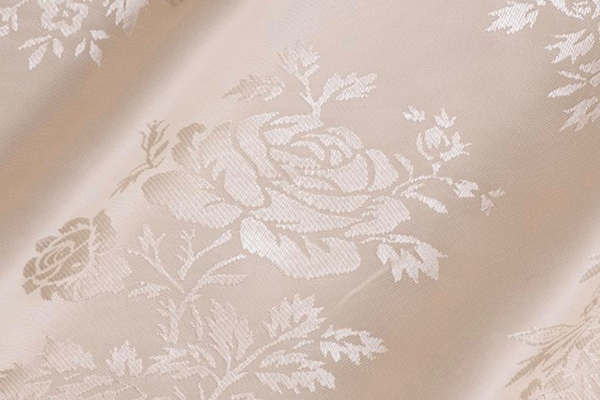
It is indicated for jacket and outerwear linings, for liturgical vestments and for the packaging of padded articles, where it combines a well-groomed appearance with good durability over time. It has a height of 160 cm and a weight of 144 g/ml (90 g/m2), is not elasticized and is available in different colors. It is certified OEKO-TEX® Standard 100, which certifies the absence of harmful substances.
Raso Ariston M Bemberg
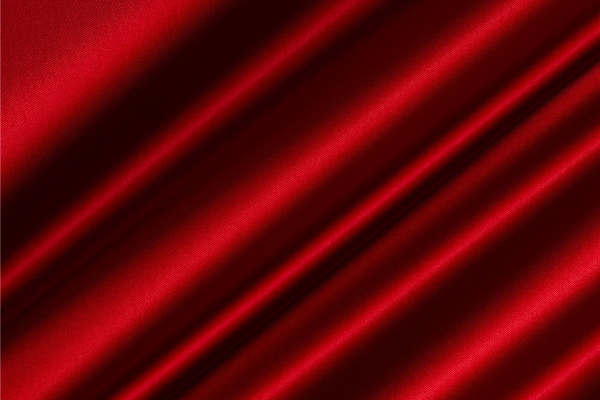
Raso Ariston M Bemberg is an Italian-made satin made of 70% acetate and 30% cupro, the cellulosic fibre known by the commercial name Bemberg. Acetate gives the surface a full sheen and good stability. The cupro adds a soft, smooth hand, a smooth drop, and breathability that makes the fabric comfortable even in direct contact with the skin.
These qualities make it suitable especially as a lining of elegant dresses, formal garments, overcoats and coats, where it facilitates wearability and finishes the inside of the garment. It is also used as the main fabric for clean line creations. With a height of 140 cm and a weight of 150 g/ml (107 g/m2) it is light but consistent, easy to work with and allows precise stitching and uniform surfaces. It is available in a range of fashion colors. It is certified OEKO-TEX® Standard 100, which certifies the absence of harmful substances.
Raso Keope
Raso Keope is a 100% polyester fabric with a shiny surface and a smooth hand, designed for sacred art and liturgical furnishings. Its brightness enhances vestments, ecclesiastical decorations and altar coverings, and maintains an orderly appearance even under the lights of celebrations. It is available in two formats with the same weight of 90 g/m2.
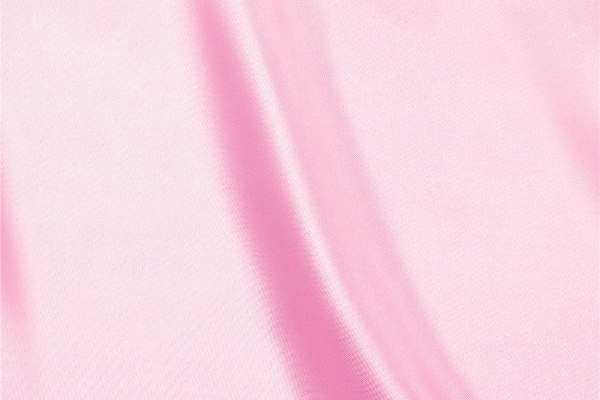
The height of 163 cm (146.7 g/ml) is suitable for large vestments, drapes and covers. The 80 cm (72 g/ml) size is convenient for stoles, borders and trim, because it reduces sphras in band workings. Lightweight and non-stretch, it drapes easily and is available in various shades of symbolic value for liturgical use. It is also used in funerary installations. It is certified OEKO-TEX® Standard 100, which certifies the absence of harmful substances.
Satin Elastic Sandra Extra
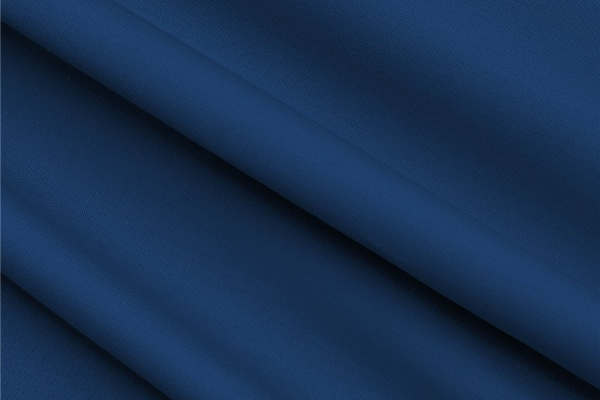
Satin Elastico Sandra Extra is a satin made of 98% cotton and 2% elastane that combines the understated shine of satin armor with the freshness of cotton. The small percentage of elastane makes the fabric stretch: it accompanies the movements and improves the fit of tight or creased garments without altering their line.
Its weight of 255 g/ml (182 g/m2) and height of 140 cm give it enough body for clean-cut trousers, skirts, jackets and dusters, which retain their shape even in everyday use. The solid color and discreet brightness also make it suitable for home accessories such as decorative pillows. It is certified OEKO-TEX® Standard 100, which certifies the absence of harmful substances.

Knowing the fiber of a satin allows you to predict how it will perform during processing, washing, and daily use, and therefore choose it with the maintenance that the finished garment will have to endure in mind. At CimminoShop you can find acetate, viscose, cotton and polyester satins for clothing, linings, linens and curtains, with technical data sheets showing composition, height and weight. Before ordering you can request samples and check hand, drop and shine directly on the work table. If you’re unsure which satin to use for a specific job, the Manifattura Foderami Cimmino team helps you find the right fabric: you can write to ciao@cimmino.com or contact us on WhatsApp.
FAQ – Frequently Asked Questions About Washing, Ironing, and Sewing Satin
Cotton satin and polyester satin can be machine washed, at 40–60 °C and with the delicati program at 30–40 °C respectively. Silk, acetate and viscose satin should instead be washed by hand in cold or dry water, as indicated on the label.
Cotton satin and viscose satin can shrink, especially in the first wash, while polyester satin does not shrink. For this reason, those who make garments or linens from cotton satin should wash the fabric before cutting it.
Silk, acetate, and viscose satin can stain with water droplets, which dry and leave a halo. To remove it, the entire area is evenly moistened and left to dry without heat; polyester and cotton satin are much less sensitive to this problem.
Silk satin is clearly recognized by the composition label or combustion test, in which it burns slowly, smells like burnt hair, and leaves a crumbling ash. It heats up quickly to the touch and has a soft, iridescent sheen in light.
To prevent satin from fraying, finish the edges immediately after cutting: French stitching on light satins, Hong Kong finishing on heavy ones, and seam cutting in the linings. Leaving seam allowances of at least 1.5 cm helps contain fraying during processing.
To sew satin, a thin-tipped Microtex needle is used: 60/8 or 70/10 for light satins, 80/12 for medium-weight satins and for duchesse. The needle should be replaced with each new project to avoid pulled threads.
Shoe satin is cleaned by brushing dust with a soft brush and dabbing stains with a white cloth dampened with neutral soap and water, without soaking the shoe. For silk or applique wedding shoes, it is preferable to consult a professional.
