


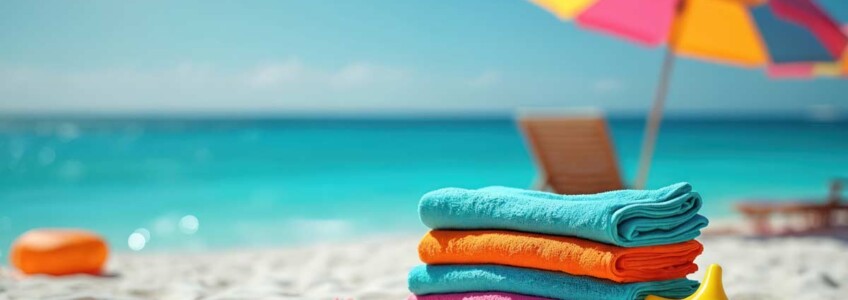
Choosing the right fabric for a beach towel isn’t a minor detail: it’s the decision that determines comfort under the sun, durability, and the satisfaction of those who use that towel every day, from the first dip in June to the last bath in September. The fiber with which a beach towel is packaged directly affects absorption capacity, drying speed, wash resistance, weight in the bag, and feel on the skin.
Manifattura Foderami Cimmino analyzes in depth each family of fabrics destined for the production of beach towels, from traditional cotton sponge to modern microfiber, with a technical yet accessible approach, designed for tailors, packagingists, hospitality operators and conscious consumers.
Cotton terry beach towel: the timeless classic
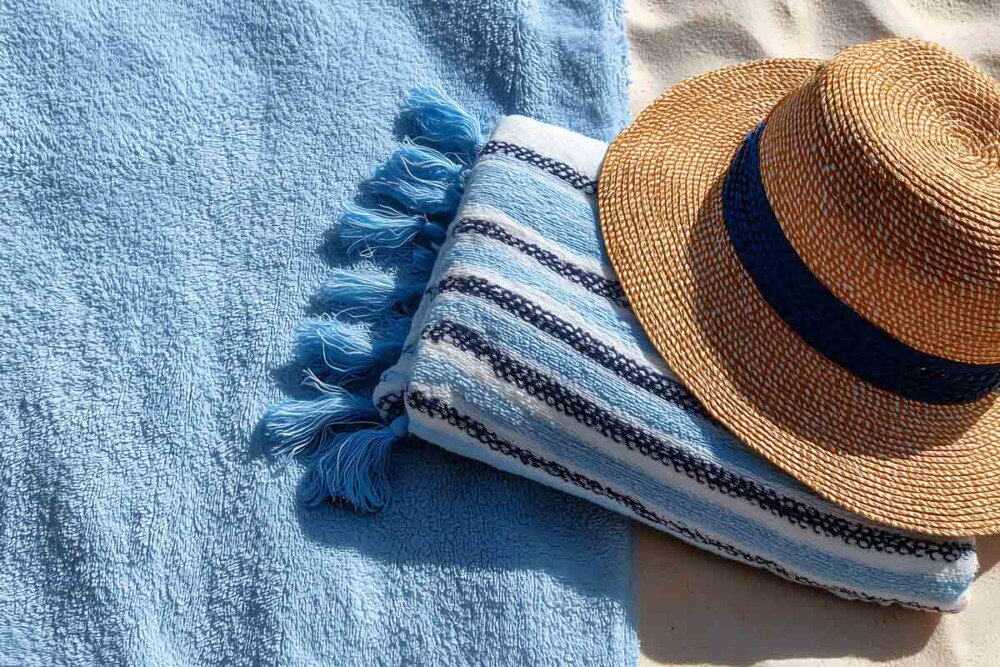
The cotton sponge represents the historical reference point in the landscape of beach towel fabrics. Its double warp structure, with a bottom warp forming the backbone of the fabric and a hedgehog warp forming the ringed surface, gives it an absorption capacity that remains unsurpassed among natural fibres intended for the seaside sector. The bottom warp is worked at a higher tension than the hedgehog warp; this, combined with soft-twist cotton yarns, allows the fabric to retain large amounts of water and restore a soft, enveloping feel upon contact with the skin.
Sponge weight: the decisive technical parameter
Weight, expressed in grams per square meter (g/m2), is the most important indicator for assessing the quality of a sponge. A higher basis weight indicates a thicker, more absorbent fabric that is more resistant to repeated washing, but also heavier and with longer drying times.
Below 300 g/m2 the sponge fabric is light and compact, suitable for frequent travellers. Between 350 and 420 g/m2 is the medium quality range, the most common for everyday beach towels: excellent absorbency, soft hand, good balance between weight and performance. Above 500 g/m2, you enter the premium segment, with sheets with maximum water retention capacity, designed for spas, resorts and professional use in the hotel industry. The choice of weight must be calibrated to the intended use: a travel bag cover requires lightness, a beach resort cover requires resistance to hundreds of washing cycles.
Spugna Cotone
Soft to the touch and generously absorbent, the Spugna Cotone by Manifattura Loderami Cimmino is a 100% pure cotton fabric designed for those who make superior quality beach towels. Weighing 331 gr/sqm, this combined sponge ensures quick drying and a feeling of enveloping comfort even after long hours of beach, sun and saltiness.
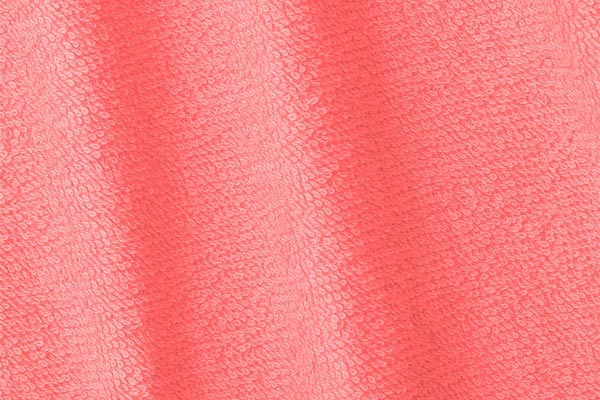
Hydrophilic cotton hedgehog construction effectively retains moisture, while the 145cm height allows for versatile cuts for beach towels of various sizes, from compact towels to more generous sun loungers. The non-stretch, full-handed fabric maintains shape and softness wash after wash, a key feature for products intended for intensive use in the summer season.
Spugna Nido d’Ape Marta
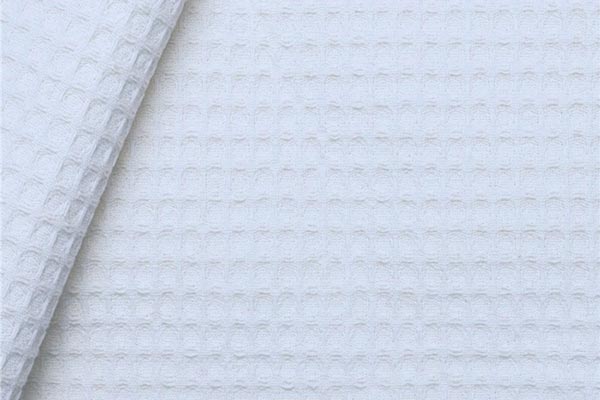
With its characteristic honeycomb workmanship, the Spugna Marta by Manifattura Foderami Cimmino represents a light and refined alternative to the traditional hedgehog sponge for the packaging of beach towels. Made from 100% pure cotton, this sponge stands out for its hexagonal cell weave that creates a breathable, quick-drying surface, two crucial qualities for those who spend long days between the beach and the pool.
Weighing 267 gr/sqm and 150 cm tall, the Spugna Marta offers an ideal balance between absorbency and lightness: it effectively retains moisture but is less bulky than the higher-weight hedgehog sponges, reducing bulk and weight in the duffel bag. The honeycomb structure also promotes better air circulation through the fibers, allowing the cloth to dry more quickly even in conditions of high coastal humidity.
Spugna Extra
Thick, full-bodied and generously soft-handed, the Spugna Extra by Manifattura Loderami Cimmino is a 100% pure cotton fabric that brings the comfort typical of high-end bathroom linens to the beach. With a weight of 310 gr/m2, this sponge is placed in the band of high-quality sponges and returns a full, enveloping texture to the touch.
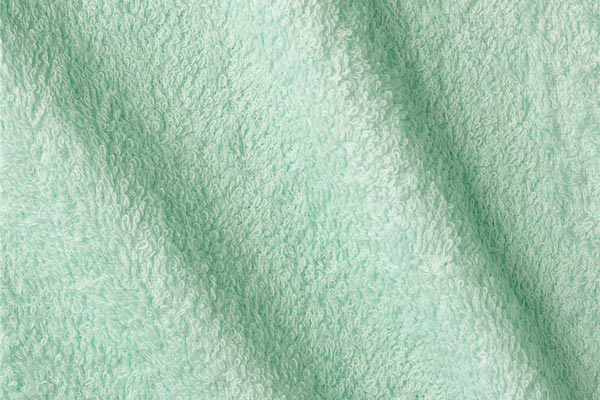
The high absorbent capacity of cotton wool allows for quick and effective drying after bathing, while the compact fabric structure resists the wear typical of bathing use resulting from sun exposure, contact with sand, salt and chlorine, maintaining softness and integrity even after frequent washing. The 150cm height lends itself to flexible cuts, from standard-sized beach towels to larger cot towels.
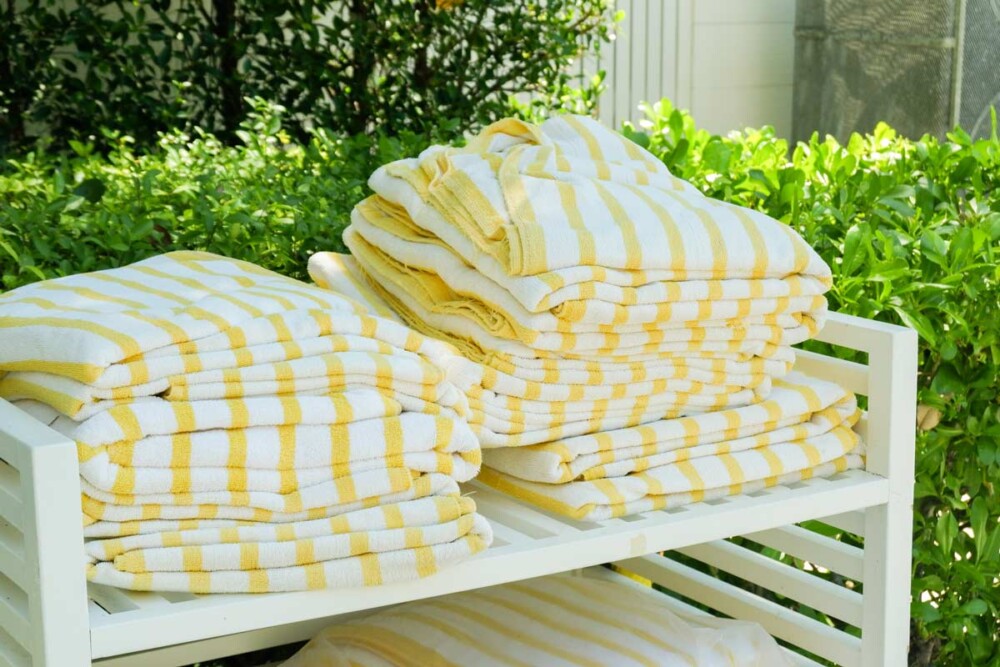
Polyester beach towel sponge with custom print
The polyester sponge is specifically designed for making bathroom linens with custom prints: the surface ensures superior color rendering in sublimation, allowing you to reproduce logos, graphics and patterns with excellent definition and color fastness. It is the ideal choice for those who produce custom beach towels intended for hotels, beach resorts, events and corporate promotions.
Spugna Poly Riccioblock®
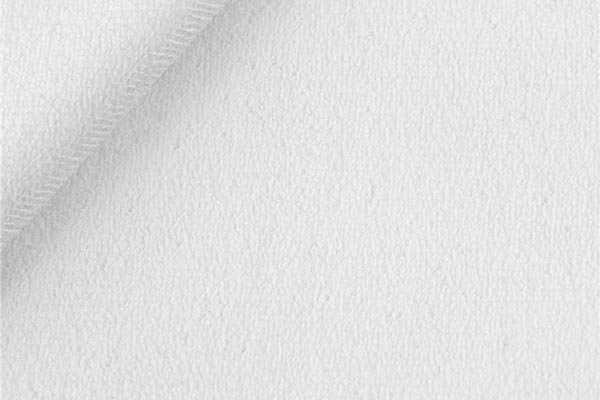
Designed to stand where traditional cotton shows its limits, the Spugna Poly Riccioblock® by Manifattura Foderami Cimmino introduces the technology of the unblemishable weft to the world of beach towels.
Made of 100% polyester, this sponge is designed to keep its structure intact even after intensive and repeated washing cycles, a quality that makes it particularly interesting for those who make sheets intended for bathing establishments, swimming pools, hotels and accommodation facilities where the turnover of use and laundry is high.
With a weight of 300 gr/m2 and a height of 150 cm, the Poly Riccioblock® Sponge offers a soft hand and a good level of absorbency, while still ensuring faster drying times than natural fibre sponges. Polyester, by its nature, retains less residual moisture between the fibers, allowing the sheet to return dry and ready to use in a short time, a real advantage on busy beach days, when the sheet is wetted and reused multiple times.
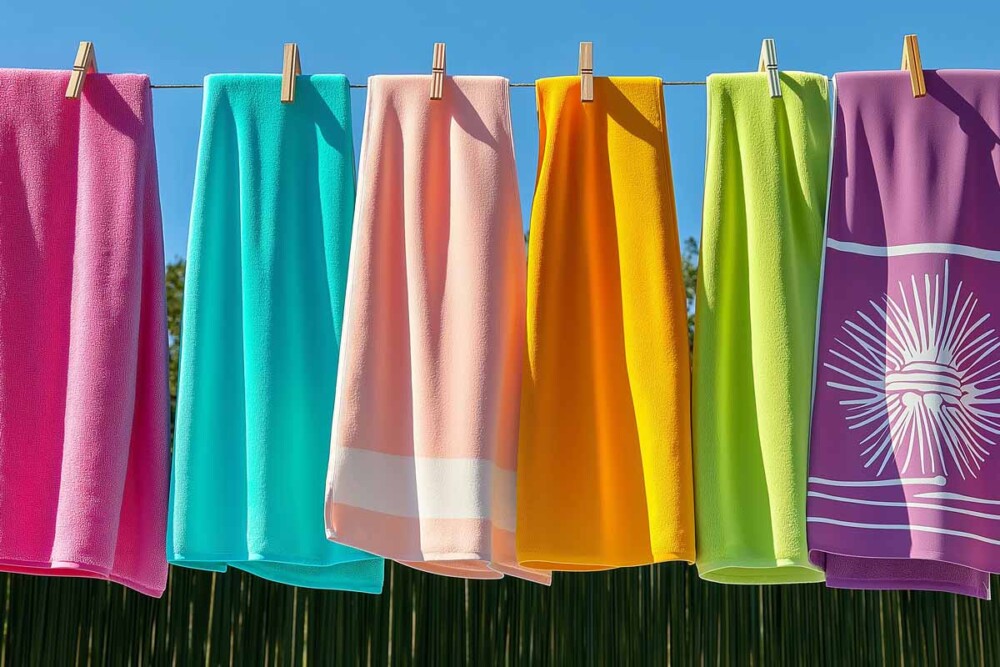
Microfiber beach towel: light weight and quick drying
Microfiber fabric is composed of ultra-thin synthetic fibers, with a titer equal to or less than 1 Dtex, i.e. 10,000 meters of fiber in a single gram of weight, generally based on polyester and polyamide. The extreme thinness of the fibers produces a capillary effect that allows the microfiber to absorb up to seven times its own weight in water, releasing it with equally rapidity.
A microfiber beach towel dries in a fraction of the time it takes for a traditional sponge and, once folded, takes up minimal space. The smooth surface prevents sand from sticking, making it a natural ally for those who frequently travel between the beach, pool, and outdoor sports activities. The wrinkle resistance and shape unalterability even after numerous washes complete a technical profile that explains the constant growth of microfiber in the beach towel market.
It should be considered, however, that microfiber is less soft to the touch than cotton and, being a synthetic fabric, tends to heat up under direct sunlight, partially limiting the freshness sensation typical of natural fibers.
Tessuto Microfibra
Ultralight, with very quick drying and minimal bulk once folded: the Tessuto Microfibra by Manifattura Foderami Cimmino is the technical answer for those who make beach towels designed for travellers, sportsmen and accommodation facilities where practicality and fast rotation of garments are absolute priorities.
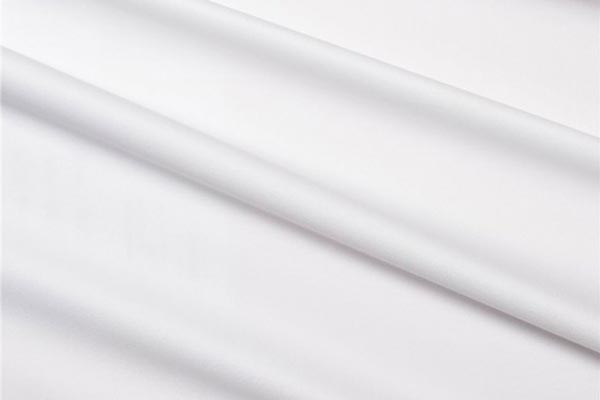
Composed of 80% polyester and 20% polyamide, this fabric exploits the synergy between the two synthetic fibres to achieve a surprising absorbent power compared to the very low weight, of just 166 gr/m2. The height of 180 cm allows for generous cuts for beach towels, cot sheets and large pool towels without wasting fabric, a concrete advantage during the packaging phase.
The microfiber structure captures water by capillary action and releases it just as quickly during drying, allowing the sheet to be ready for use again in a fraction of the time required by natural fibers. A microfiber beach towel also weighs and clutters significantly less in your beach duffel bag.
Bamboo Mixed Sponge: The oeko-tex® certified eco-friendly fabric for sustainable beach towels
The growing focus on sustainability in the textile sector is also reflected in the choice of materials for beach towels. The bamboo blend sponge ensures excellent softness and high absorbency capacity. Bamboo is known for its sustainable properties since the plant grows rapidly without the need for pesticides and the OEKO-TEX® certification certifies that the finished product is safe and free of harmful substances. These characteristics are particularly relevant for beach towels, which remain in direct contact with the body for a long time, and even more so when the towel is intended for children or accommodation facilities that must ensure high sanitation standards.
Spugna Misto Bamboo
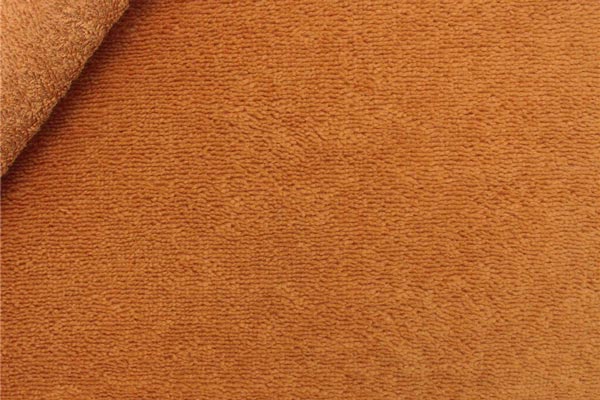
Spugna Misto Bamboo brings to the beach a combination of performance and sustainability that is hard to find in traditional sponges. The tripartite composition (40% bamboo, 40% cotton, 20% polyester) is designed to combine the best of each fiber: the softness and antibacterial properties of bamboo, the absorbent capacity of cotton, and the structural strength of polyester.
Weighing 260 gr/sqm and 145 cm high, this fabric is lighter and more compact than pure cotton sponges of similar weight, a practical advantage for beach towels that must be transported, folded and easily stored in the beach bag. Bamboo fiber also stands out for its superior breathability and natural ability to regulate humidity, allowing the sheet to dry more quickly in the open air and maintain a feeling of freshness even on the hottest days.
Which fabric to choose for beach towel
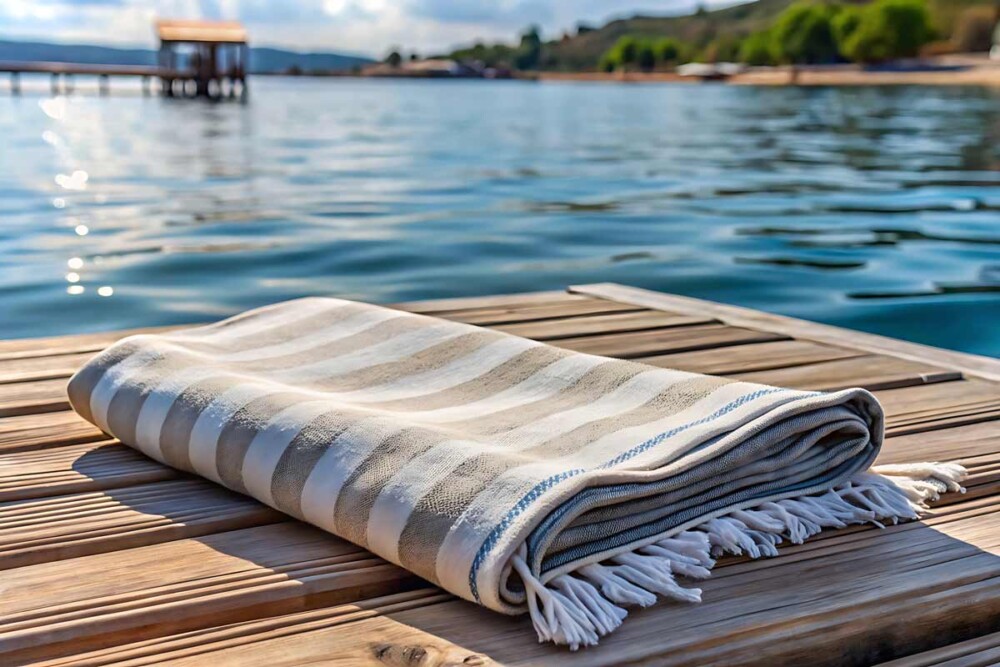
The table synthesizes the performance of major beach towel fabrics across seven key parameters, facilitating informed choice based on context of use and personal or professional priorities.
| Parameter | Cotton sponge | Microfiber | Bamboo mixed sponge |
| Absorbency | Excellent | Very good | Excellent |
| Drying time | Slow | Very fast | Medium |
| Softness | High | Medium | Very high |
| Weight/Bulk | High | Minimum | Medium |
| Anti-sand | No | Yes | No |
| Resistance washing | Very high | High | High |
| Sustainability | Natural fiber | Synthetic | Certified Eco-Friendly |
| Ideal use | Beach, pool, spa | Travel, sports, camping | Hospitality, SPA, B2 B green |
How to choose beach towel fabric based on use
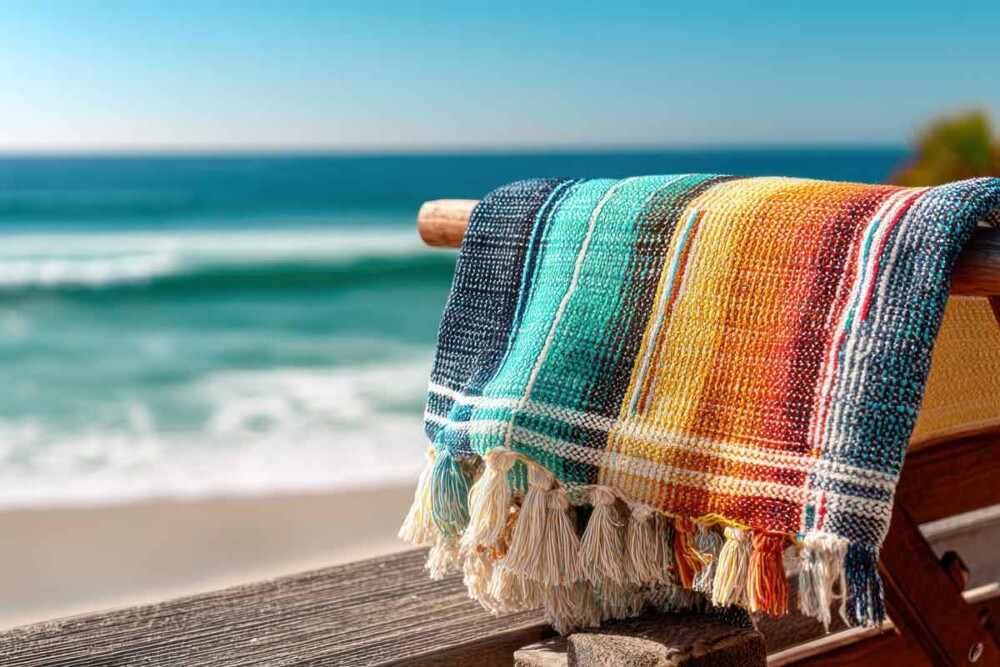
Choosing the ideal fabric for a beach towel is never universal: it depends on the context of use, personal habits, and the specific needs of the person who will use it. A tarp intended for long days spread out on the sand requires very different characteristics than one designed to fit in a travel backpack or to withstand hundreds of industrial washes in a hospitality facility.
Beach towel and cot
For days spread out on the sand or cot, the priority goes to comfort and absorption capacity. The cotton sponge with a weight between 350 and 420 g/m2 is the best performing choice: soft under the body, highly absorbent after bathing, resistant to daily wear and tear.
Travel and camping beach towel
When weight and bulk matter, microfiber is unbeatable. A microfiber cloth folds into the space of a paperback and weighs a fraction of the size of a sponge cloth of the same size. Very quick drying is a decisive advantage for those who move between locations.
Beach towel for swimming pool, spa and accommodation facilities
In environments where chlorine is present in water, the resistance of the fabric to frequent washing becomes a crucial parameter. The high-weight cotton sponge (400+ g/m2) maintains softness and color even after hundreds of cycles, proving to be the preferred choice for hotels, resorts and beach resorts.
Children’s beach towel
For little ones, choosing the fabric requires extra attention. Natural cotton, both sponge and honeycomb, remains the safest fiber: hypoallergenic, breathable, and gentle on sensitive skin. It is important to check the presence of the OEKO-TEX® Standard 100 certification, which attests to the absence of harmful substances in the finished product.
Custom beach towel for hotels, events and promotions
Those who produce beach towels with custom logos, graphics, or patterns need a fabric that guarantees high color rendering in print. The polyester sponge, with its unsightly weave and optimal surface for sublimation, is designed exactly for this purpose.
How to wash and maintain a beach towel without ruining it
The longevity of a beach towel depends largely on proper maintenance. Each fabric has specific needs that, if respected, preserve color, softness and absorbent capacity for many seasons.
Cotton sponge: Shake the cloth to remove sand before washing. Machine wash at 40°C (maximum 60°C for whites) with mild, low-softening detergent, which tends to felt the fibers in excess. The dryer is indicated for the sponge: it restores volume and softness. Avoid bleach on colored sheets.
Microfiber: Wash at 30°C without fabric softener and without bleach. Do not use the dryer, which can damage the structure of synthetic fibers. Hang in the shade; microfiber dries quickly even without direct sun exposure.
Bamboo mixed sponge: wash at 40°C with mild detergent. Bamboo retains its antibacterial properties and softness even after numerous cycles. Avoid too high temperatures and bleach to preserve fiber integrity.
Summer Trends: Colors, Patterns, and Beach Towel Fabrics
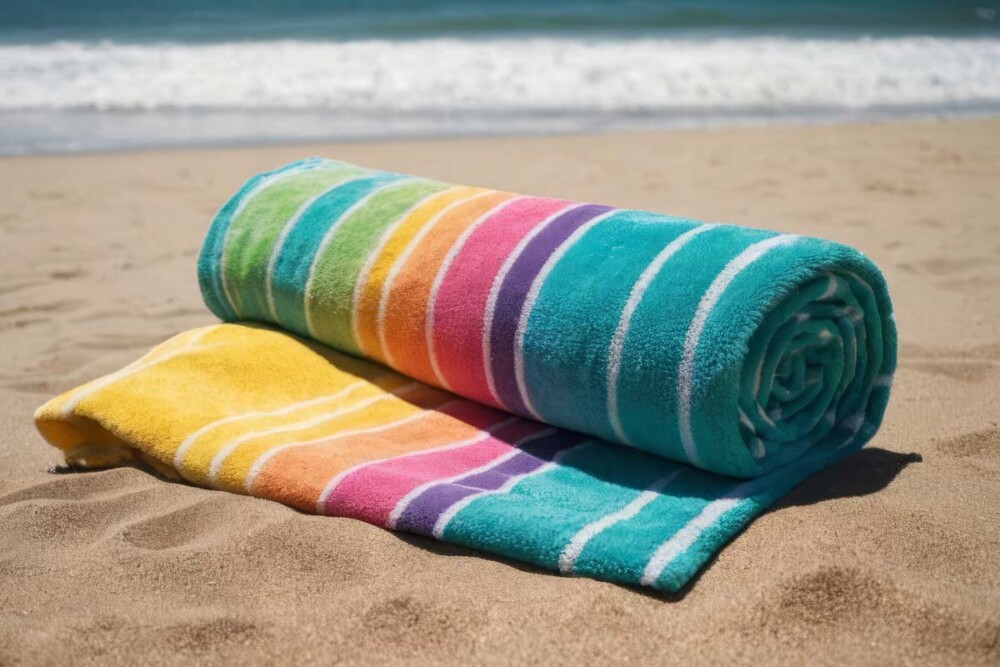
This summer confirms some directions already emerged in previous seasons and introduces new ones. On the textile front, terry cloth returns to the forefront of the best summer fabrics in beachwear, not only in sheets, but even in swimsuits, with a predilection for soft, enveloping weaves.
The summer color palette ranges from bold tones like electric blue, emerald green, vitamin orange, to more delicate colors like butter yellow, bright white, and the neutral shades that accompany the minimalist trend. The patterns that dominate swimwear trends and therefore seaside fashion in general favor graphic motifs inspired by the 1980s, maxi floral prints, nautical lines and high-contrast abstract patterns.
Seafront fabrics in the Cimmino catalog: for tailors, packaging designers, and hospitality professionals
For over 275 years, Manifattura Foderami Cimmino has supported textile professionals, tailors, packaging designers, artisans, and hospitality professionals with a catalog ranging from cotton sponges to microfibers, from costume linings to printed fabrics for decorated sheets. To receive samples, request personalized quotes, or consult the entire catalog of beach fashion fabrics, visit the Cimmino shop website and discover all the latest news.
FAQ- Frequently Asked Questions about Sea Cloth Fabrics
Cotton sponge with weight from 350 g/m2 ensures the best absorption capacity of all beach towel fabrics.
If absorbency is the top priority, the cotton sponge is the fabric to be favored. Its hedgehog structure retains large amounts of water and is particularly suitable for drying quickly after bathing. Microfiber also offers very high absorbency —up to seven times its own weight— but with a different, less warm and enveloping feel than cotton.
The sponge favors softness and comfort, the microfiber favors lightness and quick drying.
The cotton sponge is softer, thicker, and offers a warm, enveloping feel on the skin; however, it weighs more and takes longer to dry. Microfiber is ultralight, compact, does not hold sand and dries in a very short time, but the feel is less warm and under direct sun it can feel warmer than cotton.
It depends on the use. Cotton for comfort and sedentary beach, microfiber for travel, sports and practicality.
There is no universal answer. Those who spend the day at the beach or poolside will prefer the softness of cotton; those who travel, do water sports, or require a lightweight sand cloth will find microfiber the ideal solution. For a compromise, the cotton fouta offers lightness and compactness while remaining a natural fiber.
300 g/mq per viaggiare leggeri, 350-420 g/mq per l’uso quotidiano, oltre 500 g/mq per qualità premium e uso professionale.
La grammatura va scelta in funzione del contesto d’uso. Per un telo da mettere in valigia, una spugna leggera sotto i 300 g/mq è pratica e funzionale. Per l’uso quotidiano in spiaggia o in piscina, la fascia 350-420 g/mq rappresenta il miglior equilibrio tra assorbenza, morbidezza e peso. Per strutture ricettive, spa e uso intensivo, grammature superiori ai 500 g/mq garantiscono la massima qualità percepita e la migliore resistenza ai lavaggi ripetuti.
Yes. Linen, hemp, organic cotton, and certified bamboo blend sponge are the main sustainable beach towel options.
For those looking for a beach towel with a low environmental impact, the fibres to be favoured are linen, hemp, organic cotton and OEKO-TEX® certified bamboo blend sponges. In the Cimmino catalog, the Spugna Misto Bamboo represents the concrete eco-sustainable proposal, with 40% bamboo fibers and certification attesting to the absence of harmful substances.
