


Those who work with table fabrics find themselves faced with the same question sooner or later: is a stain-resistant fabric or a plasticized tablecloth better? The two words are often used synonymously, both online and in generalist catalogues, but they indicate two products constructed in a completely different way, with production processes, aesthetic yields and areas of use that do not overlap. Understanding the difference isn’t just a matter of terminology: it means choosing the right fabric for the right project, avoiding penalizing the aesthetics of an elegant table with overly technical PVC, or underestimating the strength required for an outdoor tablecloth with a simple resinate. Manifattura Foderami Cimmino analyzes and explains the composition, manufacturing process, maintenance, and contexts of use of both types of tablecloths, with a direct comparison to guide production choices.
What is a stain-resistant tablecloth: fabric and treatment
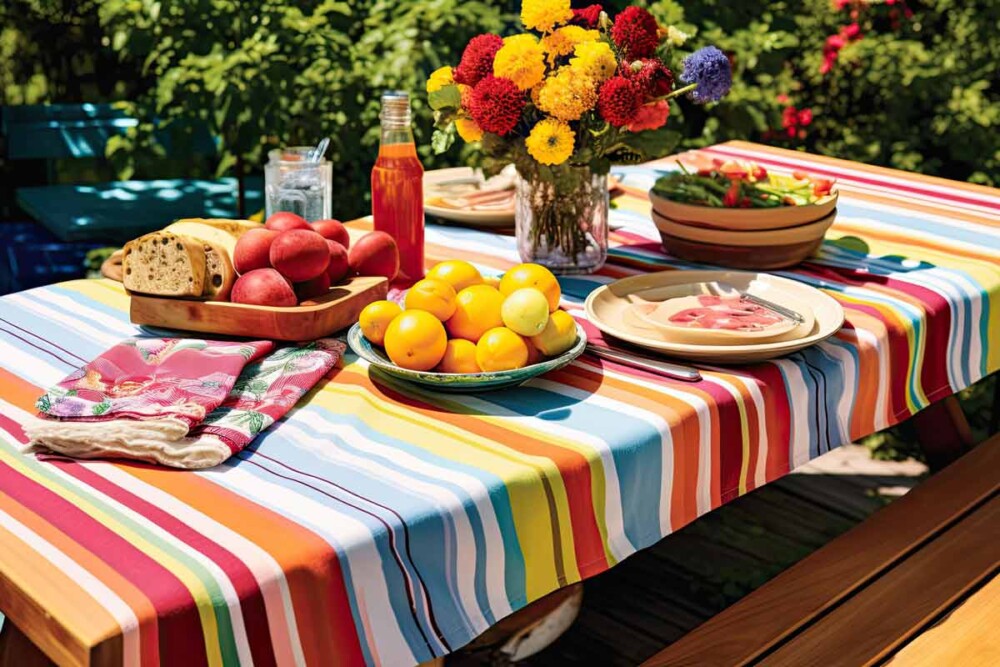
The stain-resistant tablecloth originates from a basic fabric such as cotton, polyester, polycotton or half panama, which is subjected to a resin treatment or a hydro-oil-repellent finishing on the surface. The yarn retains its textile structure: it is seen, touched and dropped like a traditional tablecloth, but the fibre is coated with one or more protective layers, generally based on acrylic resins, which prevent liquids from penetrating the weft.
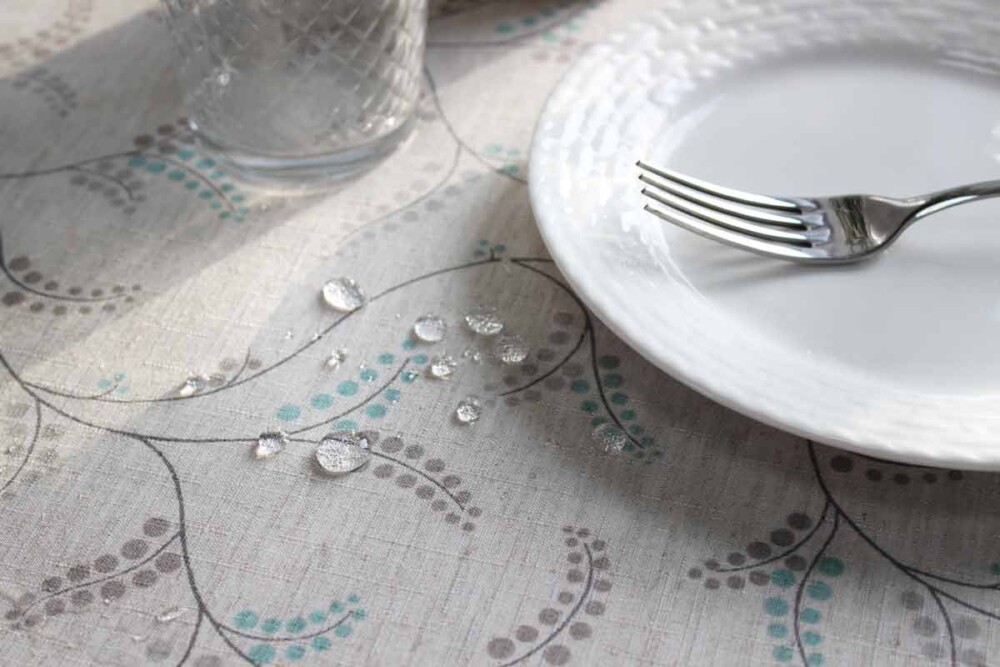
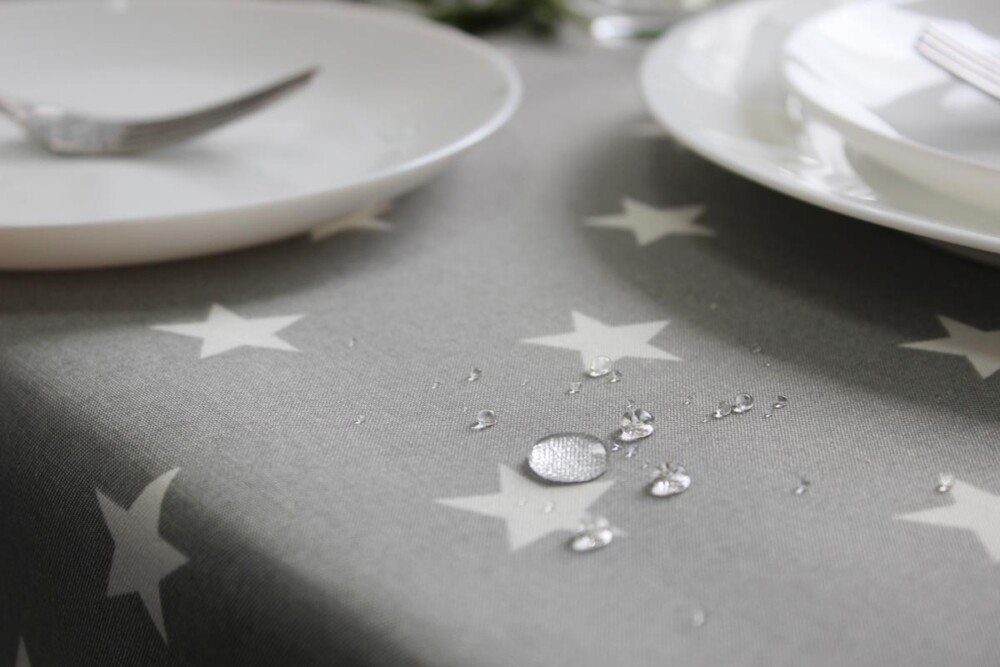
This is why, unlike an untreated cotton tablecloth, wine, oil, and coffee remain on the surface as droplets and are removed with a damp cloth, leaving no permanent streaks.
How Resin Making Is Achieved: The Process in Brief
Stain-resistant finishing occurs after the normal weaving, dyeing or printing stages of the fabric. The raw or already decorated fabric is passed through a spreading or impregnation plant, where it receives a layer of emulsion acrylic resin; this is followed by a heat-controlled drying and fixing phase, which binds the resin to the fiber without excessively altering its softness. In more technical fabrics, the treatment is applied in a double layer, to increase the resistance of the finishing to repeated washing.
How to recognize a resinous fabric
- It holds a soft hand to the touch, although slightly more compact than raw cotton
- It has a natural fall, not a stiff or “cloth” effect
- The surface may have a very slight sheen, more or less evident depending on the number of resin layers applied
- The treatment is uniform across the entire surface of the fabric, not just on the exposed side
What is a plasticized tablecloth: PVC and paired
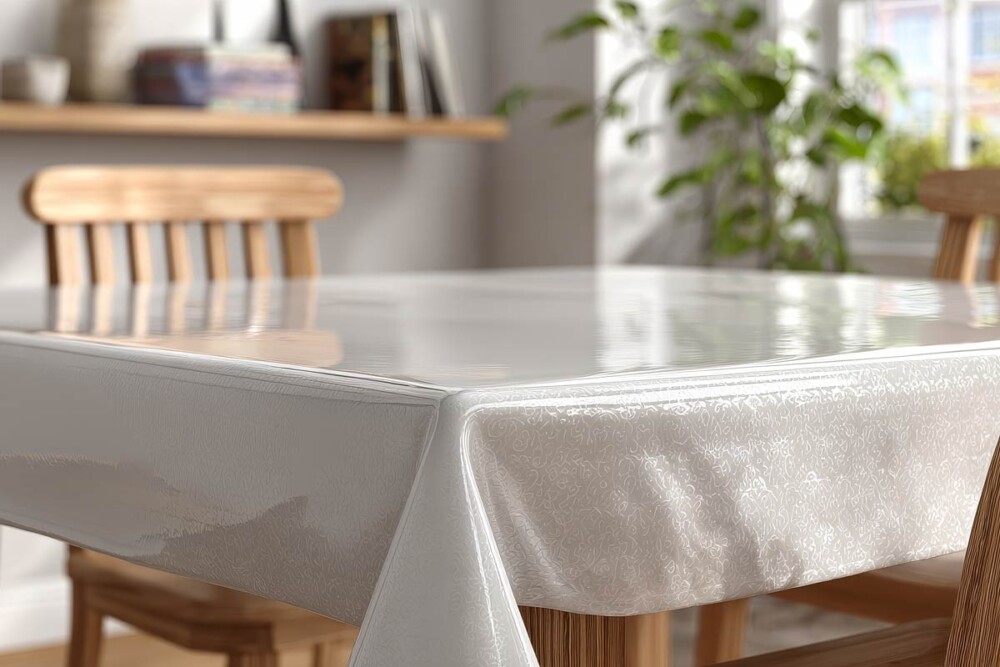
Plasticized tablecloth, often also called “plastic tablecloth,” is a different product in its nature: it does not start from a treated fabric, but from a PVC (polyvinyl chloride) film, almost always coupled to a nonwoven or polypropylene backing to give structure, dimensional stability, and tear resistance to the final material.
The result is a completely waterproof surface, not only stain-resistant, but leak-proof, that can be cleaned with a simple sponge and never requires machine washing or ironing.
How to produce a paired PVC tablecloth
The process starts by calendering or spreading the PVC paste onto a non-woven textile support, generally polypropylene, which acts as a structural reinforcement. This is followed by the printing phase of the design, created using rotogravure or digital techniques depending on the volumes and complexity of the motif, and possibly an embossing, that is, a relief work that imprints a texture on the surface to aesthetically bring it closer to a real fabric.
Main types of plasticised tablecloths
- Polypropylene-coupled molded PVC: the most popular version for tablecloth, kitchen furniture, and lightweight upholstery, suitable for both indoor and outdoor use
- Embossed PVC: raised surface, more sought-after fabric effect than the smooth version
- Recycled PVC: with a percentage of recycled raw material of no less than 40% and no optical bleaches, for those looking for a lower impact alternative without sacrificing waterproof yield
Stain-resistant or plasticized tablecloth: the technical comparison table
| Feature | Stain-resistant tablecloth (resinated fabric) | Plasticized tablecloth (PVC) |
| Basic material | Cotton, polyester or mixed, with surface resin finishing | PVC film, often coupled to polypropylene backing |
| Process of obtaining | Weaving + dyeing/printing + resin coating (one or more layers of acrylic resin) | Calendering/spreading of PVC on a support, then printing and possible embossing |
| Resistance to liquids | Hydro-oil repellent: liquids remain on the surface but the fabric is not watertight | Waterproof: total watertightness |
| Hand to touch | Soft, cadence similar to a traditional fabric | More rigid and compact, recognizable plastic effect |
| Approximate weight | Variable per item, typically 180–225 g/m² for cotton/polycotton resinates | It depends on the thickness of the PVC film, not always expressed in g/m² |
| Washing | Even in the washing machine at low temperatures, depending on the composition | Only with damp cloth or sponge, never in the washing machine |
| Ironing | Generally not necessary; if required, at low temperatures and upside down | Avoid: Heat from iron can deform PVC |
| Aesthetic performance | It falls like a real tablecloth, suitable even for elegant contexts | More technical effect, indicated for declared practical use |
| Ideal use context | Everyday use, HO.RE.CA, contexts requiring well-groomed aesthetics | Exterior, highly exposed tables, protection of valuable surfaces, party installations |
| Durability | High, particularly in polyester-based fabrics | Tends to stiffen or crack with prolonged exposure to sun and temperature changes |
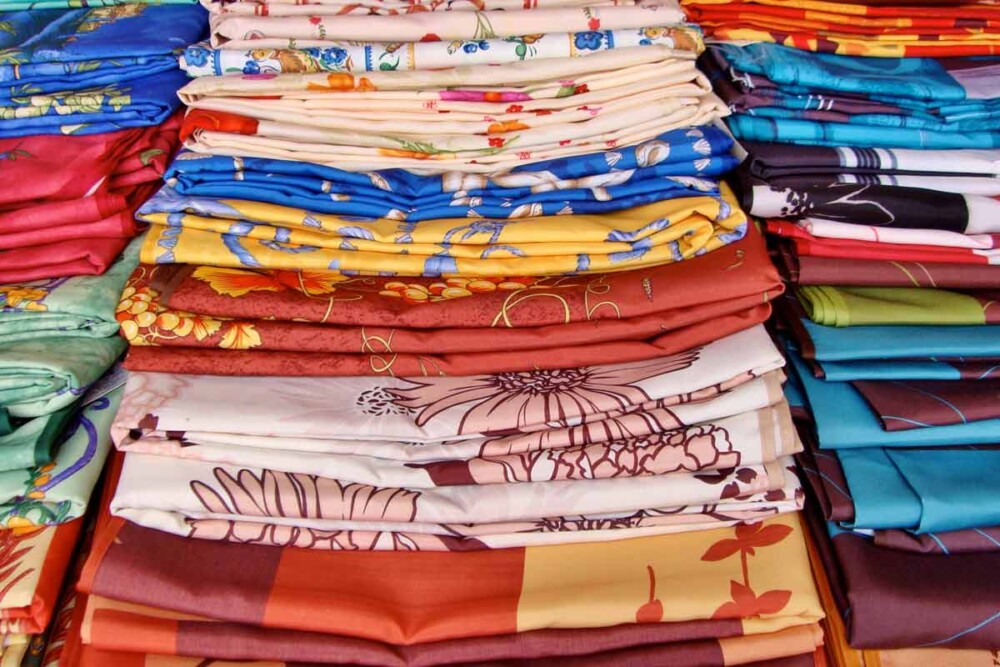
Maintenance and durability over time of stain-resistant tablecloths and plastic tablecloths
Daily management is probably the criterion that most influences the final choice between stain-resistant fabric and plasticized tablecloth fabric, especially in the professional field.
Stain-resistant tablecloth: washing and car
Most polyester or polycotton resin fabrics can be machine washed at low temperatures, maintaining treatment effectiveness over time thanks to the stable bond between resin and synthetic fiber. Resinated cotton fabrics, on the other hand, tend to gradually lose some of their resin after frequent washing: a feature to consider when selecting the item for intensive professional use, where it is preferable to focus on compositions with a higher polyester content.
Laminated tablecloth: cleaning and storage
PVC should never be machine washed or ironed: concentrated heat can permanently deform the plastic film or compromise its coupling with the polypropylene backing. Cleaning is limited to a damp cloth or sponge, possibly with a neutral detergent. Special attention should be paid to prolonged sun exposure, which over time can cause stiffening and microfractures at the corners of the tablecloth.
Stain-resistant tablecloth or plastic tablecloth: which one to choose based on the context of use
There is no single answer to the question “which fabric is better”: the choice depends on the context of use, the distribution channel and the type of stress to which the tablecloth will be subjected. A fabric designed for intensive restaurant service meets different criteria than one intended for a garden table exposed to the elements, just as the needs of a packaging designer who must ensure a consistent yield over large volumes do not coincide with those of someone who sews a custom-made tablecloth for personal use. Here’s how to navigate the four most common contexts.
Catering and HO.RE.CA
A resinated cotton/polyester tablecloth ensures an optimal compromise between refined aesthetics, resistance to intensive use and the possibility of repeated washing: a key element for those who have to manage large volumes of table linen with frequent spare parts between services.
Exteriors and tables heavily exposed to the elements
A PVC plasticized tablecloth provides a total waterproof barrier, particularly suitable when the table is exposed to rain or humidity for prolonged periods, or for temporary installations such as outdoor parties and events where practicality prevails over aesthetic rendering.
Retailers and packagers
The choice of base fabric directly determines the positioning of the finished product: a resinate lends itself to medium-high range lines of tablecloths, while a paired PVC responds to a market more oriented towards practicality and price, typically organised distribution and party/outdoor channel.
Tailors and DIY projects
For those who make DIY tablecloths and custom tablecloths, resin fabrics offer the advantage of being sewn using the same techniques as a traditional fabric, while PVC requires specific care during cutting and sewing to prevent the needle from permanently piercing the plastic film along unexpected lines.
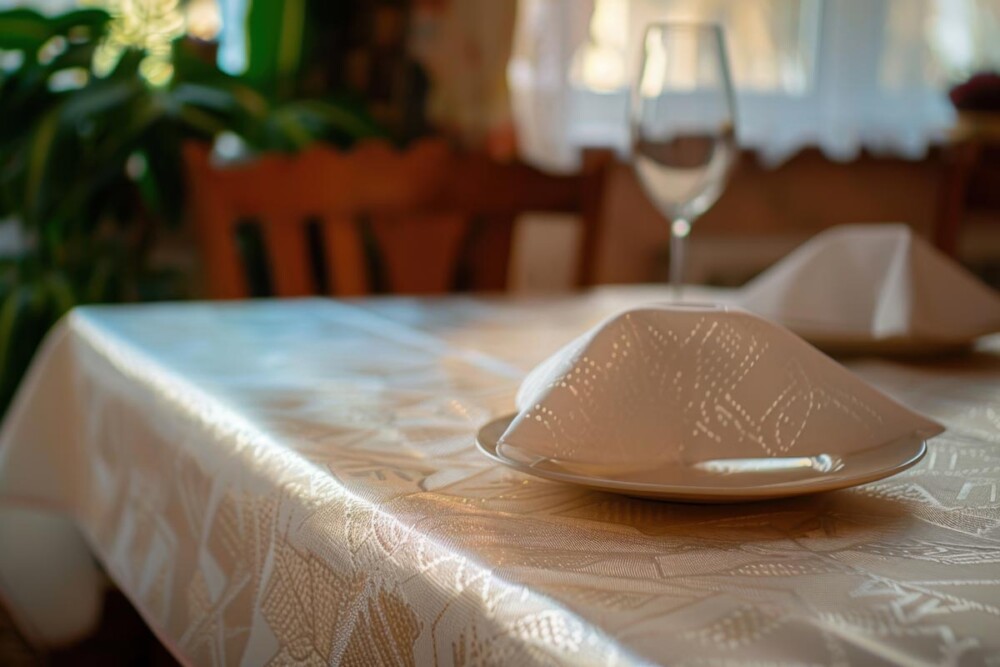
Common mistakes to avoid when choosing between stain-resistant tablecloth fabrics and plasticized tablecloth fabrics
- Consider “waterproof” and “stain-resistant” synonymous: a water-repellent fabric causes water to slide but does not necessarily protect against oily or coloring stains like wine and coffee
- Choosing a PVC for an elegant context or a formal board, where the aesthetic yield of a resinated fabric is clearly superior
- Machine wash a plasticized tablecloth, with the real risk of damaging the coupling between the film and the support
- Do not check the exact composition (percentages of cotton and polyester) before the production order, as it directly affects weight, hand and washing behavior
The best stain-resistant tablecloth fabrics at Cimmino Shop
Among the resin stain-resistant tablecloth fabrics available at Cimmino Shop, some items stand out for their balance of aesthetic appeal, durability, and ease of use, with compositions and finishes designed to meet both household needs and those of intensive professional use. Here’s a reference selection to help you navigate the different options.
Tessuto Canazei Resinato
Cotton and polyester blend fabric (90%/10%) subjected to surface resin, designed for the production of stain-resistant tablecloths and furnishing accessories suitable for both indoor and outdoor use. The resin treatment gives the Tessuto Canazei Resinato hydro-oil-repellent properties, ensuring quick and practical cleaning even in case of intensive use, typical of the domestic tablecloth sector and HO.RE.CA.
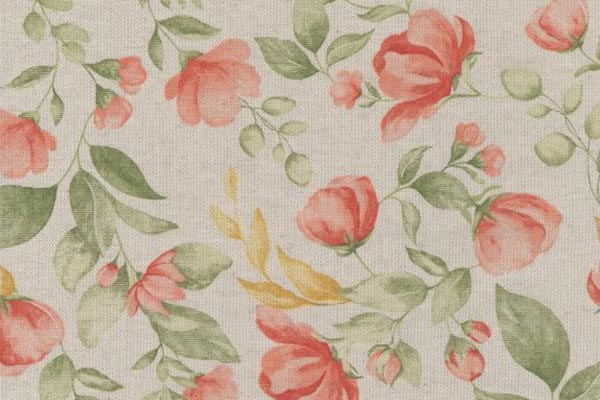
With a height of 140 cm and a weight of 225 g/m2, it is characterized by a robust hand and good dimensional stability, requirements that facilitate its packaging. Certified OEKO-TEX® Standard 100, it is also indicated for lightweight upholstery projects as well as for the production of tablecloths.
Tessuto HP Lussemburgo Resinato
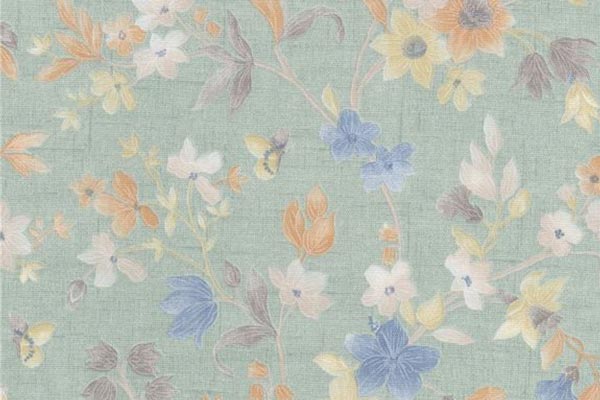
Half panama in 100% cotton with double-layer resin treatment of acrylic resins, designed for tablecloths and furnishing accessories that require high stain protection. The dense weave and double resin ensure easy and quick cleaning, maintaining effective resistance to liquids and stains over time. Pigment printing enhances decorative patterns, making the fabric suitable for both solid colors and more elaborate patterns.
With a height of 140 cm and a weight of 220 g/m², the Tessuto HP Lussemburgo Resinato lends itself to both domestic use and professional employment, typical of the HO.RE.CA sector. Certified OEKO-TEX® Standard 100, it combines construction robustness and product safety for worry-free daily use.
Tovagliato Resinato Alpine
Resin tablecloth available in two variations, solid color and Vichy-style checked pattern, designed to combine practicality and elegance on the table. The United version offers a composition of 75% cotton and 25% polyester, while the Square variant is characterised by a mix of 55% cotton and 45% polyester with a weight of 195 g/m2, designed for greater stability of the checked design.
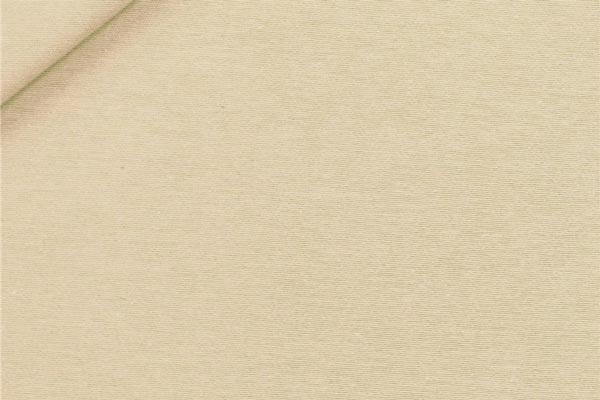
Both variants share a height of 140 cm and the surface resin treatment, which makes the fabric Tovagliato Resinato Alpine stain resistant and easy to clean. Its robust and versatile yield makes it suitable for both everyday home use and supplies for the HO.RE.CA sector, where convenience and frequent replacement are operational priorities.
The best plastic tablecloth fabrics at Cimmino Shop
For those seeking the total waterproof seal of PVC, the Cimmino catalogue offers various variations of plasticised tablecloth fabrics designed for specific contexts of use, from the daily protection of the table to decorative arrangements for ceremonies, parties and events. Here are some of the most representative articles.
Tovagliato Plastica Party Recycled
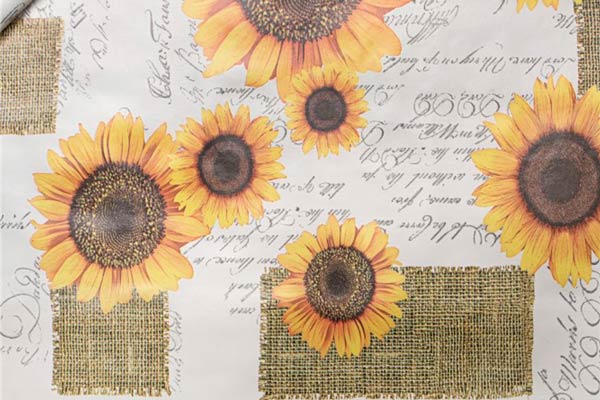
Plasticized fabric made of 88% polyvinyl chloride and 12% polypropylene, made from recycled materials and designed for party displays, events and special occasions. With a height of 140 cm and a weight of 345 g/m2, it guarantees resistance to intensive use and quick and practical cleaning, maintaining the waterproof characteristics typical of plasticized tablecloths.
Tovagliato Plastica Party Recycled is available in different colors, to adapt to different contexts and decorative needs. Certified OEKO-TEX® Standard 100 and compliant with EN 71-3 legislation on the migration of specific elements, it is characterised by a safety of use that makes it suitable for both domestic environments and professional contexts.
Bullonato Indiana
Protect bolted table in 88% PVC and 12% polyester, designed as a durable and shock-absorbing cover to protect the table surface from bumps, scratches and liquids. The thick, non-slip material ensures stability during daily use and a long lifespan, while maintaining a refined aesthetic that does not compromise the appearance of the board.
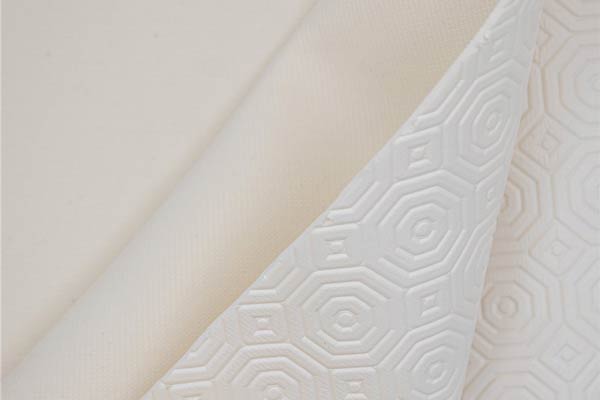
With a height of 140 cm and a weight of 720 g/m2, the Bullonato Indiana stands out for its significant thickness, which makes it particularly suitable for intensive use both in the home and in professional contexts where the protection of the support surface takes priority over its purely decorative rendering.
Zaffiro 20 Micron Glitters
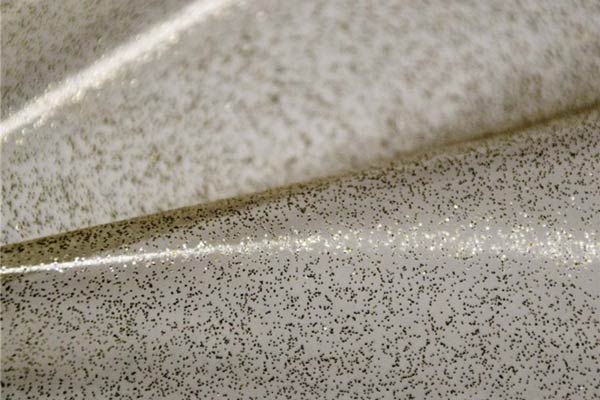
Tablecloth in 100% glitter polyvinyl chloride, designed to cover tables and coffee tables with a bright decorative touch. The glossy surface, embellished with glitter, lends itself to both indoor and outdoor environments, maintaining the waterproof properties typical of PVC: it is resistant to daily wear and tear and can be easily cleaned with a damp cloth.
With a height of 140 cm and a weight of 260 g/m2, the Zaffiro 20 Micron Glitters represents a practical solution for party, balcony and garden installations, as well as elegant protection for delicate surfaces such as glass or wood. Certified OEKO-TEX® Standard 100, it guarantees safety of use even in contexts where the product comes into direct contact with everyday objects.
Whether you’re considering a resinated tablecloth or a laminated tablecloth, the Cimmino Shop sample book offers both types with verifiable datasheets for each composition and height. Explore the complete catalog of tablecloth fabrics or contact the sales team for a consultation tailored to your production.
FAQ- Frequently Asked Questions about Stain-Resistant Tablecloth or Laminated Tablecloth
No, it is hydro-oil-repellent but not waterproof in an absolute sense. It repels liquids to the surface allowing for quick cleaning, but does not guarantee the watertight seal typical of PVC. For total waterproofing, a plasticized tablecloth remains preferable.
The resinated cotton/polyester tablecloth, because it combines resistance to frequent use, the possibility of repeated washing and a more refined aesthetic yield than PVC.
No, PVC should be cleaned exclusively with a damp cloth or sponge; machine washing or ironing can permanently damage its structure.
From the desired yield between softness and strength: a higher percentage of cotton favors the natural hand, a higher percentage of polyester favors strength and stability over time. The exact percentages should always be checked on the data sheet for the individual item.
It depends on the composition: polyester resinates maintain the treatment over time because they are stably bonded to the synthetic fiber, while cotton resinates can gradually lose some of their effectiveness after frequent washing.
Yes, it retains the same hydro and oil-repellent properties; the difference concerns the percentage of recycled raw material used in the film, not the functional yield of the finished product.
